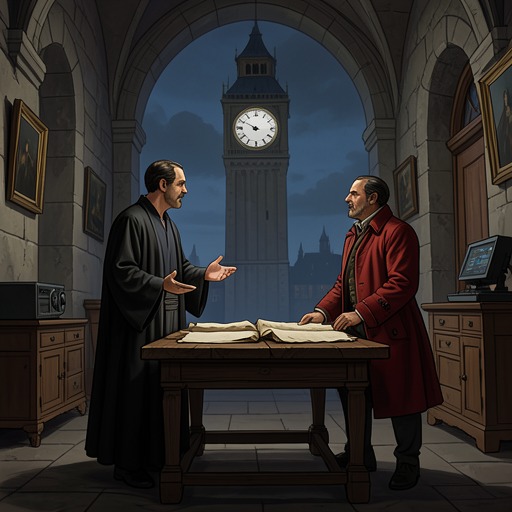
Suppression of the Archbishop of York's rebellion
Henry IV, Part 2The Suppression of the Archbishop of York's rebellion is a political reversal in which an apparent settlement becomes the means of disarming and arresting the rebel leaders. The Archbishop of York presents the rising as a cause supported by grievances, and John of Lancaster publicly accepts those complaints and promises redress. Once the rebel army has dispersed, however, Westmoreland arrests the Archbishop, Hastings, and Mowbray, while Lancaster distinguishes his promise to remedy grievances from any promise of safety for those he calls rebels. The episode makes the gap between negotiated words and their consequences the decisive feature of the rising's defeat.
Causes and Claims
The Archbishop of York's rebellion is presented not simply as a military challenge but as a cause whose religious and political framing helps gather support. An earlier report says the Archbishop has assembled well-appointed forces and binds his followers with a double assurance. The same account describes him as turning insurrection into religion: his followers are said to believe his thoughts sincere and holy, and to follow him in body and mind. The language shows how the rebellion's legitimacy is contested before its armies meet. To the royal side it remains insurrection; to those who follow the Archbishop, religious purpose helps make resistance appear righteous.
The rebels also claim substantive grievances. In addressing the royal representatives, the Archbishop says that the substance of his speech concerns the rebellion and that the rebels have a summary of their complaints, which they intend to present in articles when the opportunity comes. He adds that they had offered those articles to the king long before. The play does not specify the complaints here, but the assertion that they were already submitted matters: the rebels represent their armed action as arising from unresolved appeals, not as an aimless outbreak. Their case therefore places pressure on the crown to answer both the existence of their forces and the claims they say preceded them.
Negotiation and Dispersal
The confrontation moves from the Archbishop's account of the rebels' cause and means to a direct demand for an answer. Westmoreland asks John of Lancaster to state how far he accepts the articles. Lancaster replies that he approves them all and swears by the honour of his blood that the grievances will be speedily redressed. He also promises that some people around the king have interpreted royal authority too freely. That concession acknowledges that the complaints may have a real basis, while locating the fault partly in those who have abused the king's meaning and power.
Lancaster makes the promise conditional in practice, even as he presents it as an assurance: the rebels are to discharge their forces to their respective counties, and the royal side will do likewise. He proposes that the two armies drink together as friends and embrace. This language replaces the visible threat of opposing armies with a ritual of fellowship. The proposed reciprocal dispersal is not merely a pause in combat; it is the action that leaves the rebel leaders exposed. Hastings soon reports that his army is already dispersed, its members hurrying home to their own places. The sequence gives the promise a concrete consequence before its reliability can be tested: the rebels have surrendered their collective military protection.
Arrest and the Meaning of the Promise
Westmoreland answers Hastings's report of dispersal by arresting him for high treason. He then attaches the Archbishop of York and Mowbray for capital treason. The change is abrupt: the men who have just negotiated over articles and reciprocal disarmament are now addressed as prisoners. Mowbray challenges the apparent breach of faith, but Lancaster denies having pledged himself to him. He says that he promised to redress the grievances of which the rebels complained, and that he will carry out that promise with Christian care; he then warns the rebels to expect the punishment due for rebellion.
The distinction Lancaster draws is the episode's central verbal and political maneuver. His promise concerns the complaints, not the safety of the people who raised them in arms. In that narrow formulation, he can present himself as keeping his word while supporting their arrest. The exchange does not resolve whether the grievance articles will in fact be remedied; it shows instead that the promise and the arrests can coexist in the royal account of events. Westmoreland's arrests make the practical outcome unmistakable: the leaders are taken after the force that might have defended them has dispersed.
Lancaster orders guards to take the prisoners to the block of death and calls treason the place where they will meet their end. The threat establishes the intended severity of the arrests, but the scene does not itself show the executions. He then orders the drums struck and the scattered men pursued, while declaring that God, rather than the royal party, has safely fought that day. The closing invocation gives the royal victory a providential cast even though the immediate success has depended on negotiation, dispersal, and arrest rather than a battle shown onstage.
Political and Dramatic Significance
The episode makes royal authority effective through both concession and coercion. Lancaster recognizes the articles, promises redress, and offers a friendly embrace; Westmoreland then uses the moment created by the rebels' dispersal to seize their leaders. The play does not need to show a pitched battle to depict the suppression: its decisive action is the change in the rebels' status, from negotiating opponents to accused traitors, carried out after their army has dissolved.
The scene also distinguishes the rebels' complaints from their rebellion without allowing either to erase the other. Lancaster says the grievances will be remedied, but insists that rebellion deserves punishment. That division enables the crown to claim responsiveness to the substance of the complaints while treating armed resistance as a separate offense. Dramatically, the promise of reconciliation is tested not by its ceremonial language but by what follows it: a dispersed army, arrests for treason, a death sentence threatened, and a royal declaration of safe victory. The outcome reveals how quickly a settlement can serve as an instrument of political control when one side retains the power to define both the promise and the crime.