Westminster
Henry IV, Part 2Westminster is the play’s royal setting for scenes in which military news, the burden of rule, and the transfer of the crown meet. Its palace gives those political changes a concrete stage: King Henry IV lies awake under the demands of kingship, receives word of defeat in the north, and dies as Prince Henry takes up the crown; later, the palace remains a place where royal and legal authority encounter one another.
The Palace and the Movement of Political News
The palace at Westminster frames an Act III scene with King Henry IV in his nightgown, an intimate, unceremonious image of a monarch who cannot find the rest available to his sleeping subjects. His meditation on sleep turns the setting into more than a seat of government: within the palace, the king experiences authority as a personal burden, and the crown’s privileges fail to protect the body that wears it.
Westminster also receives news whose decisive events have happened elsewhere. In the Jerusalem Chamber, King Henry IV is joined by his sons Thomas of Clarence and Humphrey of Gloucester, Warwick, and others when word arrives that the Earl of Northumberland and Lord Bardolph have been defeated by the sheriff of Yorkshire. The chamber thus becomes the place where a northern military reversal is made present to the royal household. The report changes the political prospects confronting the king without making Westminster itself a battlefield.
Sleeplessness and the Crown
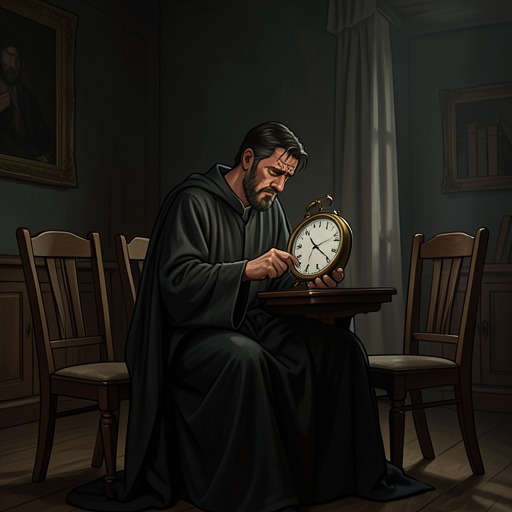
At the palace, King Henry IV contrasts his own wakefulness with the thousands of poorer subjects sleeping at that hour. The familiar comfort of sleep is withheld from him, and his reflection on the uneasy head that wears a crown makes the palace’s royal status inseparable from anxiety. Westminster gathers the public office and the vulnerable human body in one room: the crown signifies rule, while the sleepless king reveals its cost.
The palace setting later gives that tension a visible object. After the others leave, Prince Henry remains by the king and sees the crown lying on the pillow. His attention to this troublesome bedfellow links the royal emblem to the sleeplessness and physical decline already associated with his father. The crown is at once an object beside a failing body and the office that will outlast it.
Succession and Continuing Authority
The palace is the setting for the decisive change from King Henry IV’s reign to Prince Henry’s. In the scenes surrounding the king’s death, the crown passes into the son’s hands, and King Henry IV reflects on how he acquired it while praying that it may live in true peace. Westminster therefore stages succession not as a simple change of occupant but as a transfer shadowed by the history and moral burden of the crown.
The palace remains a setting for government after this transfer. A later scene opens there with Warwick and the Lord Chief-Justice meeting. Although the location evidence establishes only the meeting and its setting, its placement after the succession underscores that royal power at Westminster continues through offices and political relationships, not solely through the life of an individual king. Across these scenes, the palace connects private bodily weakness, public reports of rebellion, and the continuity of rule.