Westminster Abbey
Henry IV, Part 2Westminster Abbey serves as the landmark beside a public place where the play stages the approach of King Henry V’s coronation and Falstaff’s attempt to greet the newly crowned king. The scene is located near the Abbey, not within it: its significance lies in the public threshold it provides between ceremonial royal authority and the former companions waiting to claim the king’s attention.
Setting and Ceremonial Preparation
The final scene identifies its location as a public place near Westminster Abbey. Two Grooms enter scattering rushes, and the preparations are hurried along as the coronation approaches. The Abbey’s name anchors the scene in the vicinity of a major royal ceremony, while the stage direction keeps the action in an adjoining public space rather than inside the building.
The Waiting Party and the Royal Procession
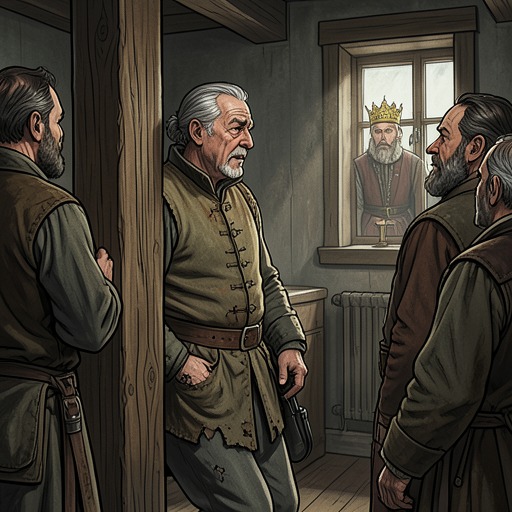
Falstaff arrives with Shallow, Pistol, Bardolph, and a Page, and tells Shallow to stand beside him. Their position makes the public place a waiting ground: Falstaff expects to address the king as he passes. King Henry V then enters with his train, including the Lord Chief-Justice. The two groups share the scene’s space, but the procession’s formal arrangement distinguishes the king’s public retinue from Falstaff’s companions.
Dramatic Significance
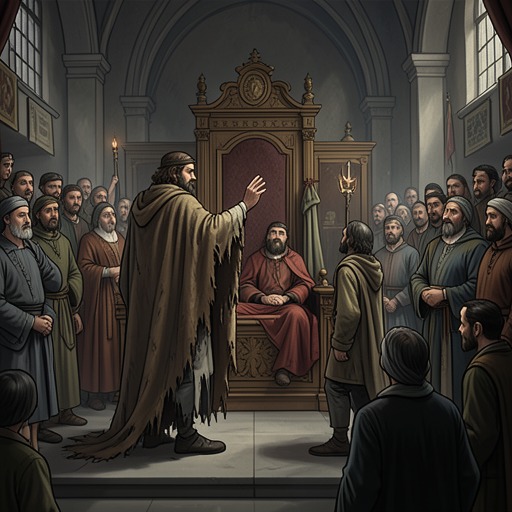
The setting brings coronation spectacle into immediate proximity with a personal appeal. Falstaff greets King Henry V as King Hal, treating the new ruler as the familiar companion he knew, while the king appears amid his train and the Lord Chief-Justice. Near Westminster Abbey, the scene thus frames a change in political status as something visible and public: the king approaches in ceremony, and the former companions wait in the path of that new authority.