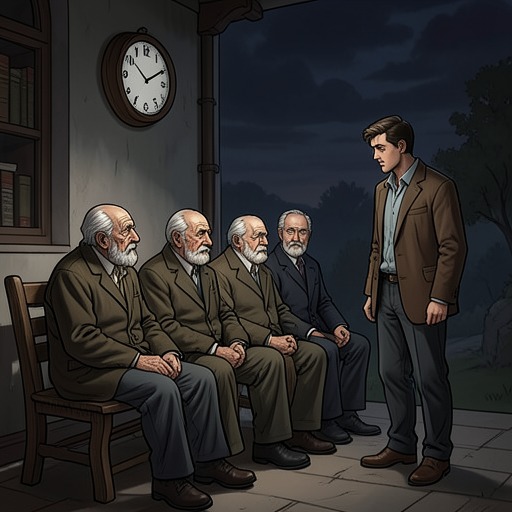
“We have heard the chimes at midnight”
Henry IV, Part 2“We have heard the chimes at midnight” is Falstaff’s brief recollection to Shallow, turning a remembered sound into a sign of the history they share. Shallow’s enthusiastic reply makes the phrase less a solitary memory than an invitation to remember together.
The Exchange
Falstaff addresses Shallow as “Master Shallow” and says, “We have heard the chimes at midnight.” Shallow answers, “That we have,” repeating the affirmation three times. The exchange establishes mutual recognition: Falstaff offers a compact reminder, and Shallow takes it up with emphatic agreement.
A Shared Watchword
Shallow identifies their watchword as “Hem boys!” The phrase gives their recollection a specific verbal token: their shared past is recalled not only through the midnight chimes but through words they used together. The scene does not explain the occasions behind either memory, so the force lies in the familiarity of the exchange rather than in a narrated account of those events.
From Memory to the Present
After invoking their watchword, Shallow urges Falstaff to dinner and laments, “Jesus, the days that we have seen!” The movement from remembered fellowship to an ordinary invitation makes the past feel close at hand, while Shallow’s repeated assent gives the moment its warm, companionable emphasis. The expression therefore marks both a bond between the two men and their shared awareness that those days belong to memory.