Aging, mortality, and the passage of time
Henry IV, Part 2Aging, mortality, and the passage of time are forces that turn personal experience into political history. The play sets remembered youth beside deaths on the battlefield, a king’s failing body beside the enduring crown, and yesterday’s friendships beside the abrupt reversals of power. Time does not move evenly: it is felt as lost sleep, vanished companions, belated news, and an inheritance that survives the person who holds it.
News, Battle, and the Nearness of Death
At the opening, Rumour announces that it runs ahead of King Henry IV’s victory at Shrewsbury, where Harry Percy and his troops have been beaten. The image makes political time feel faster than bodies can travel: a report races forward while the battle’s consequences are still arriving. Rumour’s early appearance also gives the play a way to show how people first encounter death—not necessarily by witnessing it, but through stories that precede or follow the event.
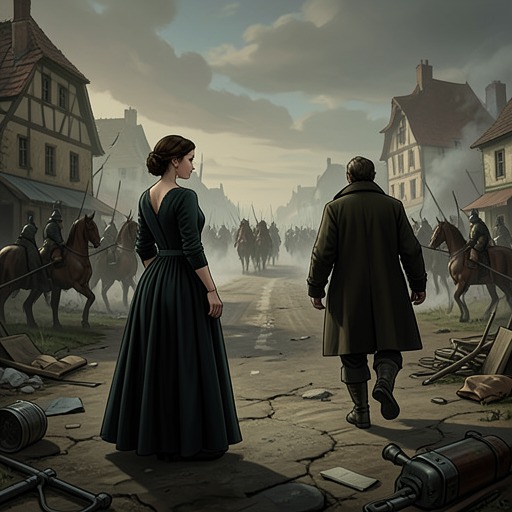
Morton, by contrast, says that he ran from Shrewsbury. His account makes the battle’s violence personal: death had put on its ugliest mask to frighten his party. The movement from Rumour’s sweeping claim of victory to Morton’s flight from the field sets public outcome against individual terror. Victory can be announced in a phrase; the deaths and fear contained within it persist in the people who escape and carry the news away.
Later, the defeat of the Earl of Northumberland and Lord Bardolph by the sheriff of Yorkshire supplies another abrupt measure of political time. A great force of English and Scottish troops has been overthrown. The news turns expectation into reversal: power assembled for rebellion can be broken before its leaders can secure the future they sought. Across these reports, mortality is not only the end of individual lives; it is also the vulnerability of armies, alliances, and political designs to events that cannot be recalled.
The King’s Body and the Burden of Time
King Henry IV experiences time through the failure of ordinary rest. He thinks of the thousands of his poorest subjects asleep while sleep eludes him, and calls sleep nature’s gentle nurse. The contrast makes the king’s rank a bodily affliction rather than a guarantee of comfort. His sleeplessness culminates in the recognition that “Uneasy lies the head that wears a crown.” The crown marks authority, but it cannot command relief for the body beneath it.
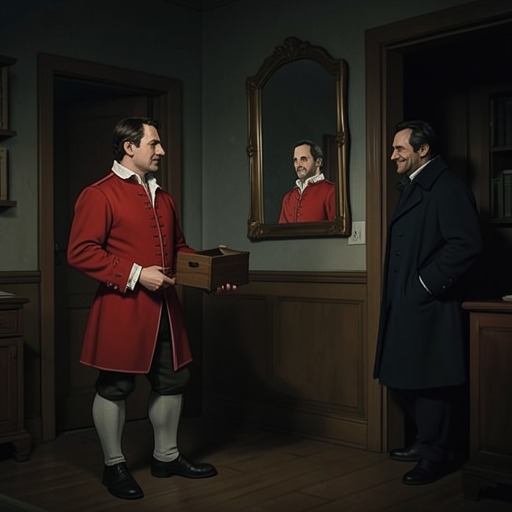
The play gives that burden a visible object when the king asks for the crown to be set on his pillow. The image brings office into the place where the body should rest: the emblem of rule lies beside a man whose health is visibly failing. When Prince Henry is left alone to watch, he sees the crown as a troublesome bedfellow and calls it “polish'd perturbation” and “golden care.” The son’s language registers both the object’s splendour and its disturbance. Succession is already present in the room, but it arrives not as an abstract principle: it is a crown beside a vulnerable father, observed by the heir who will have to wear it.
King Henry’s later words make physical decline inseparable from political responsibility. His strength of speech is spent, yet he asks forgiveness for how he came by the crown and prays that it may live in true peace. The prayer looks backward to the contested acquisition of power and forward to the rule of his successor. A failing voice can still name the moral burden of inheritance, but it cannot guarantee what the next reign will make of that burden.
Memory, Old Age, and the Lost Past
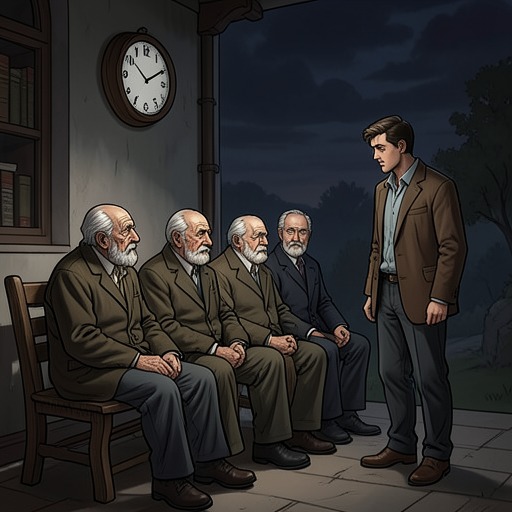
The play’s account of aging is not confined to the royal household. Shallow remembers Falstaff as a boy, recalling him breaking Skogan’s head at the court gate when he was still small. He then places his own youthful fight with Sampson Stockfish, a fruiterer, behind Gray’s Inn, on that very day. These precise memories retain the shape of old mischief, but Shallow’s exclamation at how many old acquaintances are dead turns recollection into a reckoning. His past remains vivid; the people who once filled it do not.
Falstaff answers Shallow’s remembrance by recalling that they “have heard the chimes at midnight.” Shallow repeats the thought in agreement. The chimes gather their shared past into a phrase that suggests nights spent together, while their repeated acknowledgment measures the distance between those former days and the present. Their exchange is comic in its familiarity, but its warmth carries an elegiac edge: the two old men can revisit the past in speech even as death has removed many of their contemporaries.
The scene also contrasts different relations to time. Shallow preserves particular names, places, and youthful exploits; his memories make the past seem crowded and close. Yet the list of dead acquaintances reveals how selective that closeness is. What survives is an anecdote shared between the living, not the full company that once took part in it. The chimes therefore sound both as a recollection of past pleasure and as a reminder that the past cannot be re-entered.
Historical Reversal and Inherited Rule
King Henry looks back on political change with the wish that he could read the book of fate and see time’s revolutions in advance. He recalls that Richard II and the Earl of Northumberland were great friends less than ten years earlier, and that their amity later divided. The short interval makes political history feel startlingly compressed: intimacy can become opposition within a span that remains small in a human life. Warwick’s observation that there is a history in every life, figuring the nature of times past, gives this recollection a broader frame. Personal experience becomes one way to read the shifts of an age, though it cannot make their outcomes predictable.
The crown’s passage from King Henry IV to Prince Henry concentrates that uncertainty in a single object. When the new king declares, “Harry the Fifth is crown'd: up, vanity!”, the words mark the arrival of a new reign and the descent of the old royal state. The declaration follows the father’s physical collapse and is followed by King Henry’s prayer that the crown may live in peace. The contrast does not erase the dead king or the contested past; it shows how the office continues when its holder cannot.
Time thus moves through the play on two connected scales. It shortens friendships, empties the world of old acquaintances, and carries combatants from the battlefield as bearers of news. At the same time, it transfers authority beyond an individual life. The crown survives its wearer, but survival is not simple continuity: every successor inherits both the power of the office and the history that has made it burdensome.