Battle of Shrewsbury and Hotspur's Death
Henry IV, Part 2The Battle of Shrewsbury and Hotspur's Death is the decisive royal victory that defeats Harry Percy and his troops and breaks the immediate power of rebellion. Although the fighting takes place offstage, the play gives it weight through successive accounts: Rumour announces the victory, while Morton reports the battle’s cost and course to the rebel leadership. The gap between advance announcement and eyewitness testimony makes the event both a military turning point and a story assembled from politically charged reports.
Background and Framing
Before the battle is recounted in detail, Rumour declares that King Henry IV has won at Shrewsbury and that Percy and his troops have been beaten. The speech places the victory against the rebellion it extinguishes, presenting the result as a change in the kingdom’s balance of power. Rumour’s position is significant: it runs ahead of the news, introducing the event through the speed and certainty of public report rather than through a scene of combat.
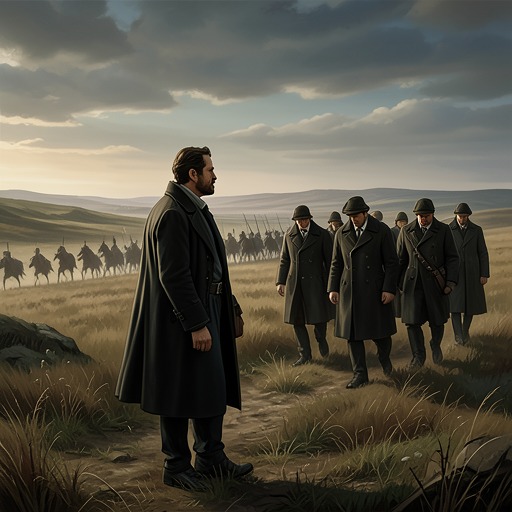
The later account comes from Morton, who says he fled from Shrewsbury. He describes death as having taken on a frightening aspect for his party, establishing that the royal victory was experienced by the rebels as a rout, not merely as the loss of their leader. The play therefore moves from Rumour’s broad announcement of success to a report grounded in a participant’s flight and testimony. The audience hears the battle after it has happened, through speakers whose words shape how its outcome is understood.
Percy’s Death and the Defeat
Morton’s account identifies Harry Percy’s death as the battle’s central personal and political loss. He says that his own eyes saw Percy in a desperate, exhausted state, giving his report the authority of claimed eyewitness testimony. Percy was fighting Prince Henry; the prince’s swift attack brought Percy down, and Percy did not rise again. The narration marks a sharp reversal for a figure earlier associated with bold rebellion: the man who had lent the revolt its energy is removed from the field, and his death alters the prospects of his allies.
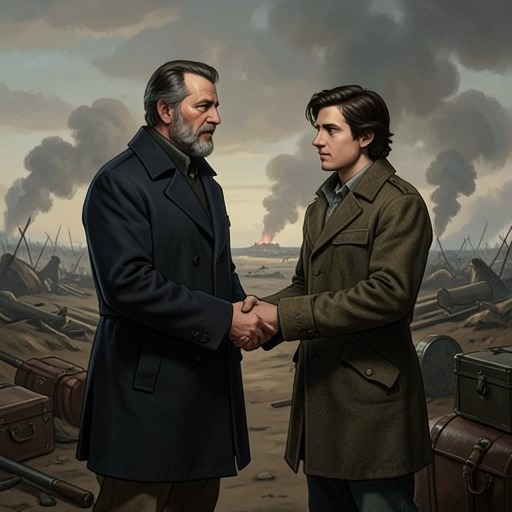
The defeat extends beyond Percy. Morton describes the rebel soldiers fleeing from the field in search of safety. Worcester is captured, and Douglas, who had fought forcefully, is also taken after turning away in flight and stumbling as he retreated. These details distinguish the consequences of the rout: Percy is killed, while other leading figures survive as prisoners. Morton sums up the outcome as a royal victory and reports that the king has sent a force under John of Lancaster to meet the remaining threat. The battle thus ends not with a single loss but with flight, capture, and an immediate effort to pursue the opposition.
Reports, Witness, and Political Meaning
The event’s presentation depends on different kinds of telling. Rumour supplies the earliest, compressed account: the king has won, Percy has fallen, and rebellion has been quenched. Morton then offers a more particular narrative, naming the retreat, the capture of Worcester and Douglas, and Percy’s death as he claims to have seen it. His account is still a speech delivered within a political crisis, but the play marks the distinction between a general report and a witness who says he was present. That structure makes the battle’s meaning arrive in stages rather than as a directly staged spectacle.
The play later places the conflict in a longer view of political change. In reflecting on the past, Warwick recalls that Richard II and Northumberland had been close enough to feast together fewer than ten years earlier, before their amity divided. He observes that individual lives can reflect the character of their times. This retrospective perspective does not alter the reported facts at Shrewsbury, but it resists treating the battle as an isolated clash: loyalties that once joined powerful figures can fracture, and the resulting divisions become part of the country’s history. The victory settles the immediate contest at the field while leaving the broader pattern of rebellion and shifting allegiance visible.
Consequences and Recurrence
The immediate consequence is the collapse of Percy’s force: the rebels flee, their leaders are captured or killed, and King Henry IV sends John of Lancaster against the remaining opposition. The battle therefore changes the situation from open confrontation at Shrewsbury to pursuit of those still in arms. Its outcome is conclusive for Percy, but the play does not present it as the end of political unrest.
A later report confirms that the Earl of Northumberland and Lord Bardolph, accompanied by a large English and Scottish force, are defeated by the sheriff of Yorkshire. This is a separate defeat, not part of the Battle of Shrewsbury, but its recurrence gives the earlier victory a larger context: the defeat of Percy does not by itself extinguish opposition to the king. Shrewsbury remains the point at which Percy’s challenge is broken and the royal side wins a decisive battle, while subsequent rebellion shows that military victory and lasting political settlement are not the same thing.