Henry IV's insomnia
Henry IV, Part 2Henry IV's insomnia is a state in which the privileges of kingship fail to secure even the most ordinary human comfort. In a nighttime meditation, the king measures his wakefulness against the sleep of thousands of his poorest subjects: they rest, while he remains alert in the royal bed. His inability to sleep gives physical force to the play’s account of the crown as a burden, and the image recurs when Prince Henry later finds the crown beside his sleeping father.
Identity and the Night Scene
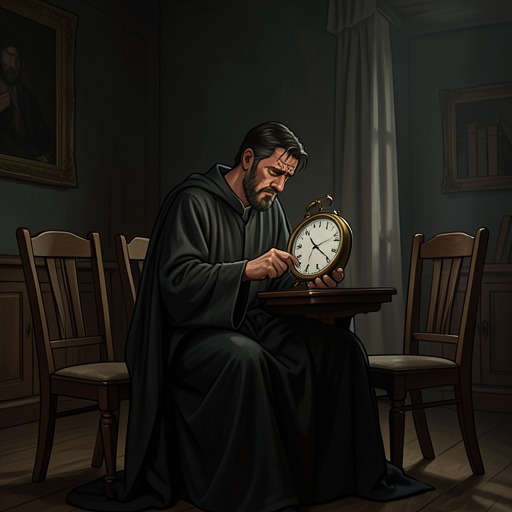
The insomnia is presented through King Henry IV’s own speech, not through a report of medical cause or diagnosis. He addresses sleep as a gentle, nurturing power and wonders how he has frightened it away so completely that it will no longer weigh down his eyelids. The language makes rest seem at once intimate and beyond his command: sleep is imagined as a nurse, yet the king cannot summon it.
The scene sets this private failure against a broad social contrast. Thousands of his poorest subjects are asleep at that very hour, while their sovereign remains awake. The contrast is not simply between poverty and luxury; it shows that the king’s rank cannot purchase a condition available to ordinary people. His sleeplessness makes the distinction between ruler and subjects feel paradoxical: he possesses authority over the kingdom, but not over his own body’s need for rest.
Royal Comfort and Its Failure
King Henry IV considers the comforts surrounding the royal bed: costly canopies and the sound of sweet music. He also imagines sleep lying among the vile, in loathsome beds, while abandoning the kingly couch to serve as a watch-case or an alarm bell. The contrast turns the expected hierarchy upside down. Sleep seems to choose the poor and reject the monarch, as if the signs of royal comfort were not invitations to rest but reminders of the vigilance imposed by office.
The king presses the contradiction further by asking whether sleep would deny its gift even to a king, and concludes that the lowly are fortunate to lie down. His final reflection connects the sleepless body directly to the crown: the head that wears it lies uneasily. The line condenses the scene’s movement from a particular night’s wakefulness to a general condition of rule. Royal authority does not remove vulnerability; here, it makes the king’s inability to rest legible as part of the price of sovereignty.
The Crown Beside the Pillow
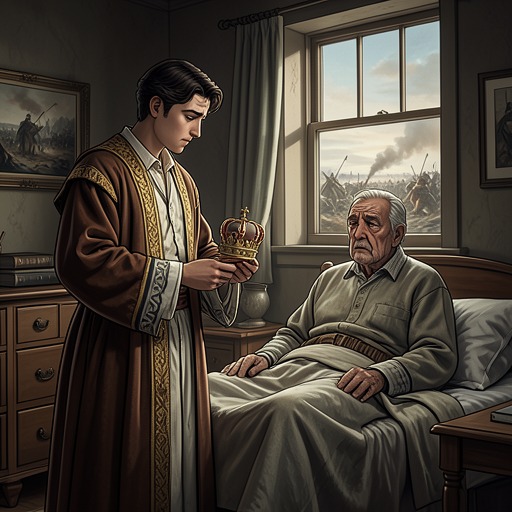
The insomnia’s central image gains a later counterpart when Prince Henry is left alone beside his father. Seeing the crown lying on King Henry IV’s pillow, he wonders why it should be there as such a troublesome bedfellow. The earlier speech had made the king’s bed a place from which sleep was withheld; now the crown itself occupies the pillow, turning the symbol of office into a presence that disrupts repose.
The parallel does not establish that the crown caused the earlier insomnia, but it binds bodily rest to political succession. In the first scene, the king cannot sleep beneath the conditions of kingship. In the later scene, the prince encounters the crown at his father’s bedside and recognizes its troubling weight before taking it up. The pillow thus connects the vulnerable body of the reigning king with the authority that will pass to his heir.
Succession and the Burden of Rule
After King Henry IV’s death, Prince Henry declares that Harry the Fifth is crowned and calls for royal state to be set aside. The change of reign gives public form to the transfer anticipated by the crown at the pillow. The state of insomnia itself is not shown to end in a cure or a restored night’s sleep; instead, its image of the uneasy crown continues to resonate as the office passes from father to son.
King Henry IV’s final words return to the troubled history of his possession of the crown. As his strength of speech fails, he asks God to forgive how he came by it and to grant that it may live in true peace. Read alongside the earlier meditation, this plea extends the burden beyond personal wakefulness: the crown unsettles the ruler’s rest and carries a history for which he seeks forgiveness. Insomnia is therefore more than an isolated discomfort. It gives intimate form to the insecurity of rule, while the pillow, the crown, and the succession show how that burden outlasts the body that first bore it.