Mowbray
Henry IV, Part 2Mowbray, addressed as Lord Marshal, is a measured but wary figure in the opposition to royal authority. He supports taking arms while asking for fuller satisfaction of the grievances, insists that redress concerns all who have suffered, and senses that the promised peace will fail. His arrest for treason turns that suspicion into the scene’s defining reversal: negotiation offers briefly to contain the conflict, then becomes the occasion for seizing its leaders.
Position and Political Context
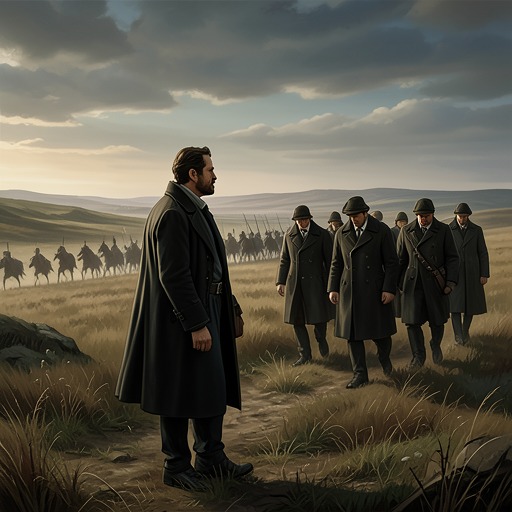
Mowbray appears within a kingdom still marked by the battle at Shrewsbury. Rumour announces King Henry IV’s victory there over Hotspur and his troops, while Morton recalls fleeing the battle and its deadly violence. These reports establish the military defeat that precedes the political crisis in which Mowbray takes part; they do not establish that he himself fought at Shrewsbury.
The play sets these upheavals against a recent past of shifting political friendships. Warwick observes that it is not yet ten years since Richard II and Northumberland feasted together as great friends, and reflects on how personal histories can figure the changing times. That retrospective frame gives Mowbray’s opposition a place in a longer pattern of unstable allegiance, without specifying his own earlier part in it.
Grievances and the Case for Redress
When asked for his view of the opposition’s prospects, Mowbray allows that the occasion for taking arms is justified, but says he would be better satisfied by further assurances. His response is neither simple enthusiasm nor outright rejection: he accepts the cause while treating its terms and prospects as unsettled.
In the later discussion of redress, Mowbray challenges the claim that there is no need for it, or that it does not belong to the speakers. He asks why it should not belong in part to him and to all who bear the bruises of earlier days. His appeal makes the grievance collective: the matter is not presented as a private injury alone, but as a shared claim by those who have suffered.
That argument also reveals a limit in what the negotiations resolve. The play records Mowbray’s demand for recognition and redress, but these exchanges do not set out a complete account of his personal injury or the particular remedy he seeks. His position is clear in principle even where its details remain unstated.
Failed Peace and Arrest
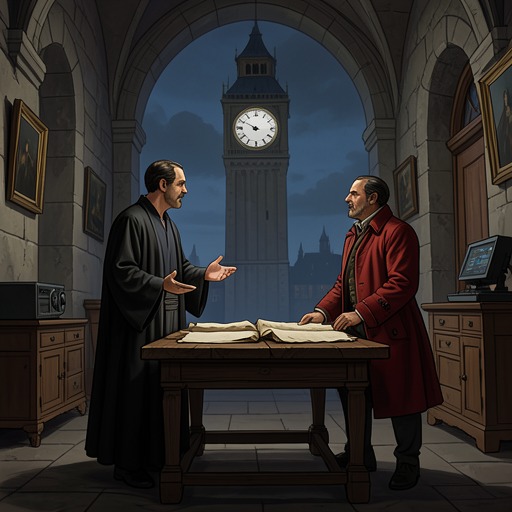
As the negotiations proceed, Lancaster says that he approves the articles and swears by the honor of his blood. Mowbray’s warning, delivered after Westmoreland exits, points in the opposite direction: something within him tells him that no conditions of peace can stand. The juxtaposition makes his distrust a dramatic counterweight to the assurances offered around him.
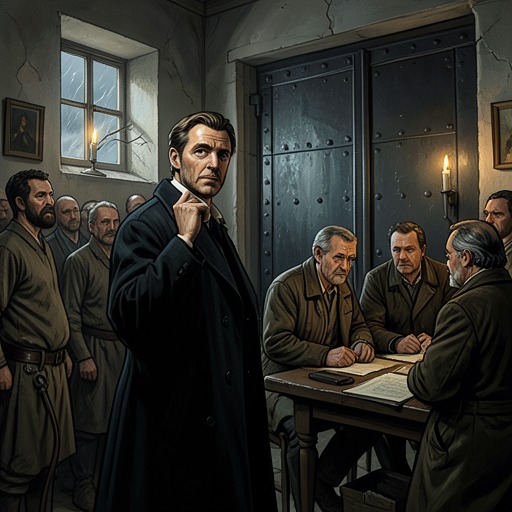
The danger becomes concrete when Mowbray is arrested alongside the Archbishop of York and Hastings. The charge identifies them as guilty of capital treason. The movement from discussion of acceptable articles to arrest is abrupt, and Mowbray’s foreboding gains force from the sequence: the terms appear to promise accommodation, but the opposition’s leaders are instead taken into custody.
Character and Narrative Role
Mowbray’s contribution is defined by a combination of conditional support and political caution. He recognizes grounds for resistance, asks that the shared injuries of the opposition be addressed, and does not mistake a formal assurance for a durable settlement. The play gives him a compact but consequential role in the negotiations: his argument articulates the rebels’ claim to redress, while his warning anticipates the collapse of the apparent peace.
His arrest is the last outcome established for him here. The evidence identifies the charge and the other leaders seized with him, but does not state his subsequent fate; it therefore leaves his personal ending unresolved.