Rebels' articles of grievance
Henry IV, Part 2The Rebels' articles of grievance is the written schedule through which the Archbishop of York sets out the rebels’ general complaints and the conditions on which they say they can return to obedience. The play does not disclose the individual articles, but it shows how the document works: it turns a broad political grievance into a set of demands that can be acknowledged, answered, and, in principle, remedied. Its presentation initiates a negotiation in which the rebels’ armed position and the government’s promise of redress meet on the ground of stated terms.
The schedule and its stated purpose
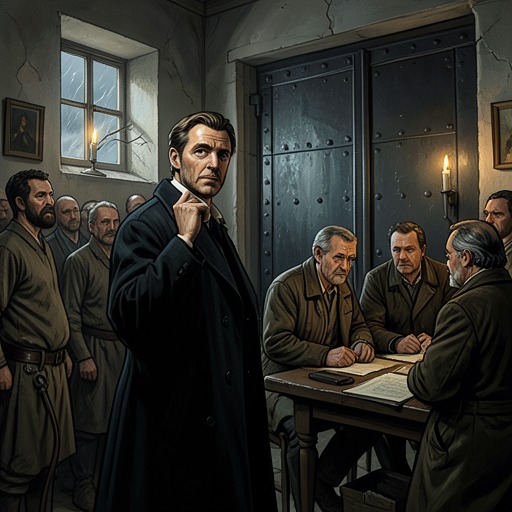
The Archbishop of York hands the schedule to Westmoreland and identifies it as containing the rebels’ general grievances. The document is presented not as a private complaint but as a formal statement for a political cause: its provisions concern the members committed to the action, whether present or elsewhere. The emphasis on a written schedule gives the demands a defined form, even though the audience never hears a list of their specific subjects.
The Archbishop describes a conditional route back from rebellion. If each article is redressed, if the members of the cause are acquitted through a proper and substantial process, and if their stated intentions are carried out, then they will return within their proper bounds. The schedule therefore joins several questions that are not identical: remedying grievances, securing formal treatment for the rebels, fulfilling their purposes, and restoring them to obedience. It records terms for settlement, not merely the fact that the rebels are dissatisfied.
The language also leaves a limit on what can be known. Because the play does not enumerate the grievances, the schedule cannot be treated as proof of any particular abuse or policy. Its significance rests on the demands the scene does make explicit: redress article by article, acquittal in due form, and fulfilment of the rebels’ stated purposes. That distinction matters because the document is politically consequential without giving the audience enough information to judge each complaint on its merits.
Presentation and response
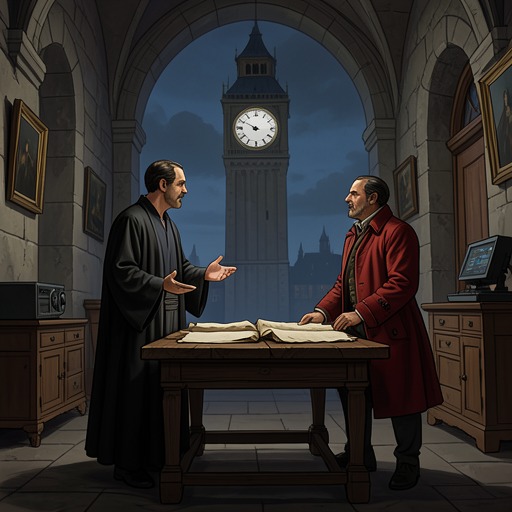
After the Archbishop gives the schedule to Westmoreland, Westmoreland asks John of Lancaster to answer directly how far he approves the articles. The request makes the document an immediate test of the government’s position: the question is not only whether the grievances have been heard, but whether a royal representative will publicly accept the proposed terms. The exchange gives the schedule a role in negotiation rather than leaving it as a declaration delivered by one side alone.
John of Lancaster says that he approves all the articles. He swears that his father’s purposes have been misunderstood and that people around his father have excessively distorted his meaning and authority. He then promises that the grievances will be redressed promptly and asks the rebels to send their forces back to their respective counties. His response thus joins concession to a demand for demobilization: the government accepts the schedule as a basis for action while seeking the rebels’ immediate withdrawal from armed resistance.
The promise is broad, not itemized. John of Lancaster does not address the contents of separate articles in the exchange shown; instead, he accepts them collectively and gives his assurance of speedy remedy. That answer gives the document public recognition, but also leaves the practical test of the promise in the future. The scene shows an agreement being offered, not the completed redress of every grievance or the rebels’ final return to obedience.
Political and legal force
The schedule’s force comes from the conditions attached to settlement. The Archbishop does not describe the rebels as returning simply because a royal figure has heard them: their return follows redress, acquittal in proper form, and fulfilment of their purposes. In this formulation, reconciliation requires acts that can be understood as both political concessions and formal treatment of those involved. The document makes the restoration of order answerable, at least in the terms of the negotiation, to what happens to the complaints and to the people who have joined the cause.
John of Lancaster’s promise meets that demand with an assurance of prompt action, while his request that the forces be discharged presses for an immediate change in the rebels’ conduct. The schedule consequently stands between two forms of power: the rebels’ capacity to continue their action and the government’s authority to promise remedies and call them back to their counties. Neither side’s position disappears in the exchange. The terms give the rebels a stated basis for returning, while the promise seeks to contain the armed challenge through negotiated compliance.
Narrative significance
The scene gives the written document a pivotal but deliberately bounded role. It is specific enough to organize a negotiation—its articles can be approved, redressed, and connected to the status of the rebels—but its undisclosed contents prevent the audience from treating the exchange as a settled account of what caused the uprising. Attention instead falls on how political claims are made legible and how a promise of remedy is used to seek a return to order.
The schedule also makes the difference between agreement and fulfilment visible. John of Lancaster’s approval and assurance answer the rebels’ stated demand for redress at the level of speech; the Archbishop’s conditions point toward further acts that must follow before the rebels return within their bounds. The document is therefore neither a record of a completed settlement nor a neutral inventory of known abuses. It is the instrument around which the scene stages a conditional offer of reconciliation, and its importance lies in the obligations and expectations that the exchange attaches to it.