
Royal Ceremony and Private Burden
Henry VThis thread traces the contrast between the king’s public majesty and the fear, isolation, and responsibility hidden beneath it.
increasing Bearing strength in each event
 decreasing
Bearing strength in each eventdecreasingThe King’s Public Face
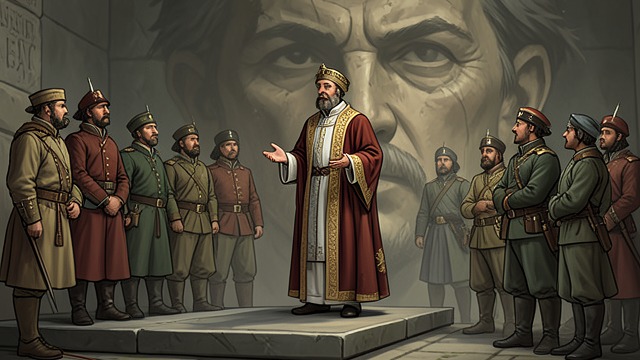
The King’s Public Face
Authority performed
King Henry V speaks as a monarch whose decisions will send soldiers into danger. He asks for legal advice while emphasizing the consequences of being misled.
A public burden
His words show that royal authority is not simply personal power. The king must answer to subjects, law, and conscience even as he commands them.
A Disguise Among Soldiers
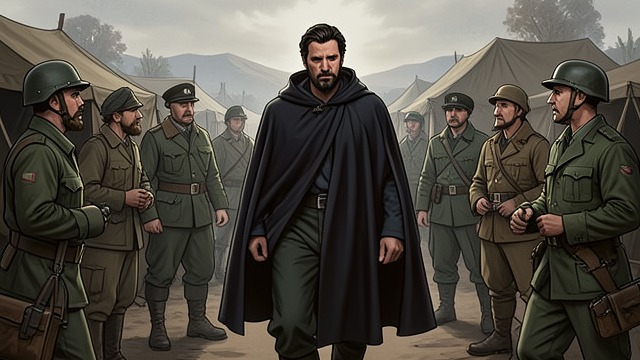
A Disguise Among Soldiers
Rank temporarily hidden
King Henry V borrows Sir Thomas Erpingham’s cloak and moves through the camp in disguise. The change of clothing grants access to ordinary speech.
Authority tested by conversation
Soldiers speak openly about fear and the king’s responsibility. The disguise reveals knowledge that ceremonial distance would otherwise prevent him from hearing.
The King as a Man
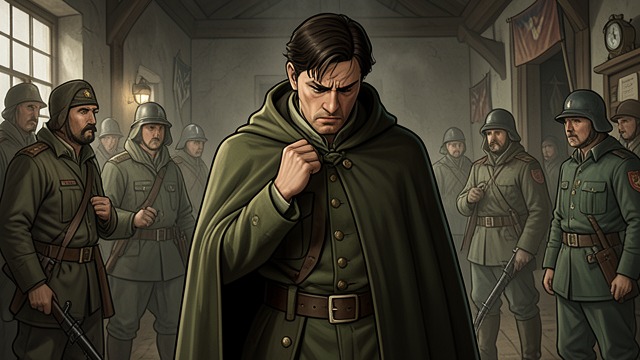
The King as a Man
Shared mortal limits
The disguised king argues that the monarch has human senses and fears. His claim strips away the assumption that royal status grants immunity from ordinary vulnerability.
A burden of concealment
He also recognizes that showing fear could dishearten the army. The king’s humanity must remain private so that his public role can hold.
The Solitary Prayer
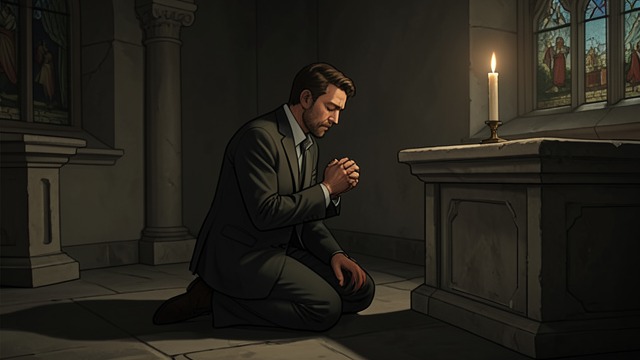
The Solitary Prayer
Ceremony rejected
Alone, King Henry V asks what kings possess beyond ceremony and reflects that ordinary laborers may sleep more peacefully. Majesty cannot provide comfort against fear or bodily need.
An unsettled conscience
He prays about Richard’s death and his father’s seizure of the crown. Public authority cannot guarantee spiritual pardon, leaving the king isolated with responsibility.
The Victory Procession
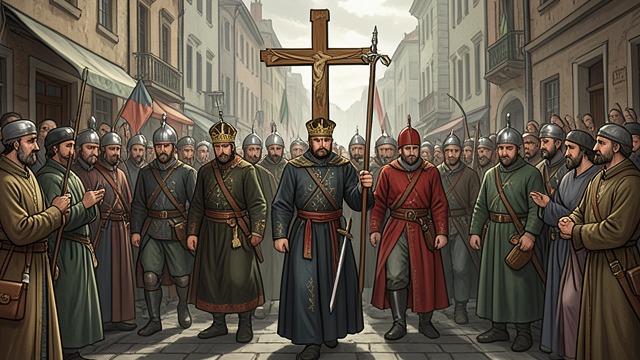
The Victory Procession
Triumph restrained
King Henry V orders a religious procession and refuses to let his troops claim the victory as their own. The ceremony directs attention away from personal glory.
Public and private realities
The king’s command gives the victory an official meaning, but the dead remain its cost. Ceremony can shape remembrance without erasing suffering.
At the English court before the French campaign
The night before Agincourt
During the exchange with Bates and Williams
After the soldiers depart, still before dawn
After Agincourt, before the return toward Calais
