
The Conspirators’ Different Endings
Henry VThis thread distinguishes the motives, confessions, and public judgment of the three conspirators rather than treating their treason as a single act.
increasing Bearing strength in each event
 decreasing
Bearing strength in each eventdecreasingCambridge’s Participation
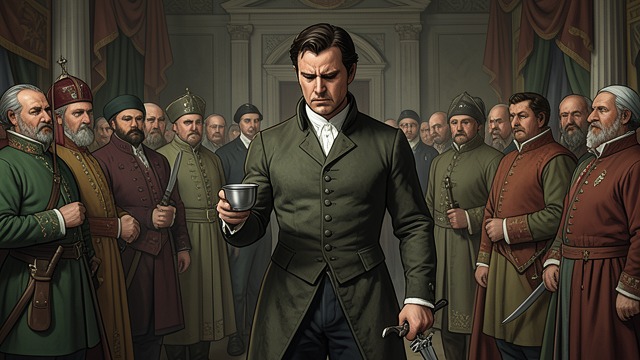
Cambridge’s Participation
A place among the plotters
Richard Earl of Cambridge joins the conspiracy against King Henry V. He occupies a position of honor, making his participation especially damaging to the realm.
Motives disputed
After discovery, Cambridge denies that French gold seduced him, though he admits it helped his purpose. His explanation complicates but does not remove his responsibility.
Grey’s Involvement
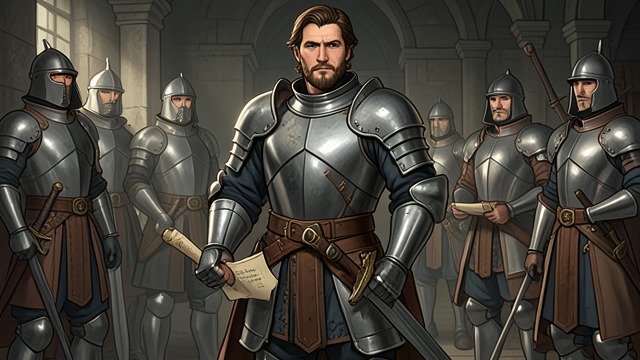
Grey’s Involvement
A knight implicated
Sir Thomas Grey joins the plot with Cambridge and Lord Scroop. His rank gives the conspiracy a broader reach within the English leadership.
Loyalty performed
Like the others, Grey appears among men who praise the king and offer service. His public conduct shows how treason can hide beneath the language of duty.
Scroop’s Special Betrayal
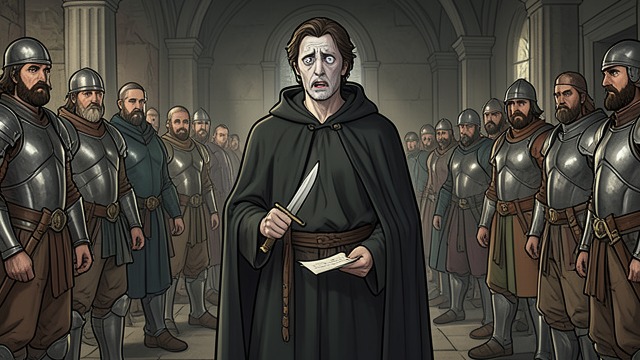
Scroop’s Special Betrayal
Intimacy turned hostile
King Henry V singles out Lord Scroop because he had access to the king’s deepest counsels. His betrayal violates a bond more personal than the other conspirators’.
Trust placed at risk
The king fears that Scroop’s fall will make all apparently virtuous people suspect. One traitor’s deception damages confidence beyond his own case.
Three Confessions

Three Confessions
Different appeals
Cambridge, Scroop, and Grey acknowledge their involvement and ask for mercy or pardon. Their responses reveal different forms of remorse without undoing the danger they created.
Public justice asserted
King Henry V separates forgiveness of their persons from the safety of the kingdom. The state’s claim to punish remains distinct from private reconciliation.
A Sentence Enforced
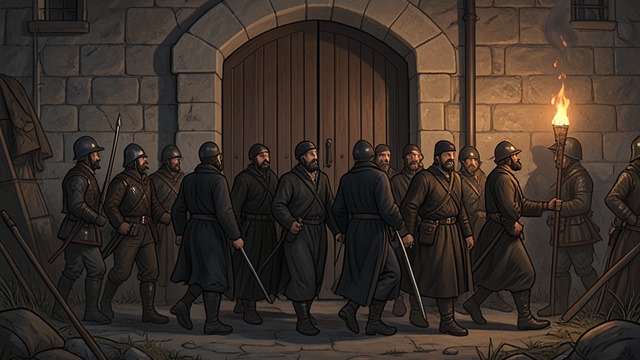
A Sentence Enforced
Law concludes the plot
The conspirators are taken away to die under the kingdom’s laws. Their social standing does not prevent the sentence.
War resumes
King Henry V immediately returns to the French expedition. The decisive domestic threat is contained, but the transition to war makes the punishment part of a larger campaign for authority.
Before the fleet sails from Southampton
Before the Southampton council confrontation
When King Henry V confronts the plotters
Immediately after the evidence is read
Before the embarkation for France
