
The Chorus and Historical Memory
Henry VThis thread follows how the Chorus frames the campaign as both national legend and incomplete theatrical reconstruction.
increasing Bearing strength in each event
 decreasing
Bearing strength in each eventdecreasingThe Muse Requested
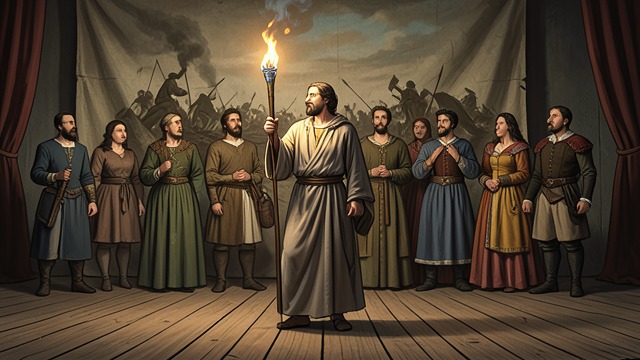
The Muse Requested
Epic scale desired
Chorus asks for a Muse of fire and a stage fit for monarchs and armies. The aspiration establishes the grandeur of the history the play will attempt.
Limitation admitted
The wooden stage cannot reproduce the fields of France. The gap between historical scale and theatrical means becomes part of the play’s subject.
The Audience Enlisted
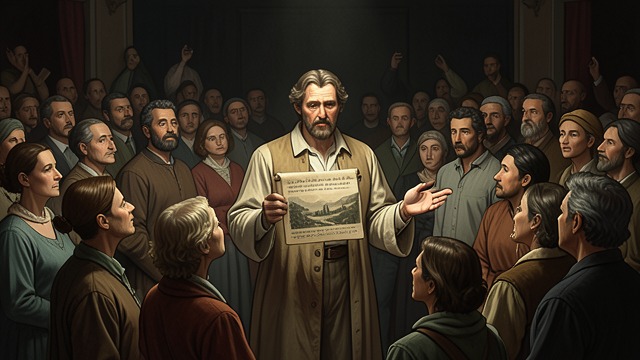
The Audience Enlisted
Imaginary forces summoned
Chorus asks spectators to picture horses, kingdoms, and years compressed into moments. The audience is asked to supply movement and magnitude.
Shared authorship
The production depends on spectators’ mental work. The play’s account of history is built jointly by performers and audience.
The Campaign Compressed
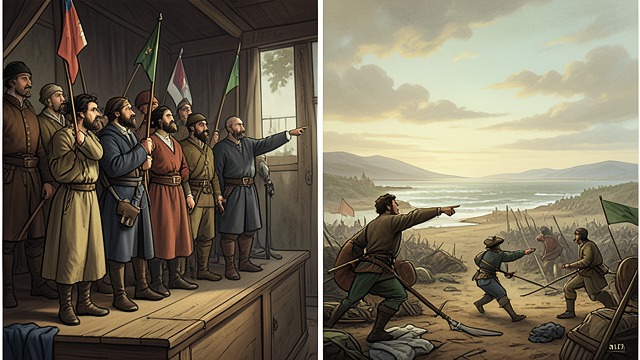
The Campaign Compressed
Time made swift
Chorus moves the audience from England to ships, siege, and battlefield through invitation and narration. The narrative skips the intervals a literal staging would require.
History as construction
The speed makes the campaign feel both immediate and deliberately shaped. The play acknowledges that its version is an arrangement, not a complete chronicle.
The Battle’s Stage Limits
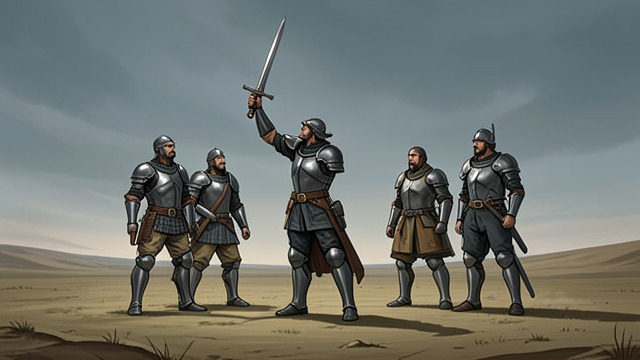
The Battle’s Stage Limits
The battle named in advance
Chorus warns that a few actors cannot convincingly reproduce Agincourt. The admission draws attention to the difference between military event and stage spectacle.
Meaning through fragments
The audience is asked to see the battle through partial representations. The play makes theatrical inadequacy an invitation to interpret rather than a reason to withdraw.
The Epilogue’s Warning
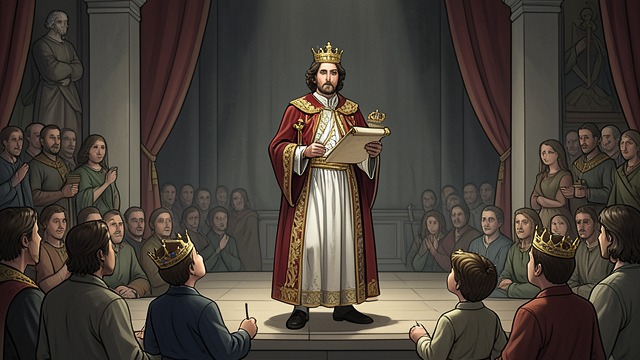
The Epilogue’s Warning
Glory summarized
Chorus celebrates King Henry V’s brief achievement and the succession of his infant son. A compressed history turns military success into a remembered national moment.
Achievement undone
The Epilogue says that Henry VI’s governors will lose France and bring suffering to England. The final perspective resists treating victory as permanent or complete.
At the opening prologue
Immediately after the opening request
At the beginning of the French expedition
Just before the Battle of Agincourt is represented
At the close of the play
