
The English Church and the Crown
Henry VThis thread traces the churchmen’s financial and political interests as they support the French campaign through counsel and promised resources.
increasing Bearing strength in each event
 decreasing
Bearing strength in each eventdecreasingA Bill Threatens Church Lands
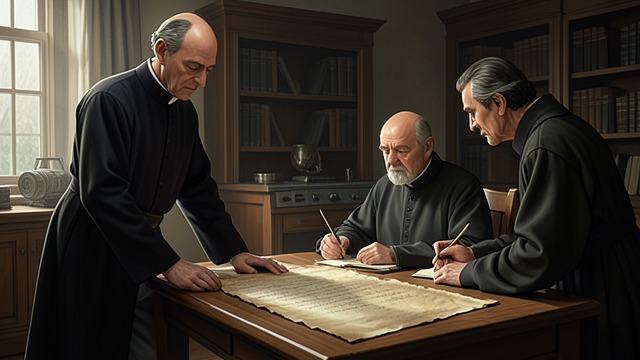
A Bill Threatens Church Lands
Property at stake
Archbishop of Canterbury tells Bishop of Ely that a proposed bill would strip the church of much of its temporal property. Their first concern is institutional survival.
Political calculation begins
The churchmen consider how to prevent the measure from passing. Their conversation frames later support for the king as entangled with material interest.
A Subsidy Offered
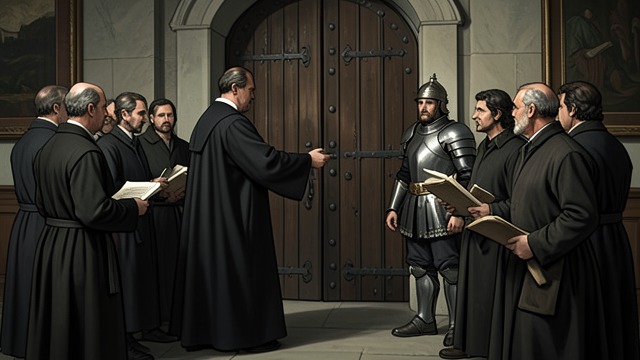
A Subsidy Offered
A generous contribution
Archbishop of Canterbury proposes a large payment to King Henry V from the clergy. The offer may strengthen the king’s inclination to resist the Commons’ bill.
Support with an interest
The church’s financial aid is presented alongside its concern for the French campaign. The political alliance has both patriotic and institutional dimensions.
The French Case Prepared
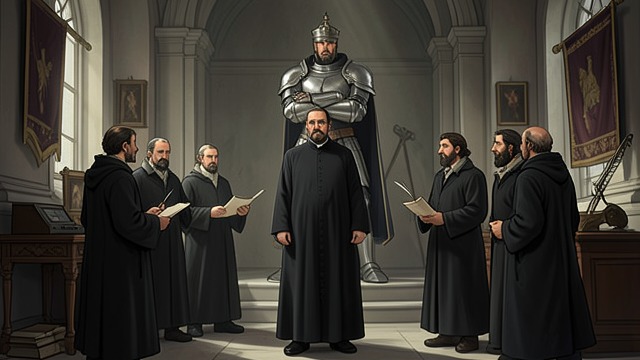
The French Case Prepared
Counsel assembled
Archbishop of Canterbury is asked to explain the legal claim to France. His authority gives the clergy a central role in shaping the king’s decision.
Persuasion under warning
King Henry V warns against distorted interpretation because soldiers may die as a result. The church’s political influence is placed under a demand for moral honesty.
The Argument Mobilizes War

The Argument Mobilizes War
Legal reasoning becomes action
Archbishop of Canterbury argues that Salic Law does not bar the English claim and invokes scripture for female inheritance. His advice helps turn dynastic theory into military policy.
Responsibility remains unsettled
The king accepts the case but has already stated that its consequences belong to a larger moral reckoning. Counsel carries influence without carrying the whole burden of command.
The Church’s Role in Triumph

The Church’s Role in Triumph
Public thanksgiving
The king orders religious rites after victory, giving clergy a role in interpreting the battle. The ceremony directs public praise toward God.
Interests and ideals together
The opening concern over church property remains part of the play’s political background. Religious language can express sincere devotion while serving institutions with material stakes.
At the opening council between Canterbury and Ely
During the same opening conversation
When the king calls for counsel before hearing France’s ambassador
At the council’s conclusion before the ambassadors enter
After the Battle of Agincourt
