
The Battle’s Contest of Honor
Henry VThis thread follows how honor is first offered as a promise of shared fame and then tested against fear, death, and the victor’s restraint.
increasing Bearing strength in each event
 decreasing
Bearing strength in each eventdecreasingHonor Promised
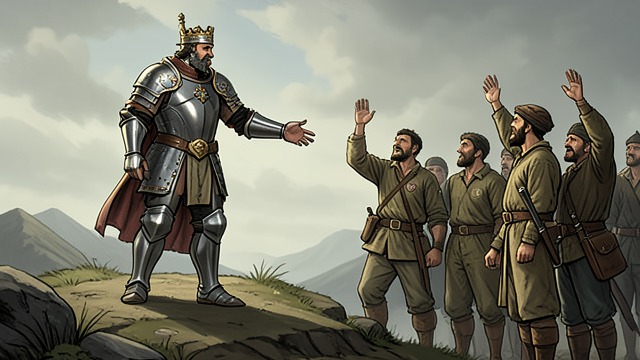
Honor Promised
A national invitation
King Henry V calls the English to act as worthy descendants of earlier warriors. The speech makes honor a shared expectation rather than a privilege reserved for nobles.
The yeoman included
The king invites ordinary soldiers to prove their mettle. Service becomes a means of belonging to the national story.
The Few Become Brothers
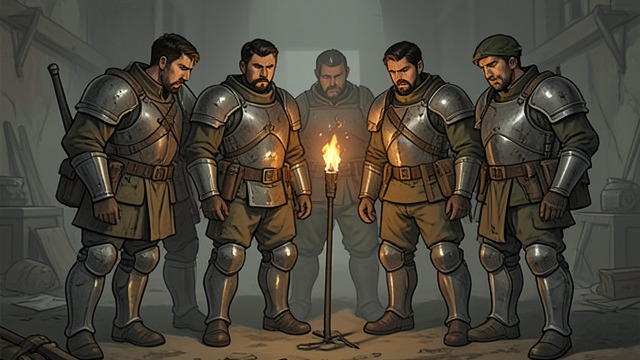
The Few Become Brothers
A small force reframed
King Henry V tells his soldiers not to wish for reinforcements. Their small number can make each survivor’s share of honor greater.
Fellowship created by danger
He promises that everyone who sheds blood with him will be remembered as a brother. The bond is inspiring, but it depends on accepting the risk of death together.
A Promise Kept in Confusion

A Promise Kept in Confusion
A soldier acts on his word
Michael Williams strikes Captain Fluellen, believing the exchanged glove proves he has found his challenger. The conflict arises because Williams treats his promise as binding.
Honor corrected by truth
King Henry V reveals the mistaken identity and rewards the soldier rather than punishing him. The resolution recognizes the integrity behind the error.
The Dead Remembered
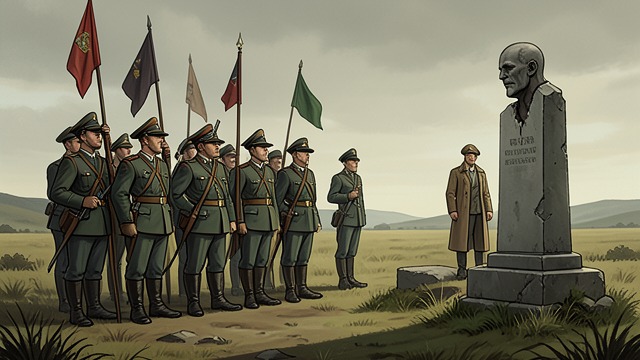
The Dead Remembered
Names set apart
The account names York, Suffolk, and a small number of other English dead. Their individual identities interrupt the abstraction of victory statistics.
Honor joined to mourning
King Henry V responds by crediting God, while the battlefield narrative preserves the soldiers’ deaths. Shared renown does not make loss impersonal.
The Story Carried Home
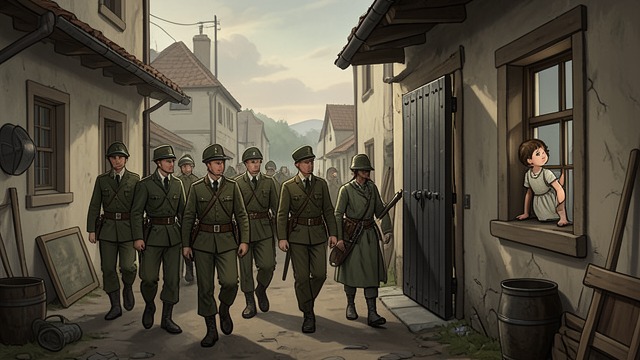
The Story Carried Home
Victory narrated
The king orders the army to proceed without boasting and with religious observance. Survivors carry a story shaped by both royal instruction and personal memory.
A future audience imagined
The Saint Crispin’s Day speech imagines descendants hearing of the battle. The play shows how a community’s identity can be built from remembered danger and shared honor.
At the beginning of the campaign
Before the Battle of Agincourt, on Saint Crispin’s Day
After the battle, near the king’s pavilion
During the report of the English casualties
As the English leave Agincourt for Calais
