
The Making of English Identity
Henry VThis thread follows how the play constructs English identity through geography, shared military service, regional loyalties, and remembered victory.
increasing Bearing strength in each event
 decreasing
Bearing strength in each eventdecreasingA Small Island’s Potential
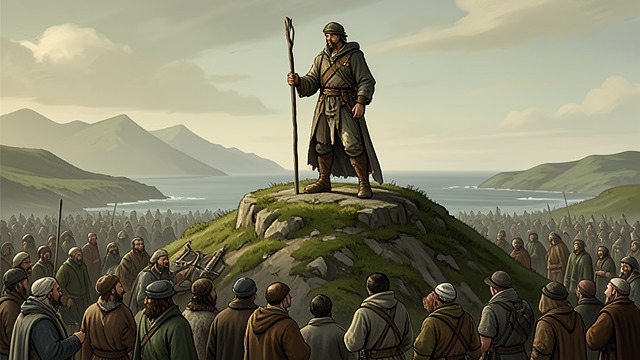
A Small Island’s Potential
A compact nation imagined
Chorus calls England a small body with a mighty heart. The image makes national strength a matter of spirit rather than size.
Unity qualified
The Chorus also laments that not all the nation’s children are loyal. English identity is presented as an aspiration vulnerable to internal division.
A Coalition in the Army
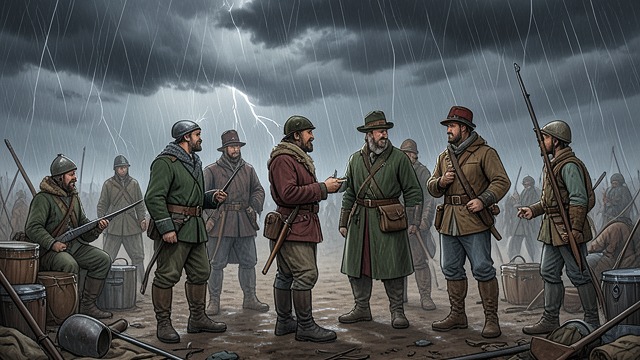
A Coalition in the Army
Regional voices together
English forces include Welsh, Irish, Scottish, and English figures whose different speech marks distinct backgrounds. Their participation makes the army more than a single regional identity.
Cooperation under pressure
Military service brings these differences into a common campaign. Unity is practical and imperfect, formed through danger rather than sameness.
Welsh Heritage Recognized
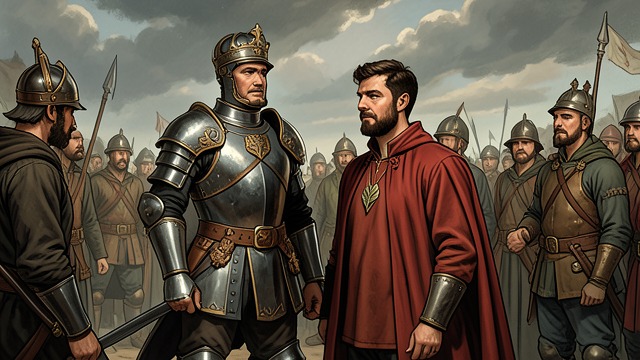
Welsh Heritage Recognized
The king claims his origin
King Henry V acknowledges his Welsh identity and honors the leek worn by Captain Fluellen. Regional pride is affirmed within the authority of the English crown.
A shared emblem
The exchange presents national belonging as capable of containing local traditions. The leek becomes a small sign of recognition between ruler and soldier.
Comrades Made by Battle
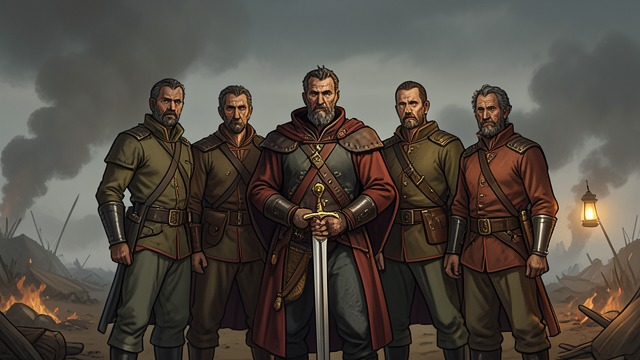
Comrades Made by Battle
Rank briefly narrowed
King Henry V promises that everyone who fights beside him will share the status of brother. The speech offers a bond crossing social rank.
Memory creates a community
The soldiers are imagined as a group whose common experience will shape later generations. National identity is made through the telling of a shared ordeal.
A Victory Remembered and Lost
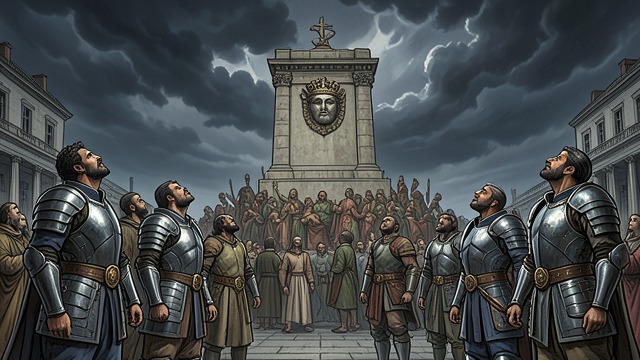
A Victory Remembered and Lost
A national triumph preserved
Chorus remembers King Henry V as a star of England whose campaigns brought extraordinary power. The play transforms the victory into a story for its audience.
The historical reversal
The Epilogue says that Henry VI’s government will lose France and bring suffering to England. National glory is shown as temporary, dependent on rulers and institutions that may fail.
At the opening of the Chorus’s second prologue
During the siege and march in France
After Agincourt, during the leek exchange
Before the Battle of Agincourt
In the Epilogue, after the settlement has been concluded
