
The Play’s Uneasy Peace
Henry VThis thread follows the movement from war’s promises of reconciliation to the explicit reminder that political peace can fail.
increasing Bearing strength in each event
 decreasing
Bearing strength in each eventdecreasingThe Cost Named in Advance
The Cost Named in Advance
Widows and orphans invoked
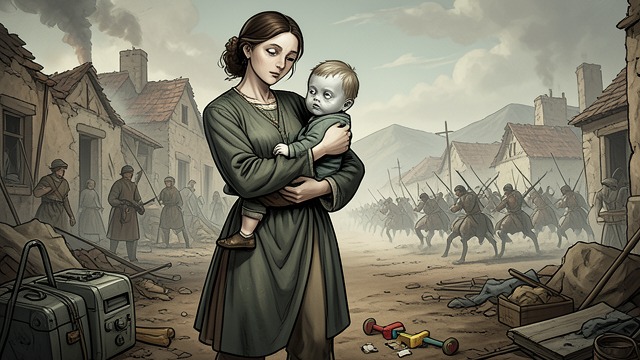
Exeter warns that refusal will bring death, grief, and destruction to French families. The king’s claim is presented alongside the human consequences of enforcing it.
Peace offered under threat
The demand allows the French to surrender the crown and avoid war. The proposed peace is inseparable from coercion and the credible threat of violence.
The War’s Desolation
The War’s Desolation
France under pressure
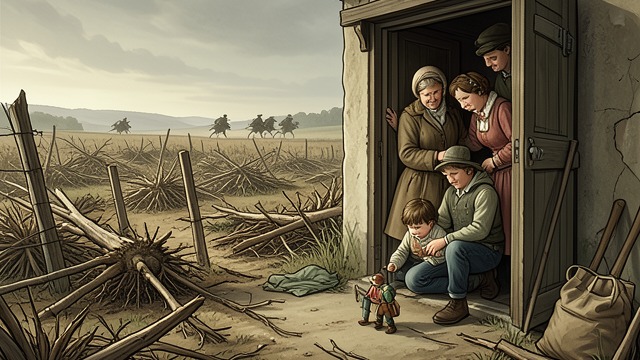
The English advance leaves towns threatened and the countryside exposed to military movement. The Chorus and the French court describe the disorder that war brings to ordinary life.
Peace as restoration
The Duke of Burgundy later describes neglected fields and damaged social life as consequences of prolonged conflict. His appeal makes peace valuable beyond royal prestige.
A Truce Proposed
A Truce Proposed
Burgundy appeals to the kings
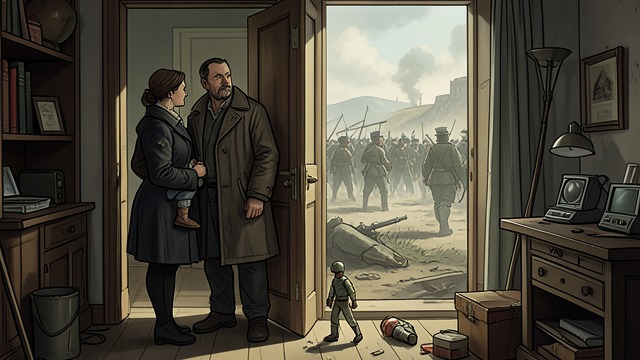
The Duke of Burgundy asks what prevents peace between the rulers. He depicts France’s damaged farms, households, and customs as evidence of war’s cost.
Political terms remain
King Henry V replies that peace requires agreement to his demands. The appeal to suffering meets the hard reality that reconciliation depends on terms.
Marriage as a Guarantee

Marriage as a Guarantee
Kinship proposed
The marriage of King Henry V and Princess Katharine is presented as a bond between the kingdoms. Queen Isabel prays that jealousy will not dissolve their union.
Peace institutionalized
The rulers exchange vows and arrange a settlement intended to prevent renewed war. Personal marriage becomes a public promise of political stability.
The Settlement’s Failure

The Settlement’s Failure
An apparent resolution
The play ends with a marriage and recognition of succession that suggest the crowns have been joined. The ceremony offers an image of peace after conquest.
A later reversal
Chorus states that Henry VI’s government will lose France and bring renewed suffering. The ending makes clear that treaties can outlive a ruler in promise but not necessarily in power.
When the French receive the English demands
After Harfleur falls and the English advance
After Agincourt, during the royal conference
At the final negotiation of the treaty
At the Epilogue, looking beyond Henry’s reign
