
Henry’s Transformation
Henry VThis thread follows King Henry V’s movement from remembered youthful excess to disciplined rule shadowed by responsibility.
increasing Bearing strength in each event
 decreasing
Bearing strength in each eventdecreasingA Reformation Observed
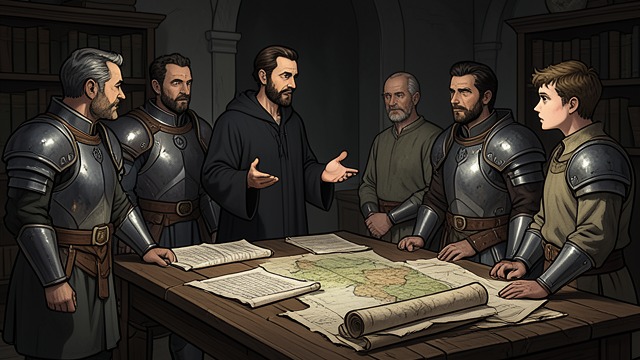
A Reformation Observed
A changed reputation
Archbishop of Canterbury describes King Henry V as transformed after his father’s death. The court interprets the change as a sudden emergence of learning and judgment.
The hidden preparation
Bishop of Ely suggests that apparent wildness concealed developing ability. The king’s past is thus presented as both a liability and a possible source of experience.
The Challenge Answered
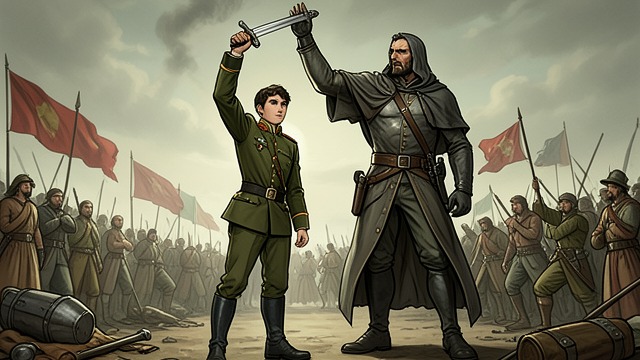
The Challenge Answered
Youth recalled
King Henry V recognizes that the Dauphin has invoked his former, reckless image. He distinguishes the memory of youth from the purpose he now claims to serve.
Majesty asserted
He promises to reveal himself as a king in France. The campaign becomes a public test of whether his new identity can withstand provocation.
Mercy and Exposure
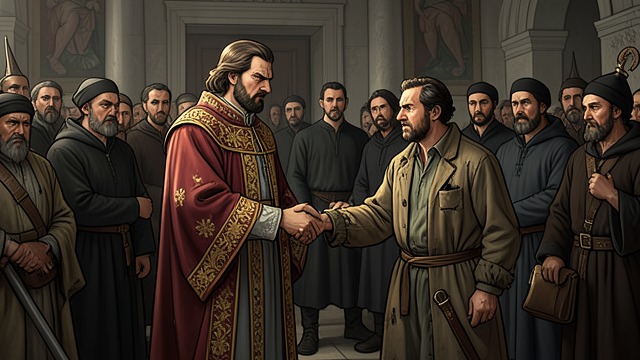
Mercy and Exposure
A staged act of mercy
King Henry V pardons a drunk offender in the presence of the conspirators. Their advice against leniency exposes the contrast between his measured judgment and their concealed treason.
The king’s anger
When the plot is revealed, he grieves especially over Lord Scroop’s betrayal. Rule requires him to turn from personal attachment to public justice.
The King Without Ceremony
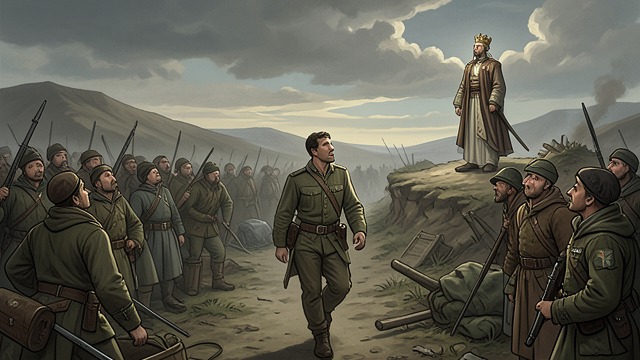
The King Without Ceremony
A common disguise
King Henry V walks among soldiers without revealing his identity. Their doubts let him hear how ordinary people understand the king and the justice of war.
A private reckoning
Alone afterward, he reflects on the burdens that ceremony cannot relieve and prays about the sins inherited from his father’s seizure of the crown. Kingship appears as an exposed spiritual responsibility, not simply authority.
Victory Under Judgment
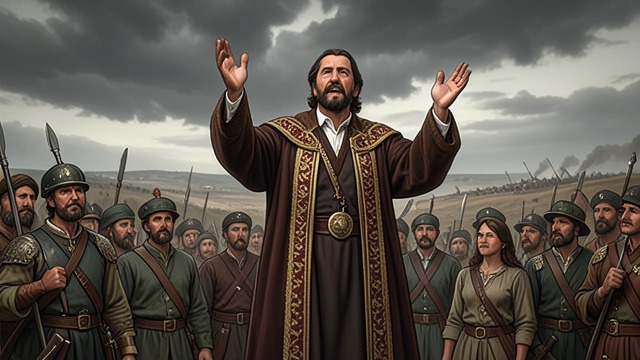
Victory Under Judgment
Praise redirected
King Henry V refuses to claim the victory as his own and orders public thanks to God. His authority is expressed through restraint as well as command.
A ruler still burdened
The victory does not erase his anxiety about death, justice, or the cost imposed on others. His public triumph remains shadowed by questions he cannot settle.
Early in the play, before the campaign begins
After the Dauphin’s tennis-ball gift
At Southampton, after the conspiracy is uncovered
The night before the Battle of Agincourt
After the Battle of Agincourt
