
The Campaign’s Moral Limits
Henry VThis thread traces the play’s shifting claims about justified war, responsibility, discipline, and violence against captives.
increasing Bearing strength in each event
 decreasing
Bearing strength in each eventdecreasingA Conscience Required

A Conscience Required
The archbishop questioned
King Henry V asks whether the French claim is sound and warns Archbishop of Canterbury not to distort the law. He recognizes that religious advice may lead soldiers to die.
Argument and consequence
The legal case proceeds, but the king’s question keeps responsibility in view. Political authorization does not automatically settle the morality of war.
The Siege Threat
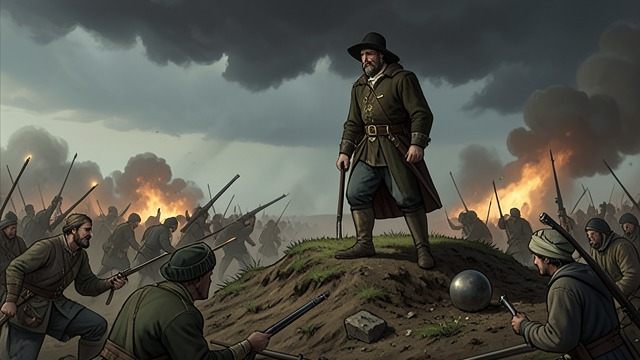
The Siege Threat
Surrender under pressure
King Henry V describes the violence that may follow continued resistance, including danger to civilians. His demand for surrender uses fear of military disorder as leverage.
Mercy and coercion
The governor yields, and the king orders humane treatment after entry. The contrast exposes the uneasy boundary between protective discipline and threats made in war.
The Soldier’s Soul
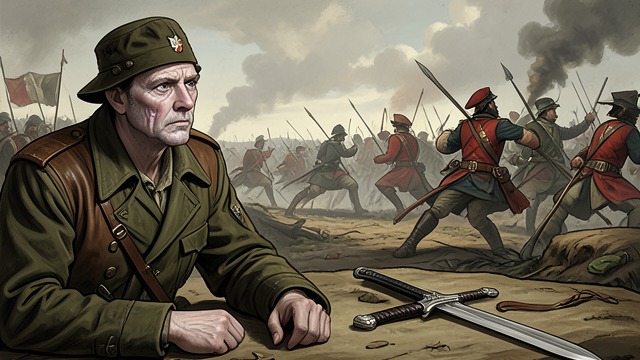
The Soldier’s Soul
Allegiance questioned
Michael Williams argues that a king may answer for the deaths caused by an unjust war. The debate makes the soldier’s conscience more than a tool of obedience.
Responsibility divided
King Henry V argues that subjects retain responsibility for their own souls even while serving the king. Their exchange leaves duty and moral accountability in unresolved tension.
The Captive Order
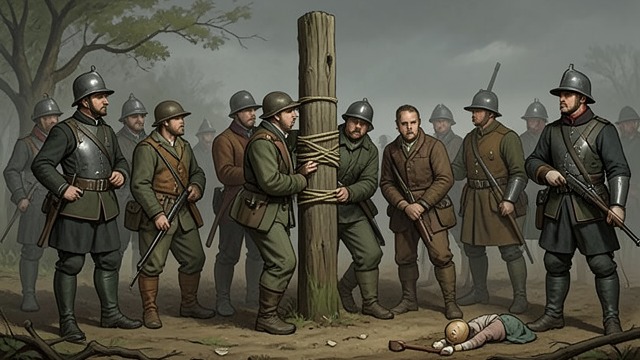
The Captive Order
A drastic command
King Henry V orders the French prisoners killed when renewed danger threatens the English position. The command presents battlefield necessity in direct conflict with the obligations of restraint.
Discipline under strain
The order is carried out amid the battle’s confusion and the killing of English boys. The play leaves the cost of military necessity visible rather than smoothing it into uncomplicated triumph.
Praise and Accountability
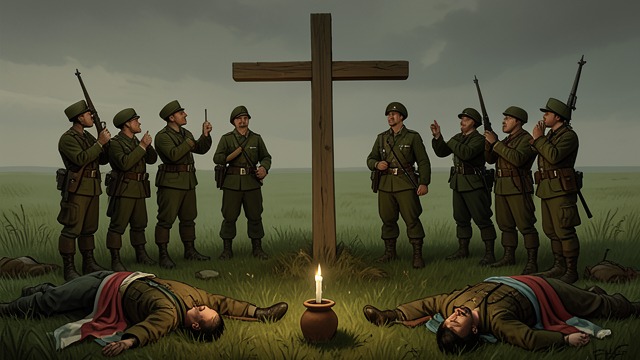
Praise and Accountability
Victory credited to God
King Henry V forbids boasting and directs the army to sing Non nobis and Te Deum. Gratitude becomes a public alternative to claiming the slaughter as personal glory.
The dead remain present
The king also orders the fallen buried with care. Religious celebration does not remove the human cost or settle every question about the campaign’s justice.
Before the English claim is accepted
At the gates of Harfleur
During the king’s disguised conversation before Agincourt
During the Battle of Agincourt, after the French counterattack
After the English victory is confirmed
