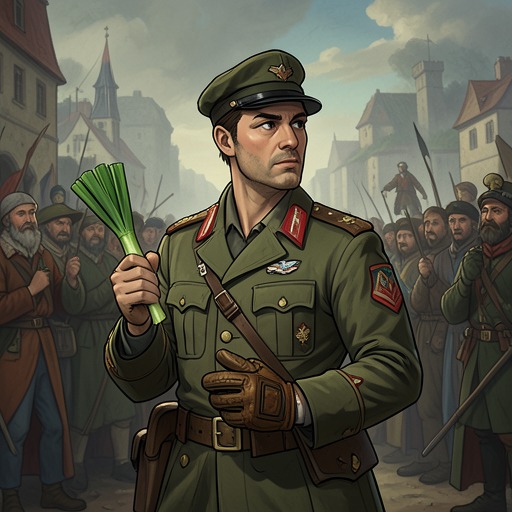
Fluellen's leek
Henry VFluellen's leek turns a small, wearable plant into a badge of Welsh service and, later, the means by which Captain Fluellen retaliates against Ancient Pistol. Its passage from an emblem worn in the cap to food forced upon an opponent links collective honor with a sharply personal quarrel.
A badge of remembered service
Fluellen explains to King Henry V that Welshmen once served well in a garden where leeks grew. They wore them in Monmouth caps, he says, and the leek remained an honorable badge of that service. He also reminds the king that he wears one on Saint David’s Day. In this account, the leek is not merely a comic prop: it carries a public memory of Welsh contribution and a custom Fluellen presents as an enduring mark of honor.
The king’s own wearing of the leek connects the emblem to royal recognition. Fluellen’s explanation places a Welsh tradition within the king’s view, while the later scene brings the same object back into the English camp as part of an unresolved dispute. The plant’s meaning therefore shifts with its setting: it can signify service and shared observance, but it can also become a personal challenge.
Kept for a confrontation
In the English camp, Captain Gower asks Captain Fluellen why he is wearing his leek that day. Fluellen explains that Ancient Pistol had made him eat one, but that he did not want to begin a quarrel at the time. He has kept the leek in his cap until they meet again, intending to tell Pistol what he thinks of the insult. Its place in his cap makes the plan visible: Fluellen carries the grievance and its chosen answer with him.
When Ancient Pistol arrives, he recoils at the leek’s smell and refuses Fluellen’s repeated requests to eat it. Fluellen answers the refusal with blows. After one strike, he repeats the demand; after another, he recalls that Pistol had called him a mountain-squire the day before and threatens further punishment. The leek has become the instrument of a reversal: Pistol, who had previously made Fluellen eat one, is now ordered to do the same himself.
Eating, injury, and retaliation
Captain Gower remarks that Fluellen has astonished Ancient Pistol, but Fluellen continues to insist that Pistol eat at least part of the leek or suffer another beating. Pistol finally eats, while threatening revenge. Fluellen tells him not to throw away the skin, presenting it as useful against his broken head. The exchange makes the emblem’s humiliation physical: Pistol must consume the object he despises while enduring blows and hearing his injury turned into part of the joke.
Meaning in the play
Fluellen’s leek gathers two forms of honor into one prop. Its remembered association with Welsh service gives it communal significance; Fluellen’s decision to wear it until he can confront Pistol gives it the force of a personal pledge. In the camp scene, that pledge is carried out not through formal judgment but through a comic, bodily contest. Pistol’s eventual eating answers his earlier affront, though his threat of revenge leaves the quarrel’s hostility intact.