Henry Lord Scroop of Masham
Henry VHenry Lord Scroop of Masham is one of three men implicated in a treasonous conspiracy linked to French payment. His betrayal is especially charged because King Henry V treats him as a trusted counselor before naming him a traitor and ordering his arrest for high treason.
Identity and Position
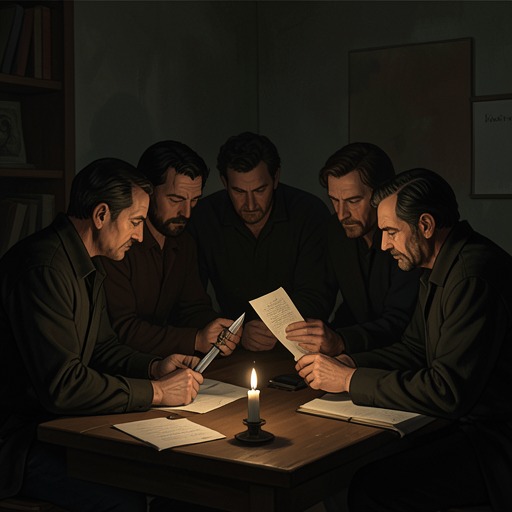
Henry Lord Scroop of Masham is identified alongside Richard Earl of Cambridge and Sir Thomas Grey as one of three corrupted men implicated in the plot. The accusation connects their treachery to France’s payment, described as its gilt; the evidence establishes the group’s association with that reward but does not specify what Scroop personally received or what precise role he played in the conspiracy.
Before the accusation, King Henry V addresses Scroop together with Richard Earl of Cambridge and the knight, inviting the three to give their thoughts about the forces accompanying them as they prepare to sail. The exchange places Scroop within the king’s immediate circle at a moment of military departure. His presence as a participant in the king’s consultation makes the later exposure more than the discovery of an external enemy: the threat has been inside the group entrusted with the expedition.
Betrayal of the King’s Trust
When King Henry V turns to Scroop, he asks what he can say to a man he calls cruel, ungrateful, savage, and inhuman. The denunciation marks a sharp reversal from the earlier courteous address to the “kind Lord of Masham.” Its force comes from the intimacy the accusation invokes: Scroop had borne the key to all the king’s counsels. The charge therefore identifies him not merely as a political opponent but as someone admitted to confidential knowledge and positioned to betray that confidence.
The surrounding accusation also distinguishes Scroop from the reference to a knight who, like Richard Earl of Cambridge, had been bound by the king’s bounty and had sworn against him. That passage concerns Sir Thomas Grey; Scroop’s betrayal is given its own emphasis through the king’s direct address and the particular reminder that he had access to the king’s counsels.
Exposure and Arrest
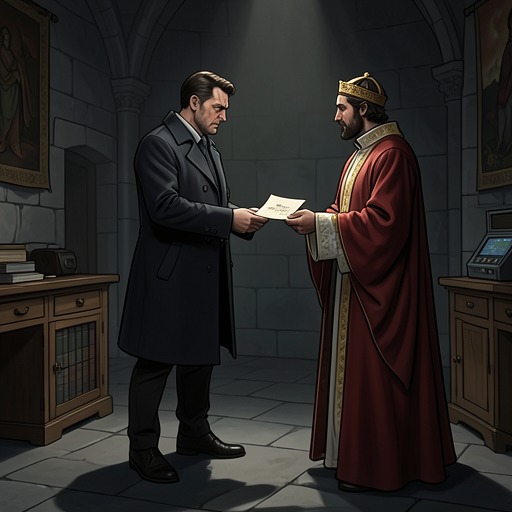
The disclosure culminates in formal action. King Henry V arrests Scroop for high treason, naming him as Henry Lord Scroop of Masham. The act of naming gives the charge legal and public form: the man previously addressed as a counselor is now identified in the language of arrest as a traitor. The supplied account ends with that arrest and does not establish Scroop’s later fate.
Scroop’s brief appearance turns on this contrast between proximity and betrayal. His place among the king’s advisers makes the conspiracy a breach of personal as well as political trust, while the arrest converts the revelation into an immediate consequence. The betrayal is thus presented through the collapse of a relationship: access to the king’s counsel, once a sign of confidence, becomes the measure of the danger Scroop posed.