Moral Responsibility and Justice in War
Henry VMoral Responsibility and Justice in War shapes the play’s treatment of the French campaign, from the scrutiny of England’s claim to the handling of prisoners after battle. King Henry V demands that the grounds for war be examined before his “sleeping sword” is awakened, yet the play repeatedly tests the consequences of that appeal to justice: soldiers die, families are left vulnerable, and battlefield decisions can turn a claim of righteousness into a fresh moral burden.
The Claim and the Cost of War
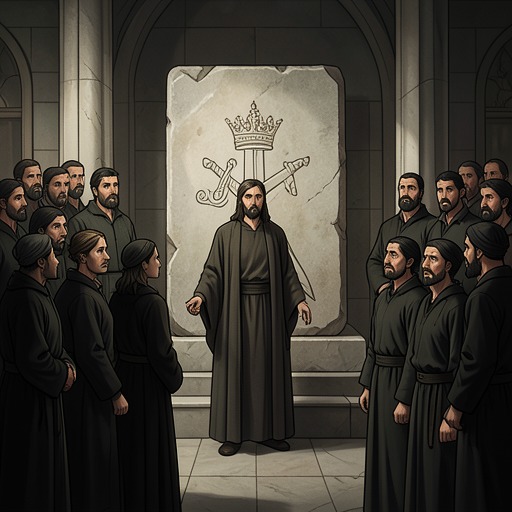
King Henry V asks the Archbishop of Canterbury to explain whether the Salic law should bar the English claim to the French crown. His request is framed not as a formality but as a judgment with human consequences. He warns that blood will be shed in support of the Archbishop’s reasoning, and charges him, in God’s name, to take care before encouraging the conflict. The deaths of “guiltless” people, he insists, will stand as a complaint against the person whose wrong gives the swords their edge. The king thus places responsibility for war’s casualties not only on those who wield weapons, but also on those whose arguments authorize them.
The scene makes the claim’s legal and religious presentation inseparable from its cost. Henry says he will hear the Archbishop, take note, and believe him in his heart; that trust heightens the stakes of the explanation. Canterbury’s account is not merely counsel to a ruler but a rationale that may expose many people to death. The play does not settle the question simply by showing the king ask it. Instead, Henry’s warning leaves the moral validity of the cause connected to the quality and consequences of the reasoning used to defend it.
That concern is tested again at Harfleur, where Henry declares that he will not leave the city half-conquered and describes mercy as shut out while soldiers range with bloody hands. The language presents a severe threat rather than a measured account of what has already happened. It places the pursuit of military success beside the threatened suffering that makes success possible. The king’s earlier demand for care over bloodshed therefore stands in sharp tension with a campaign speech that imagines mercy giving way to violence.
The King, the Soldier, and the Moral Account
In conversation with soldiers, Henry argues that the king has the same human senses as other people. Ceremony may distinguish the ruler’s public position, but laid aside, he remains a man. This claim complicates the idea that royal authority can absorb all responsibility for the choices made in war: the king is not a being exempt from ordinary human or moral limits. Henry’s reflection on ceremony reinforces the contrast. Subjects may place their lives, souls, debts, wives, children, and sins upon the king, but royal ceremony does not remove the private burden borne by the person who governs.
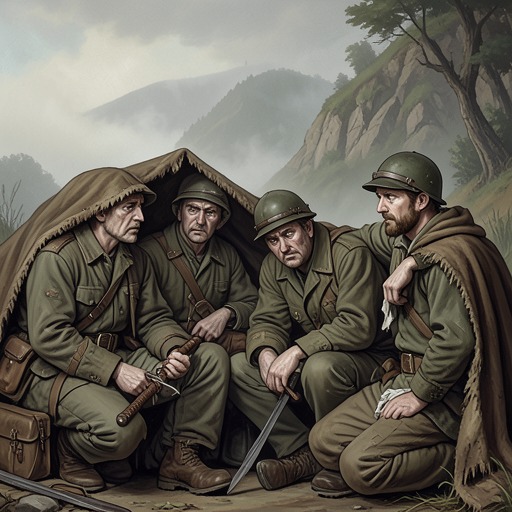
The soldiers do not accept that the justice of the cause is self-evident. Michael Williams says that the king’s cause is more than the soldiers can know. He warns that if the cause is not good, the king himself will face a heavy reckoning for the limbs and heads cut off in battle. His concern extends beyond the dead: some wounded men will need a surgeon, while wives may be left poor, debts unpaid, and children abruptly without care. Death in battle can also prevent a person from putting affairs in order charitably. Williams’s account gives the cost of war a domestic and spiritual scale that royal claims of honor cannot erase.
Henry’s reply distinguishes obedience from personal salvation. He argues that a subject’s duty belongs to the king, but each subject’s soul remains his own, and urges soldiers to prepare spiritually as a sick person would. The distinction does not make the king’s choices harmless; it makes responsibility plural. A soldier may be bound to obey, yet the king remains answerable for the cause and the command, while the soldier cannot simply treat obedience as a guarantee of innocence. The play leaves the tension between subjection and individual conscience active rather than resolving it with a single rule.
Victory, Violence, and Providence
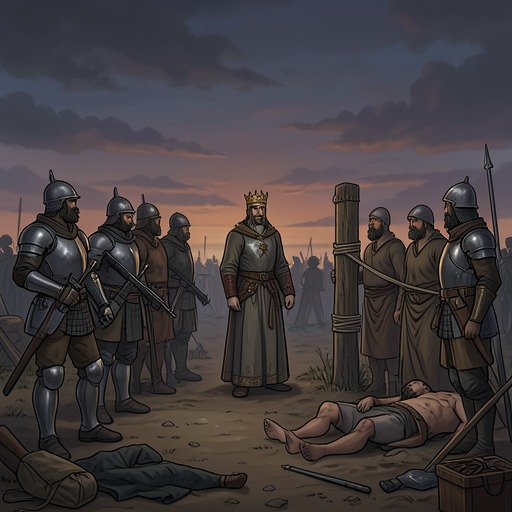
The pressure of that moral argument becomes concrete when the French reinforce their scattered troops. Henry orders his soldiers to kill their prisoners. A later report says that the French have burned and carried away what was in the king’s tent and presents the order as the king’s response to that act. The report supplies a motive and a military circumstance, but it does not make the prisoners’ execution disappear as an ethical problem. The sequence puts retaliatory violence beside the earlier language of justice and asks the audience to notice the difference between explaining an order and vindicating it.
After the battle, Henry attributes the outcome to God rather than to English strategy or personal merit. He says that only five and twenty men of name have been lost and gives God’s arm the credit. This act of thanksgiving frames victory as providential, but it also returns the narrative to the question raised before the campaign: what does invoking God mean when human beings have chosen the war’s aims and means? The king’s prayer for God to steel his soldiers’ hearts and remove their fear likewise shows religious language operating amid the immediate demands of combat, not outside them.
The play’s treatment of justice therefore holds several claims in view at once: the asserted right to the French crown, the king’s and soldiers’ duties, the souls and dependants exposed to war, and the violence used to secure victory. Neither obedience, royal ceremony, nor success alone closes the moral account. By placing the king’s public authority beside his human limits—and the language of providence beside threats and executions—the play makes responsibility a question that follows the campaign through to its consequences.