Picardy
Henry VPicardy is a campaign setting in Henry V that locates an English camp and frames the approach to the battle near Agincourt. The region links the play’s military geography: invasion is imagined on a national scale, while the action narrows to encampments, siege works, sickness, and the imminent encounter between the armies.
Setting and Campaign Geography
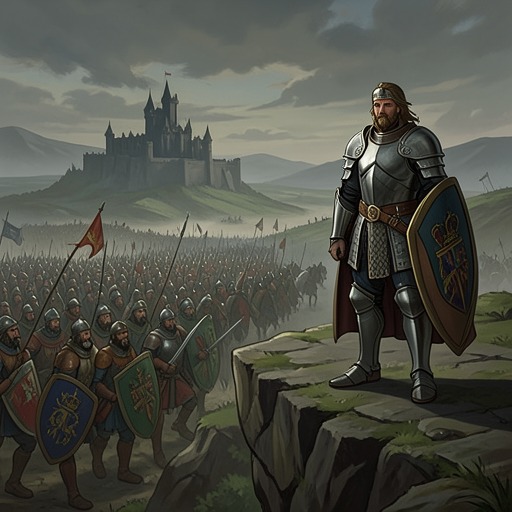
Picardy is named directly in the scene heading for an English camp where Gower and Fluellen meet. Later, another scene is set in the French camp near Agincourt, placing the opposing force in the same broad campaign landscape. The play thus uses Picardy not as a detailed portrait of a region but as a marker of where the English army is operating and where the movement toward battle gathers force.
The military project has earlier been framed in expansive terms: the proposal is to divide England into four and take one quarter into France, an undertaking said to make all Gaul shake. Against that sweeping rhetoric, the Picardy camp provides a more immediate setting, where military conduct and the condition of the force become concrete concerns.
English Camp and Siege Operations
The campaign’s material character is established through the image of a siege: ordnance on its carriages is aimed at Harfleur, with its mouths described as gaping against the defended town. This image makes the invasion an operation of artillery and besieged walls, not merely a royal claim or an act of national resolve.
At the mines, Fluellen objects to the way the work is being conducted, saying that it does not accord with the disciplines of war. His intervention brings questions of military procedure into the campaign’s physical setting. The scene’s concern is not simply that a siege is underway, but that its methods should conform to an understood standard of military practice.
The Army’s Condition and the Approach to Agincourt
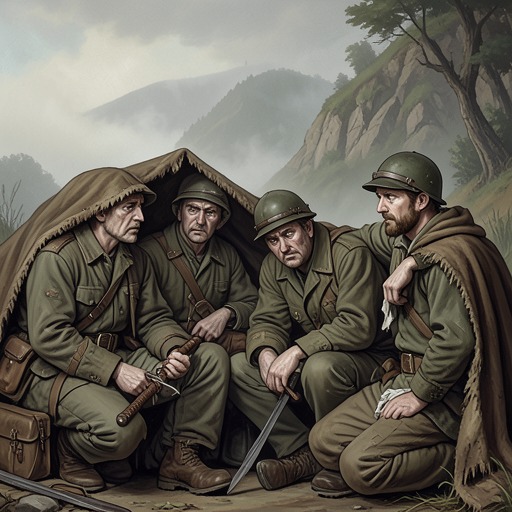
The English force is later described by King Henry V as weakened by sickness, reduced in number, and nearly as diminished in quality as the French might suppose. That admission sharply qualifies the earlier image of an invasion powerful enough to shake France. Picardy therefore belongs to a campaign whose ambition and vulnerability coexist: the army has advanced into France, but its numbers and health make the coming confrontation precarious.
In the French camp near Agincourt, Montjoy delivers the French king’s message to Harry of England. The message presents the French as having seemed dead but only slept, and asserts that advantage is a better soldier than rashness. The exchange makes the approaching battle a contest not only of force but of timing and strategic advantage. The English army’s reported sickness and reduced numbers give that warning particular weight.
Dramatic Function
Picardy’s importance is chiefly structural and military. The location anchors the transition from the siege of Harfleur and the broader French campaign to the camps facing one another near Agincourt. The Chorus’s account of a brief touch of Harry in the night then turns the scene toward the battle, making the camp setting a threshold between the king’s contact with his men and the coming combat. In this way, Picardy helps hold together the play’s contrasting scales: the expansive language of conquest, the disciplined work of siege, and the exposed human army on the eve of battle.