The king is but a man
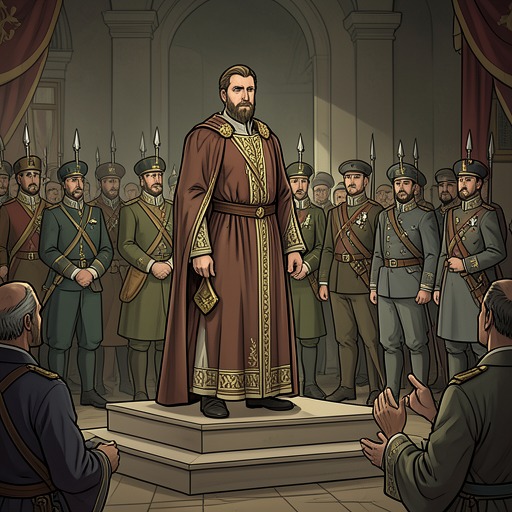
Henry VThe king is but a man is the principle King Henry V voices when he sets the king’s public majesty against his private, vulnerable humanity. In conversation with soldiers, he argues that ceremony may distinguish a ruler from his subjects, but it cannot give him different senses or free him from fear. The line makes kingship both an office of extraordinary authority and a human life carrying extraordinary burdens.
The Claim of Shared Humanity
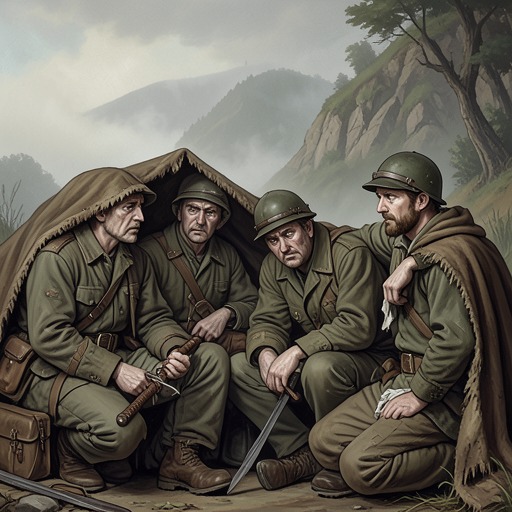
John Bates asks whether the king has been told the soldiers’ thoughts. King Henry V answers that he has not, and that it would not be fitting for him to know them. He then turns to the human likeness between ruler and subject: the violet smells to the king as it does to him, and both encounter the same elements through senses governed by human limits. The comparison is deliberately ordinary. Royal distinction does not alter what the body can perceive.
The claim does not mean that a king and a common soldier occupy the same position. King Henry V allows that royal affections may be more elevated, but insists that when they descend into fear, they do so in a recognizably human way. The phrase therefore draws a boundary around royal difference: authority and ceremony set the king apart, while sensation and fear keep him within the shared conditions of human life.
Ceremony and Its Cost
King Henry V identifies ceremony as the visible privilege separating kings from private men, but the surrounding exchange makes that privilege look costly as well as impressive. The soldiers declare, “Upon the king! let us our lives, our souls, / Our debts, our careful wives, / Our children and our sins lay on the king!” Their pledge gathers not only their own lives but the obligations and attachments they leave behind into a burden placed upon the ruler.
After the soldiers depart, King Henry V reflects on the private ease that kings must neglect and asks what kings possess beyond “general ceremony.” The contrast sharpens the expression’s meaning: the king’s human nature does not dissolve his responsibility for those who serve him. Ceremony may be an outward distinction, but the people’s willingness to entrust their lives and families to the king gives his office real consequences. His complaint about its cost sits beside, rather than cancels, that responsibility.
Fear, Prayer, and Kingship
The expression is spoken in the context of imminent battle, when the soldiers’ fear is not abstract. King Henry V reasons that when the king sees cause for fear, his fear has the same character as theirs. Yet he does not simply share his anxiety with them: he says that no man should possess or control the king’s fear. The thought holds vulnerability and command together, presenting the ruler as subject to fear but still accountable for how it is borne.
Soon afterward, King Henry V prays, “O God of battles! steel my soldiers' hearts; / Possess them not with fear.” The prayer turns the earlier recognition outward: fear is a human condition shared by king and soldiers, while the king’s immediate concern is that it not overcome his army. His appeal gives the phrase a practical and spiritual setting, linking personal vulnerability to the leadership demanded by battle.
The Human King and the Credit for Victory
After the battle, King Henry V again limits the claims he can make for himself. Reporting that, apart from the named dead, there were only five-and-twenty other men, he declares, “O God, thy arm was here; / And not to us, but to thy arm alone, / Ascribe we all!” The passage does not repeat the earlier expression, but echoes its resistance to treating the king as self-sufficient. The ruler who has acknowledged ordinary human fear also refuses to claim the victory as his own achievement alone.
Across these moments, the expression holds together a tension at the heart of kingship: the king’s person is human, while the office concentrates the hopes, risks, and obligations of others. Ceremony marks that office, but it cannot make its bearer invulnerable; nor does his vulnerability release him from responsibility. The phrase gains its force from keeping both truths in view.