
The Recipient with a Failing Graft
Hepatitis C in Renal Disease, Hemodialysis and TransplantationThis flow follows how HCV-related glomerular injury and chronic allograft damage threaten a transplanted kidney.
increasing Bearing strength in each event
 decreasing
Bearing strength in each eventdecreasingEarly Proteinuria

Early Proteinuria
The first sign
Proteinuria and microscopic hematuria may be the earliest visible evidence of de novo HCV-associated renal disease. The patient can have few systemic symptoms while the graft is already under attack.
Differential danger
Transplant glomerulopathy, chronic allograft nephropathy, rejection, and HCV-related MPGN may overlap. Kidney biopsy is required to separate immune-complex injury from alloimmune damage.
Glomerular Lesion
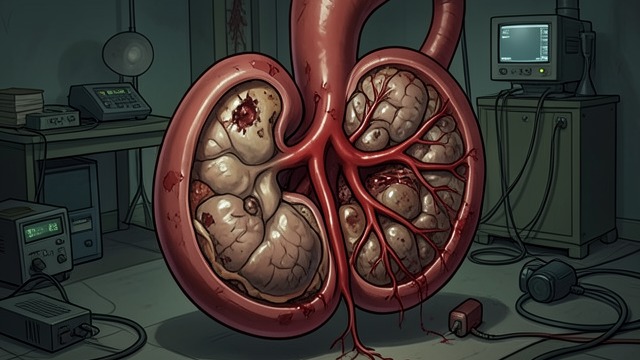
Glomerular Lesion
Two injuries meet
HCV-related MPGN may show mesangial proliferation, double contours, and IgM or complement deposits. Transplant glomerulopathy may coexist, making the graft a site of both viral and alloimmune injury.
Accelerated loss
The combined lesion can produce hypertension, nephrotic syndrome, and declining filtration. A complication once considered uncommon becomes a central explanation for graft failure.
Limited Rescue

Limited Rescue
Supportive first steps
Antiproteinuric treatment and careful immunosuppression adjustment may slow damage. Interferon is generally avoided because it can provoke Acute rejection.
Targeted options
Rituximab therapy may suppress cryoglobulin-related disease, but infection and viral replication remain concerns. The graft’s fate depends on balancing immune control against overimmunosuppression.
after Kidney transplantation
when graft dysfunction progresses
during established allograft injury
