
Kidney Disease Enters the Center
Hepatitis C in Renal Disease, Hemodialysis and TransplantationThis flow traces the recognition that Hepatitis C is both a consequence and a driver of chronic kidney disease.
increasing Bearing strength in each event
 decreasing
Bearing strength in each eventdecreasingEpidemiologic Signal

Epidemiologic Signal
Beyond coincidence
Studies linked HCV positivity with albuminuria, proteinuria, and faster development of Chronic kidney disease. The association persisted after attention to age, hypertension, diabetes, and liver disease.
A change in clinical posture
The virus became a renal risk factor rather than merely a background comorbidity. Annual assessment of urine findings and filtration therefore became part of HCV care.
Cryoglobulinemic Injury
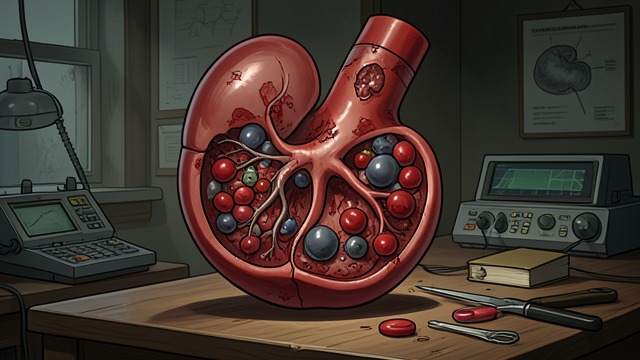
Cryoglobulinemic Injury
Immune complexes in the glomerulus
Mixed cryoglobulinemia links viral antigen, antibody, rheumatoid factor, and complement activation. The characteristic lesion is Cryoglobulinemic membranoproliferative glomerulonephritis, often presenting with proteinuria and hematuria.
Systemic stakes
Purpura, arthralgia, neuropathy, hypertension, and renal failure make the disease more than a biopsy finding. Kidney injury becomes evidence of an active systemic process requiring both supportive and antiviral treatment.
Therapeutic Integration

Therapeutic Integration
Two targets
Treatment combines renin-angiotensin blockade and blood-pressure control with Hepatitis C antiviral therapy. Severe nephrotic or rapidly progressive disease may require Plasmapheresis, steroids, cytotoxic therapy, or Rituximab therapy.
A guarded resolution
Viral clearance can reduce proteinuria and immune activity, but anemia, relapse, infection, and impaired renal clearance complicate the path. The kidney cannot be treated separately from the virus that sustains its injury.
1990s to 2011
during recognition of extrahepatic disease
late 2000s to 2012
