
From Hidden Infection to Systemic Disease
Hepatitis C in Renal Disease, Hemodialysis and TransplantationThis flow traces how Hepatitis C moves from an obscure liver infection to a recognized systemic disease involving kidneys, blood vessels, and transplantation.
increasing Bearing strength in each event
 decreasing
Bearing strength in each eventdecreasingThe Unnamed Epidemic

The Unnamed Epidemic
A diagnostic absence
Before the Discovery of hepatitis C virus, many patients carried what clinicians called non-A non-B hepatitis. The disease was visible through liver injury but remained invisible as a defined infection.
Consequences
This uncertainty allowed transfusion-related and healthcare-related transmission to continue. The later identification of the virus transformed scattered observations into a coherent medical problem.
Viral Identification
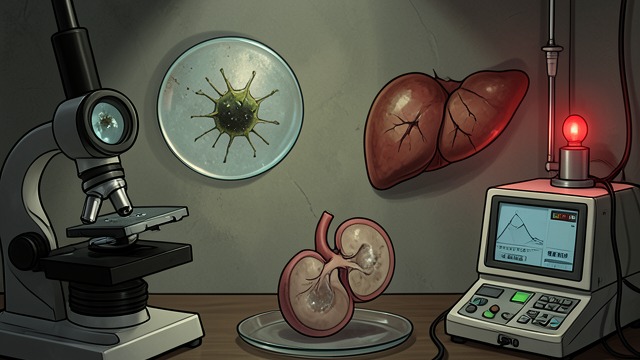
Viral Identification
A new causal agent
The Discovery of hepatitis C virus supplied the missing explanation for chronic hepatitis cases that had resisted earlier classification. Serology and molecular testing gradually made infection measurable.
A widening field
Once the virus could be detected, investigators recognized that its consequences extended beyond the liver. Kidney disease, cryoglobulinemia, and transmission within Hemodialysis became central parts of the story.
A Nephrology Agenda

A Nephrology Agenda
Integration
The volume brings epidemiology, diagnosis, dialysis safety, kidney transplantation, immunosuppression, and antiviral therapy into one narrative. The disease is no longer treated as a specialty problem belonging only to hepatology.
Resolution through coordination
Its resolution is institutional rather than personal: screening, biopsy, infection control, treatment before transplantation, and long-term surveillance become linked decisions. The central movement is from fragmentation toward shared clinical responsibility.
before 1989
1989
2012 publication era
