Flora–Charles relationship
Her First Werewolf (BBW, Werewolf, Prince Charming, Fairy Tale Romance)The Flora–Charles relationship is the central romantic transformation in Flora’s story: it carries her from farm labor and maternal pressure toward a promised life at Charles’s castle in Endenbrook. The relationship is significant because it appears to answer Flora’s wish for freedom and intellectual independence while also reproducing the marriage-centered solution that her mother has urged upon her. Its distinctive romance depends on a reversal of the familiar wolf-in-the-forest encounter: Charles is initially an alluring stranger, then a sexual partner, then a werewolf and a member of a wealthy royal family, and finally the man who proposes marriage.
Origins and Social Pressure
The relationship develops against Flora’s dissatisfaction with the life available to her at home. After her father’s death, she works on the family farm, milking cows, cleaning stalls, and helping Hans, while imagining a future different from that of a farmer’s daughter. Morgan, who had once been the town beauty but has been physically changed by hard work and time, repeatedly insists that Flora should become settled and marry well. She presents marriage as protection from the dangers of being a single young woman, whereas Flora describes unmarried life as freedom.
Flora’s resistance is intellectual as well as domestic. Her father came from a wealthy family, married Morgan for love despite objections about their unequal social positions, and taught Flora to read, think independently, and interpret other people through body language. Flora fears that marriage might prevent her from reading or thinking for herself. This history makes Charles’s arrival more than a chance flirtation: he enters a conflict between the freedom Flora associates with her father’s teaching and the socially approved future Morgan is trying to arrange.
The immediate circumstances of their meeting are also shaped by marriage strategy. Morgan sends Flora to her wealthy paternal grandmother beyond the forest to seek money for a dress suitable for the town party, where a distinguished visitor and men connected with the Royal Army are expected. Flora agrees largely because she knows this answer will please her mother, although she feels uneasy about asking an old woman for money for something frivolous. Morgan’s warning to stay on the path invokes the danger associated with the forest, but Flora’s encounter with Charles occurs within the very journey meant to prepare her for conventional courtship.
Meeting and Rapid Intimacy
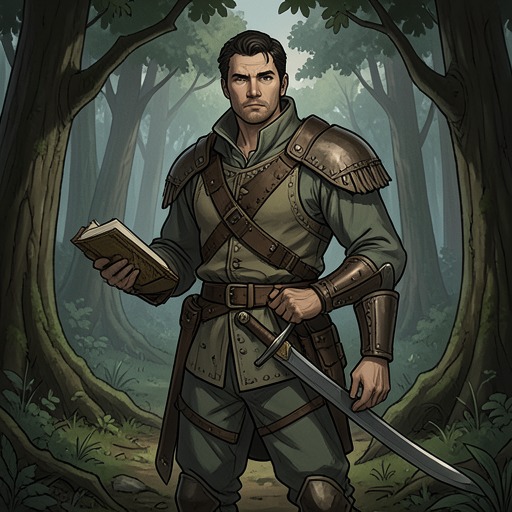
Charles first appears as a deep-voiced stranger who has overheard Flora declaring that she is not afraid of the forest. He is tall and handsome, with dark hair, green eyes, fine clean clothes, and broad shoulders; his appearance suggests that he is neither a farmer nor a herdsman. The contrast between his polished appearance and Flora’s working life immediately marks him as socially and erotically different from the men she knows. His playful address turns her defensive statement into an opening for conversation.
Flora gives him her real name, explaining that everyone calls her Red even though she is actually Flora. Charles repeats the name Flora approvingly, and the naming changes the terms of their encounter. With him, she finds herself speaking easily. She studies his body language using the lessons her father taught her and decides that Charles seems genuine and free of a hidden agenda. His presence allows her to relax as though they were old friends reunited after a long separation. This sense of instant familiarity becomes one of the relationship’s emotional foundations, even though the pair have only just met.
Their intimacy accelerates through small acts of sharing and observation. Flora offers Charles sweet bread from her brown wicker basket and passes him the milk jug; she is embarrassed when milk spills onto her chest, while she watches his swift, delicate mannerisms with fascination. The pastoral meal in the flowers creates an atmosphere of ease, but it also places the relationship within the story’s recurring tension between innocence and adult desire. The forest is not merely a dangerous setting: it becomes the private space in which Flora can experiment with an identity not governed by her mother, the farm, or the town.
The first kiss begins as a playful exchange about propriety. Charles dismisses an earlier kiss as merely a small kiss for the milk, and Flora responds that it was not a proper kiss. Charles then kisses her more fully. The encounter becomes sexual, and Charles asks whether she wants him to stop. Flora knows that she does not want him to stop, although she also remembers the possibility of pregnancy and the pressure that would force her into marriage. The scene therefore combines an explicit moment of verbal permission with circumstances in which desire, ignorance, and social consequence are already entangled.
Desire, Secrecy, and the Werewolf Body
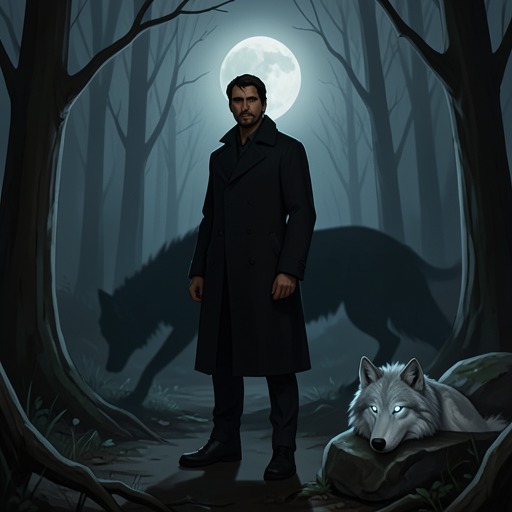
The relationship’s decisive revelation comes during their sexual encounter. Charles’s howl, glowing eyes, and lengthening, sharpened teeth make Flora question who he really is and what he is. The sound recalls the werewolf blamed for her father’s death, although the narrative has already established that a bear actually killed him. Charles’s animal traits transform the handsome stranger from an unknown potential lover into the embodiment of a feared category. Yet Flora remains absorbed in the physical intensity of the encounter and temporarily treats the question of his identity as less important than her experience with him.
This suspension of judgment is central to the relationship’s movement. Flora does not enter the forest seeking a werewolf, and Charles does not initially disclose that he is one. The discovery arrives through the body rather than through a confession: the howl, the eyes, and the teeth interrupt the human appearance he presented at their first meeting. The werewolf identity thus carries both threat and attraction. What the town imagines as a murderous monster becomes, for Flora, a desired and emotionally responsive partner.
After sex, Charles helps Flora dress and carefully reties her clothing, shifting briefly from seducer to caretaker. He then begins to explain himself, and the disclosure changes the meaning of his earlier attentiveness. Charles says that he has been tracking Flora for days at her farm and wants to take her away from her current life. His statement suggests that their meeting was not entirely accidental: Flora experiences sudden intimacy, but Charles has already observed her from a distance. The relationship therefore contains asymmetrical knowledge from its beginning, with Charles knowing more about Flora than she knows about him.
At the same time, Charles presents his desire as protective and emotionally committed rather than merely predatory. Flora feels her heart quicken at the thought of him watching over her. She recognizes that ordinary storybook endings do not exist in her harsh world, and she contrasts the expected white knight with the werewolf who has actually appeared. The contrast expresses both irony and acceptance: Charles is not a conventional savior, but his difference makes him seem a fitting answer to Flora’s dissatisfaction with conventional life.
Class, Proposal, and Promise of Escape
Charles’s identity expands the relationship beyond a private forest affair. He tells Flora that he would take her to his castle in Endenbrook. He is not first in line to inherit, because six older brothers and their families stand before him, and he describes himself as a black sheep within his family. Flora answers that he may instead be a black wolf, turning the stigma of his animal nature into a flirtatious sign of intimacy. Their exchange joins class revelation to romantic play: Charles is not simply a mysterious gentleman but someone connected to a castle, inheritance, and a family above Flora’s social position.
His proposal also depends on his werewolf condition. Charles explains that his affliction gives him unusual freedom because his father has allowed him to choose whom he will marry. The statement makes the proposal appear to escape the ordinary rules of class and family arrangement, yet it still places marriage at the center of the relationship. Flora has objected that marriage could limit her ability to read and think for herself; Charles now offers marriage as the route through which she can leave the farm and gain access to another world.
Flora directly asks whether Charles is proposing, and he confirms that he is. The speed of this escalation is part of the relationship’s fairy-tale logic, but it also exposes its fragility. Their bond has moved from first conversation to sexual union and then to a marriage promise without the gradual knowledge normally associated with courtship. The proposal responds to Flora’s longing for a different life, but it does not erase the unresolved questions surrounding Charles’s surveillance of her, his hidden identity, or the material terms of life at his castle.
Flora’s response is nevertheless emphatic. She asks whether her family may accompany them, and Charles promises that anyone she wants may come, telling her that the world is hers if she chooses it. She accepts with the whispered declaration, “A thousand times, yes!” Her condition that her family be included shows that escape does not mean simple abandonment. Charles’s promise offers both romantic devotion and practical relocation, while Flora’s answer binds her desired independence to a new household and a new marriage.
Meaning and Unresolved Tensions
The Flora–Charles relationship rewrites the Little Red Riding Hood motif as an adult romance. Flora is associated with Red, a maternal warning sends her toward and through the forest, and a wolf-like man waits beyond the familiar path. Yet the encounter does not end with the wolf devouring the girl. Instead, the feared creature becomes the object of her desire and the prospective husband who promises a castle. The relationship turns a cautionary structure into a fantasy of sexual awakening, social elevation, and escape from rural labor.
Its apparent promise of freedom remains complicated. Flora begins by rejecting marriage because she fears losing the ability to read and think independently. Morgan’s pressure makes marriage resemble a social obligation imposed on young women, while Charles’s proposal appears to make the same institution personally chosen. The difference is meaningful, but the outcome still channels Flora into marriage as the solution to economic hardship, sexual consequence, and dissatisfaction with farm life. Charles offers her choice within his own family structure, not necessarily independence from family structures altogether.
The relationship also moves through an unstable boundary between human and animal identity. Charles’s body reveals the Werewolf nature that the town fears, but Flora’s response converts monstrosity into intimacy. His tracking of her, his ability to change form, and the unexplained power suggested by his royal family all make him more than an ordinary romantic partner. By accepting him, Flora does not merely choose a man outside her community’s expectations; she chooses a figure who embodies the forest’s danger and makes that danger part of a promised domestic future.
The relationship ends, within the supplied narrative, at the moment of mutual commitment rather than after the promised move to Endenbrook. Charles has declared love, disclosed his castle and social position, and offered Flora a marriage based on his freedom to choose. Flora has accepted him and asked that her family be included in the new life. The ending therefore functions as a romantic promise and a threshold: it resolves the immediate question of whether she will choose Charles, while leaving the practical and ethical consequences of that choice still beyond the narrated scene.