
Her First Werewolf (BBW, Werewolf, Prince Charming, Fairy Tale Romance)
Basic identification
Her First Werewolf is credited to Jackie James. The available material does not establish a first-publication date, publisher, edition history, length, or original release platform, so those bibliographical details remain unknown. Its subtitle and promotional descriptions place it within paranormal romance and erotic romance, with strong werewolf-romance, plus-size-heroine, and fairy-tale-romance elements. “BBW” is a genre-market abbreviation for a big, beautiful woman or plus-size female protagonist. The title’s promise of a first werewolf, together with the subtitle’s references to a prince and a fairy tale, signals a deliberately heightened romantic fantasy rather than realistic contemporary fiction.
Story outline
The identifiable narrative centers on Red and Charles. Promotional copy says that, from the moment Red meets Charles, she is intrigued by his masculine mannerisms and strikingly handsome appearance. Their encounter is associated with the woods, and the copy asks whether Red can resist the “big bad wolf” there. Another brief description presents the heroine as a young woman abandoned as a baby and characterizes the male fantasy figure as a prince who is also a vampire with alpha-wolf tendencies. Since these descriptions are advertising fragments rather than a full synopsis, they do not securely establish a particular villain, ending, sequence of events, or detailed supernatural mythology.
Even so, the premise clearly combines familiar fairy-tale imagery with adult paranormal romance. The woods function as a threshold between ordinary life and the dangerous, enchanted world represented by Charles. He is not simply an attractive stranger: the promotional framing gives him aristocratic or princely glamour, predatory power, and the animal force associated with an alpha werewolf. Red’s immediate fascination supplies the emotional and erotic catalyst. Her possible history of abandonment adds a second fairy-tale register, suggesting the movement from exclusion and insecurity toward recognition, belonging, and romantic acceptance.
Themes and context
The book’s central concerns are desire, self-worth, and the fantasy of being unmistakably chosen. Traditional fairy tales often place a heroine in a passive position, waiting for rescue or transformation. The available description instead makes Red’s curiosity and attraction the starting point of the relationship. Her plus-size identity is also part of the book’s declared market and imaginative appeal: she is positioned as a woman who can be desired at the center of a supernatural romance, rather than treated as a marginal side character. Charles’s wolf and vampire qualities intensify familiar romance themes—protectiveness, danger, possessiveness, forbidden attraction, and the tension between civilized charm and animal instinct.
The writing background can be discussed only cautiously. The surviving evidence is primarily commercial genre copy and informal online references, not an author interview, scholarly account, or publishing history. That evidence suggests a work designed for readers seeking a concentrated paranormal-erotic fantasy: a powerful supernatural male lead, a fairy-tale framework, a charged first meeting, and a heroine whose body is part of the romantic fantasy rather than an obstacle to it. There is no reliable information about when James wrote the book, what personal experiences informed it, or which authors directly influenced it.
Reception and status
Nothing in the supplied material demonstrates awards, adaptations, a major critical reception, or a lasting influence on the wider werewolf-romance genre. Its most defensible status is that of a niche commercial paranormal romance with a clear and recognizable package of motifs. Red, Charles, the woods, the big-bad-wolf image, the princely supernatural hero, and the abandoned-girl-to-beloved fantasy give the book its distinctive identity. Because the available record is limited, claims about sales, readership, publication history, or long-term reputation would be speculative. For a book wiki, the responsible description is therefore both specific about the advertised premise and transparent about the many bibliographical and plot details that remain undocumented.
About the Author
Identity and available record
Her First Werewolf is credited to Jackie James, but the author’s biography is not documented in the supplied material. There is no reliable information about her birthplace, nationality, family, education, occupation, residence, or personal history. Search results involving other people named Jackie or James concern unrelated figures, including a basketball player and writers or biographical subjects associated with the Kennedy name. Those records cannot responsibly be assigned to the novelist. It is also possible that Jackie James is a commercial pen name, but the available evidence does not confirm that possibility.
Writing and works
The one work that can be securely associated with this author in the supplied record is Her First Werewolf. Its subtitle and promotional descriptions identify it as a combination of BBW romance, paranormal erotica, werewolf fiction, and fairy-tale romance. The advertised story brings together Red and Charles: Red is intrigued by Charles’s masculine mannerisms and handsome appearance, while the woods and the “big bad wolf” image provide the recognizable fairy-tale setting. A separate description presents the heroine as a young woman abandoned as a baby and describes the male fantasy figure as a prince with vampire qualities and alpha-wolf tendencies.
These details establish the book’s genre position and central imagery, but they do not establish a complete bibliography. No dependable first-publication year, publisher, series order, sequel, alternate title, or additional work by James is supplied. Consequently, a list of major works with dates cannot honestly be expanded beyond this single identified title, and even its publication date must remain unknown. Adding invented titles or dates would confuse promotional fragments with verified bibliographical evidence.
Background, death, and reputation
There is no author interview or biographical account explaining James’s education, formative experiences, entry into romance writing, or reasons for choosing werewolves and fairy-tale motifs. The book’s market presentation suggests an interest in concentrated supernatural-erotic fantasy: an immediately charged meeting, a powerful and dangerous male creature, a plus-size heroine placed at the center of desire, and a movement from abandonment or isolation toward romantic recognition. That observation describes the work’s positioning, not the author’s personal life.
The supplied evidence contains no death notice or death date for Jackie James. Her death therefore cannot be reported as an established fact. Nor does the material demonstrate major awards, adaptations, extensive scholarship, or a measurable long-term influence on werewolf romance. Her current reputation is best described cautiously: she is the credited author of a clearly packaged niche paranormal romance whose public biographical record is sparse. Further assessment would require verified publication records, reviews, reader data, or statements from the author. Until such evidence appears, the most accurate biography distinguishes what the book’s advertising establishes from the many personal and career details that remain unknown.
StoryFlow
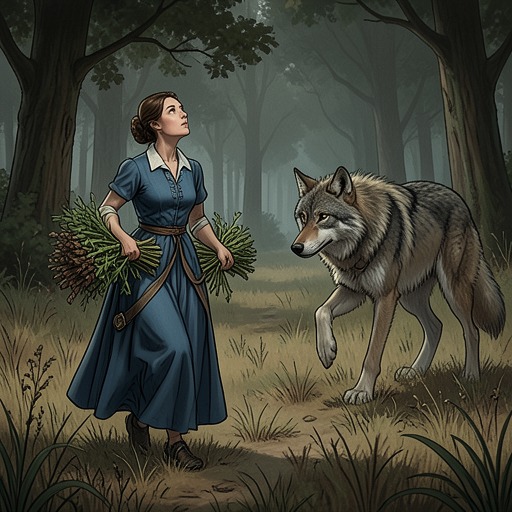
Flora’s Escape from Farm Life
This flow traces Flora’s movement from repetitive farm labor toward an unexpectedly transformed life with Charles.
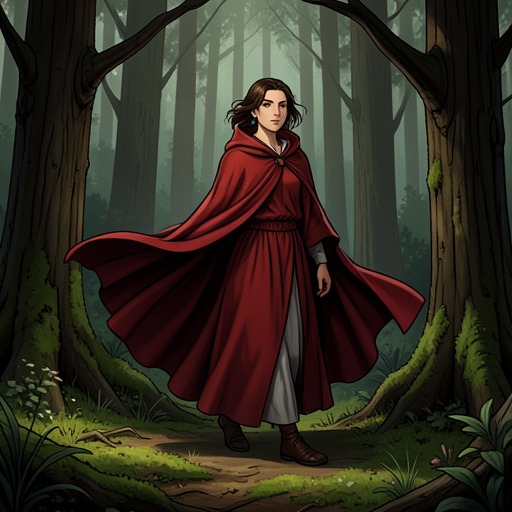
The Red Cloak Quest
This flow follows Flora’s red cloak as a material symbol of identity, vulnerability, and transformation.
From Village Daughter to Castle Bride
This flow traces Flora’s social ascent and the costs and possibilities of entering Charles’s aristocratic world.
