Unmarried womanhood
Her First Werewolf (BBW, Werewolf, Prince Charming, Fairy Tale Romance)Unmarried womanhood is a central social and emotional condition in Flora’s life: it allows her to work, read, think, and imagine an existence beyond the farm, but it also exposes her to judgment, anxiety, and pressure to secure a husband. The narrative presents her singlehood not as a simple personal preference, but as a contested space between self-determination and the social demand that a young woman become married, protected, and economically settled.
Definition and Material Conditions
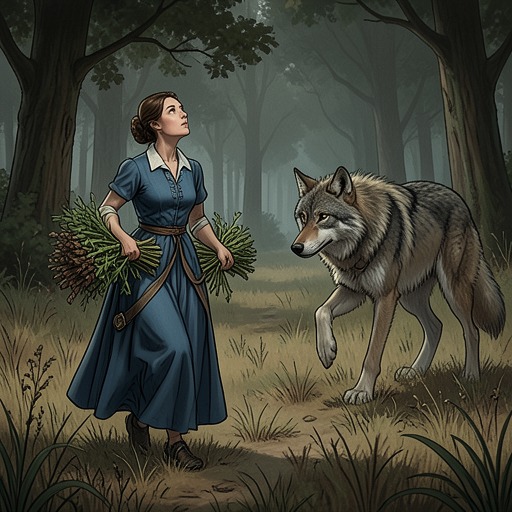
Unmarried womanhood begins for Flora within a life shaped by loss and labor. Her father died when she was fifteen, and the townspeople believed a Werewolf had killed him, although the truth was that a bear attacked him. Afterward, Flora and her mother, Morgan, were left to manage the farm and endured years of social isolation because frightened townspeople avoided them. Flora spent her days milking dairy cows, cleaning stalls, and assisting Hans, the family’s field hand. Her singlehood therefore exists alongside substantial productive responsibility rather than idleness: she helps sustain the household while fearing that each year will reproduce the same hardships and another difficult Winter.
Morgan embodies the future Flora fears. Once the town beauty, Morgan has been altered by hard work and time; her back has begun to hunch, and Flora sees in her mother’s aging body the possibility of remaining permanently tied to farm labor. Flora has inherited Morgan’s dark hair and blue eyes, but she does not want to inherit the same life. The contrast makes unmarried womanhood both a present identity and a warning about an unchosen future: without a different social or economic arrangement, Flora may remain a farmer’s daughter until labor visibly reshapes her as it has reshaped Morgan.
Freedom and Social Pressure
Flora explicitly resists the assumption that young women should desire marriage. When Hans speaks of someday taking a wife, she answers that, although most young people are eager to marry, she is not. His joking image of a wolf pursuing a lamb exposes the romantic language surrounding courtship, while Flora’s reply about the wolf eating the lamb makes the danger within that metaphor plain. Her resistance is not abstract. She has watched how marriage and domestic expectations can turn desire into vulnerability, and she refuses to treat pursuit as automatically benevolent.
Morgan, however, interprets Flora’s unmarried state as dangerous. She tells Flora that being a single young woman is no good and insists that there are dangers Flora does not yet understand. Morgan also invokes Flora’s dead father, arguing that he would have wanted his daughter settled and married well. The pressure is therefore presented as both maternal protection and social discipline: marriage is described as safety, respectability, and the proper continuation of family wishes, while remaining single is cast as exposure and failure.
Flora answers that she enjoys her freedom and asks whether marriage would still allow her to read and think for herself. That question identifies the precise freedoms at stake. Her father came from a wealthy family, married Morgan for love despite their class difference, and taught Flora to read and to examine the world independently. His books and lessons gave intellectual value to a life not organized entirely around marriage. Flora’s fear is consequently not merely that a husband might be unpleasant; it is that marriage might absorb the mental independence her father cultivated.
Courtship as Economic Negotiation
The town’s social world reinforces Morgan’s position. When a possible visitor is rumored to be connected with the Royal Army, Morgan imagines not only the visitor but the other men who may accompany him, hoping that one will notice Flora’s beauty and that she will finally marry. Flora dismisses the possibility that anyone royal would visit and suspects the stranger may be only a lowly squire, but Morgan treats even that prospect as an opportunity. Courtship becomes a strategy for changing Flora’s class position and escaping rural labor rather than a private matter of affection alone.
The approaching town-hall party makes the pressure concrete. Morgan orders Flora to attend because the event might provide a chance at a new life, yet Flora immediately worries about what she could wear. Her plain dark-brown dress is too small across the bodice, and the family lacks the fabric needed to replace it. Her unmarried status is thus linked to material presentation: to be seen as marriageable, she needs clothing and access that farm resources cannot provide. Morgan responds by sending her toward a wealthier relative, hoping Flora can obtain help with a dress.
Flora agrees to ask for assistance largely because she knows it is what Morgan wants to hear. She feels sickened by the prospect of asking an old woman for money for something she considers frivolous, and Morgan instructs her to make the request indirectly so that it will appear to be the grandmother’s own idea. This episode shows unmarried womanhood operating through dependence and performance. Flora must present herself attractively, negotiate for resources without openly begging, and treat marriage prospects as a practical family project even while she privately rejects the goal.
Desire, Consent, and Reorientation
The narrative complicates Flora’s stated refusal by placing her in an encounter where desire and uncertainty coexist. During an intimate meeting with Charles, she whispers that she does not even know him. Charles asks, "Do you want me to stop?" The question marks a moment in which her bodily response and her conscious apprehension are placed beside one another. Her unmarried condition makes the encounter dangerous within the social order represented by Morgan: sexual intimacy could lead to pregnancy, forced marriage, and the loss of the freedom Flora has defended.
Flora’s thoughts turn to Mary and the infant at Mary’s breast, connecting unmarried womanhood to the visible consequences of female sexuality and motherhood. She does not want to be with child and forced into marriage, yet her immediate desire overwhelms her rational fear. The scene therefore does not erase the conflict between autonomy and social consequence; it intensifies it. Flora’s body becomes a site where the freedom she claims, the danger Morgan predicts, and the possibility of a relationship chosen through desire meet uneasily.
From Rejection to Chosen Marriage
Flora’s position changes when Charles proposes. Her surprised question, "Is this a proposal?", registers the sudden movement from private intimacy to formal marriage. Charles explains that his affliction gives him unusual freedom because his father has allowed him to choose whom he will marry. The proposal is significant because it offers Flora a form of marital choice unavailable in the ordinary social pressure surrounding her: Charles presents marriage as an arrangement he can enter by personal selection rather than merely as a duty imposed by rank or family.
Flora’s first practical concern is whether her family may accompany her to the castle. Her question shows that acceptance does not mean abandoning the people and conditions from which she came. Charles answers that anyone she wants may come and promises that the world is hers if she chooses it. Flora then accepts, whispering, "Yes," and expressing the intensity of her consent through the repeated declaration that she agrees a thousand times. Her unmarried womanhood ends not simply because marriage is demanded, but because this proposal appears to combine affection, mobility, family security, and a degree of personal choice.
The conclusion remains deliberately double-edged. Flora has gained the possibility of leaving the farm and bringing her family to the castle, yet the route to that new life still runs through marriage and Charles’s authority to choose a bride. The narrative therefore treats unmarried womanhood as both a threatened freedom and the condition from which Flora seeks release. Its resolution promises expanded circumstances, but it does not entirely dissolve the question Flora asked at the beginning: whether a married woman will truly retain the ability to read, think, and choose for herself.