Charlie’s disinformation operation
Here There Is No WhyCharlie’s disinformation operation is the cover-up strategy through which Charlie redirects Judah Loeb’s investigation of Chaim Lerner’s death toward a fictitious confrontation involving Meir Alon and Rabbi Kaplowitz. The invented story claims that Chaim was targeted because of his theology, politics, or planned condemnation of the Lebanon War, but its actual function is to prevent scrutiny of Zehava Lerner, who had killed Chaim while struggling with him on the balcony and then helped conceal what happened. The operation protects both a politically useful public reputation and a fragile peace initiative, making truth itself a negotiable instrument.
Construction of the False Investigation
Charlie’s deception begins by presenting Alon and Rabbi Kaplowitz as possible participants in a planned meeting with Chaim and as men who might have tried to blackmail him. Judah eventually recognizes that neither man had intended to meet Chaim that night and that neither had planned blackmail. The alleged conspiracy, including its suggestion that radical ideology or Chaim’s statement about the Lebanon War had provoked his death, was fabricated from the beginning.
The false trail was especially effective because it resembled the kind of explanation an investigation might plausibly pursue. It supplied motive, ideological conflict, and apparent suspects while withholding the central fact: Chaim’s death had arisen from a violent encounter with Zehava, not from a political assassination. Charlie also made sure that the story lacked firm evidence. If Judah published it, he would have no solid proof, and the result could be dismissed as another instance of biased American journalism rather than treated as a reason to reopen the case.
Charlie’s Political Purpose
Charlie’s operation was not merely a favor to Zehava. When Judah confronted him, he inferred that Charlie belonged to the new peace coalition and had a stake in keeping Zehava’s reputation intact. Charlie confirmed that Zehava was indispensable to the suddenly promising peace process and argued that damaging her could destroy the dream of Israel finally making peace with its neighbors. The deception therefore joined police power to political calculation: the person who controlled the investigation also shaped the explanation that would determine whether an investigation proceeded.
Zehava gave the same argument a more explicit form. She told Judah that she was negotiating with senior representatives of the Palestinian Authority and that the opportunity was a once-in-a-century chance for a permanent settlement. A public scandal, she insisted, would allow religious right-wing opponents of territorial concessions to undermine the negotiations and remove her from government. Her appeal converted concealment into an alleged duty to peace. Charlie’s operation made that appeal operational by providing Judah with a competing narrative about Chaim’s death.
The Operation’s Relation to War and Responsibility
The invented political conspiracy gains force from real violence surrounding Chaim’s life and death. Charlie had once warned that he would find a way to avoid service in Lebanon, yet his military history remained connected to the Lebanon War, the Sabra and Shatila massacre, and the moral trauma that haunted Chaim. Charlie’s account of killing two ten-year-old Lebanese boys after mistaking them for armed Hezbollah fighters had become, in Chaim’s imagination, an intolerable repetition of the violence associated with the Holocaust. Chaim’s recurring nightmare transformed the Israeli army into the force hunting Arab children and transformed his own son into the perpetrator.
That history gave the false story a credible emotional and ideological surface. Chaim could plausibly have been threatened because of his public treatment of the Lebanon War, but the real explanation was more intimate and more compromising. The fabricated account displaced responsibility from a violent domestic encounter onto abstract enemies, fanatics, and political ideas. It also concealed the broader question of responsibility: the army’s orders, the rule to fire when life appeared threatened but certainty was impossible, the failure to intervene at Sabra and Shatila, and the private guilt that followed were all part of the novel’s moral field, but none supplied the actual cause of Chaim’s death.
Judah’s Recognition and the Hidden Protector
Charlie’s deception begins to collapse when Judah compares its claims with Zehava’s admission. Charlie confirms that Zehava lied to him from the start, that she wrestled Chaim from the balcony, and that he accepted her account that the killing was self-defense. He nevertheless decided that prosecution would serve no useful purpose because Chaim had not been the saintly figure of public reputation and because Zehava’s political role had become too important.
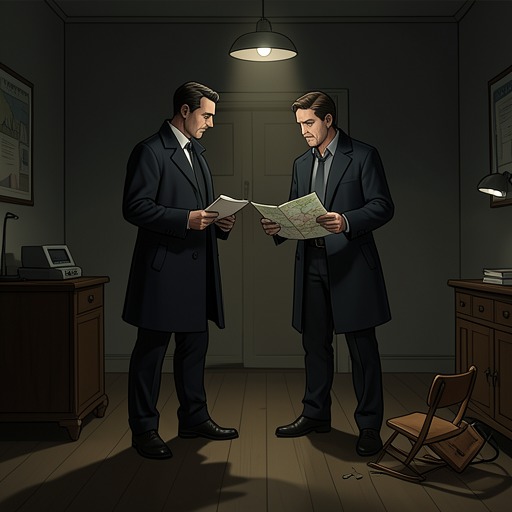
Judah then identifies the mechanics of the cover-up. Alon and Rabbi Kaplowitz, despite appearing ideologically opposed to Zehava, had joined the new peace coalition. Zehava persuaded them to participate in staged deceptions that would deflect suspicion. Because the supposed meeting and blackmail attempt had never occurred, they faced little genuine legal danger, while Charlie’s control of the investigation protected them from serious consequences. The operation thus depended on coordinated performance: Zehava supplied the political center, Alon and Rabbi Kaplowitz supplied misleading witnesses or suspects, and Charlie supplied institutional authority.
Judah later wonders whether Charlie’s elaborate story may have been designed not only to protect the peace negotiations but also to point him, indirectly, toward Zehava and away from Michal. Michal had actually killed Chaim while resisting his sexual violence. Judah had noticed the injury in her one-armed embrace after Chaim’s death, but he initially interpreted the scene through his own grief and through the familiar expectation that a Holocaust writer might have committed suicide. Charlie may have allowed the truth to remain discoverable while ensuring that it could not be cleanly prosecuted. The possibility remains uncertain, but it reveals the operation’s layered design: misdirection could conceal Michal while preserving a path by which Judah might eventually understand her innocence of deliberate murder.
Peace, Publication, and Aftermath
Judah accepts Charlie’s deal. He writes his book about Chaim but leaves the death unresolved, offering possibilities ranging from suicide shaped by Holocaust nightmares, illness, loneliness, or the burden of historical witness to accident or murder. Those explanations are knowingly fictionalized, while the biographical portions of the book remain meaningful to him. The compromise rescues his journalism career and eventually leads to work at The Washington Post, but it also converts his investigation into a public narrative that preserves the central lie.
The peace initiative itself proves as unstable as the cover story. Zehava never conducts the broad negotiations her speech implied; instead, her team holds one round of secret meetings with Palestinian negotiators in London. Charlie arranges for Judah to observe on the condition that he delay reporting until a final agreement and use no direct quotations. The discussions exchange maps, with Israel offering approximately 95 percent of the West Bank and the Palestinians seeking the whole territory with limited border adjustments for most Jewish settlers. Pisgat David appears on the Palestinian side of both versions, but the negotiations soon fracture over Jerusalem, the right of return for Palestinian refugees, recognition of Israel as a Jewish state, the connection between Gaza and the West Bank, and the role of Hamas.
The London talks collapse a week later, and Judah’s eventual report is buried in the newspaper. The bargain has therefore protected a peace process that never becomes peace, while suppressing a murder that never becomes a public case. The subsequent violence confirms the cost of that exchange: suicide bombings decline after Israel builds its West Bank barrier, but Hamas missiles, incendiary kites, Israeli attacks, new settlements, and continuing terrorism preserve the larger conflict. Charlie himself is later killed by a bomb outside the Russian Compound, where he serves as the head of Israel’s police homicide division.
Narrative and Ethical Significance
The operation dramatizes the difference between telling a plausible story and telling the truth. Charlie’s words do more than describe events: they organize police attention, distribute suspicion, and produce practical immunity. His authority allows a fabricated narrative to function as an investigative fact, while Judah’s status as a foreign journalist makes the truthful account easier to discredit. The deception is consequently a form of institutional speech whose effect matters more than its factual content.
Its deepest irony is that peace and justice are not simply opposed by villains; they are traded among people who understand the moral cost of what they are doing. Charlie, Zehava, and Judah each recognize that publishing the truth might damage a political opening, while concealing it damages the dead and falsifies the public record. The operation’s success depends on this unresolved arithmetic. Chaim’s death is made mysterious, Zehava’s career is preserved, Michal is shielded from exposure, and the promised settlement still fails. What remains is not peace but a carefully administered uncertainty in which political hope becomes the final alibi for violence.