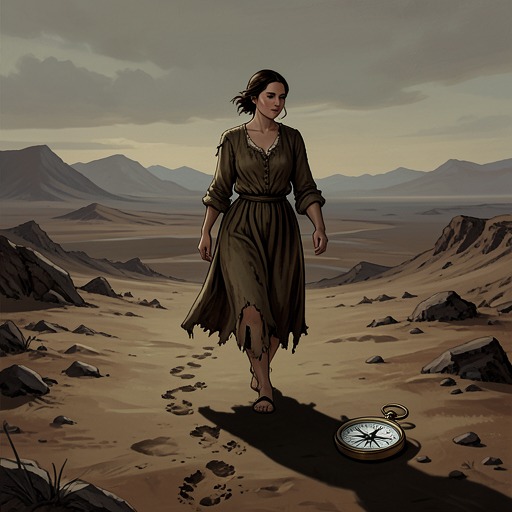
Chayut
Here There Is No WhyChayut is the Kabbalistic concept Chaim Lerner offers to explain vitality and survival in the Holocaust. He describes it as a life force shared by created things and proposes that survivors were given an additional measure of it by God. The explanation is deliberately paradoxical: it gives Chaim a mystical answer to the question of survival, but he also calls that answer ultimately meaningless.
Meaning and Structure
Chaim connects the word Chayut to chai, meaning life, and presents the concept through a riddle about the levels of the soul. He first speaks of four levels, then corrects the count to five: the fourth, Chayut, is the highest level available to human beings, while the fifth belongs to God. He also calls this fifth level mythic or transcendent, beyond human access and on an undiscoverable plane.
The account resists being made into a complete system. Chaim says the idea cannot be fully explained in this format, or in any format, and treats its numerical contradiction as part of its Kabbalistic wordplay. He hesitates to disclose it because it may sound surreal, mythical, or mad, and warns that publication could damage both his reputation and the interviewer’s. The concept is therefore offered as a risky, limited interpretation rather than a proof.
Chayut and Survival
Chaim sets Chayut against the condition of prisoners he describes as Musselmen: people whose life force seemed to have gone, whose eyes were blank, and who appeared to have surrendered their souls. Other prisoners could recognize this condition. Chaim says death was likely within days, whether through collapse, being shot for disobedience, or selection. His account makes the loss of vitality visible in the body while framing it as a spiritual loss as well.
He proposes that those who became Musselmen had been born with lower levels of soul, or that God had granted them less life force for reasons humans could not know. By contrast, he insists that survivors received extra measures of Chayut through an explicit creative act by God, not through genetics. This claim does not make survival a reward: Chaim specifically rejects reward and punishment as an explanation.
The idea is personal as well as theological. Chaim says that his father and brother became Musselmen, although he considers them stronger, more intelligent, more generous, and better men than himself. Their fate stands against any easy equation between moral worth and survival; the distinction Chayut proposes is not a judgment of character.
Limits and Unresolved Challenge
Chaim calls Chayut the mystical answer to the interviewer’s inquiry, then immediately qualifies it: ultimately, it is meaningless, though important to him. The juxtaposition preserves the concept’s emotional force without claiming that it explains why one person lived and another died. Its importance lies in Chaim’s insistence on holding a belief that cannot be proved, and that cannot be reconciled with a simple moral account of survival.
The interviewer tests the theory against Holocaust writers who took their own lives, invoking the figure of the survivor-poet-suicide and naming the Paul Celan syndrome. After the question, the narration records a long pause rather than an answer. That silence leaves a pointed difficulty unresolved: Chaim’s account associates survival with an extra measure of vitality, but the testimony does not explain how that account accommodates survivors who later died by suicide.