Judah’s acceptance of Charlie’s deal
Here There Is No WhyJudah’s acceptance of Charlie’s deal is the book’s clearest instance of truth being traded for political access. After learning that Zehava Lerner killed Chaim Lerner by wrestling him from the balcony and that Charlie chose not to pursue prosecution, Judah is offered a bargain: suppress the domestic violence and the evidence implicating Zehava, and receive exclusive access to the emerging Israeli–Palestinian peace process. Judah accepts. He writes a successful book about Chaim Lerner while presenting the death as an unresolved mystery, thereby converting a concealed killing into an officially usable story about theology, ideology, and history.
The Truth Behind Chaim Lerner’s Death
Judah’s decision follows a series of revelations that overturn the investigation he had been encouraged to pursue. Zehava admits that she did not tell the police the truth because Chaim was physically infirm, she was stronger, and even an acquittal would have branded her as the person who killed Saint Auschwitz. She also insists that her public reputation and political ambitions serve a national purpose. At the time of her confession, she claims to be negotiating with senior figures in the Palestinian Authority and presents the negotiations as a rare opportunity for a permanent settlement. Publishing the accusation, she argues, could destroy her credibility, remove her from government, and kill the peace effort.
Charlie confirms the essential facts to Judah. Zehava wrestled Chaim off the balcony and killed him, while Charlie accepted her claim that the act was self-defense. Charlie also rejects the saintly public image attached to Chaim, describing him as cruel and violent toward the people closest to him. In Charlie’s reasoning, the absence of a viable prosecution and the political importance of Zehava outweigh the demand to reopen the case. The death is therefore placed inside a conflict between criminal accountability and the preservation of a fragile political possibility.
Charlie’s Offer and Judah’s Choice
Charlie first tries to control the story by redirecting Judah away from the physical circumstances of the death. He urges him not to make it a domestic account of a husband and wife who tortured each other, drank too much, and finally confronted one another on a balcony. Instead, Judah should remain with theology, ideology, and myth: the narrative Charlie believes Chaim deserves. The proposed exchange is explicit. If Judah leaves Zehava alone, Charlie will provide exclusive access to the peace negotiations, allowing Judah to report their success before the rest of the world and potentially earn another Pulitzer and substantial book income.
The offer is reinforced by menace. Charlie says he cannot control Zehava if Judah publishes accusations, repeats that Judah does not want her as an enemy, and combines the promise of professional advancement with the warning of personal danger. Judah recognizes the construction of the bargain as a deliberate mixture of rewards and threats. He is impressed that Charlie understands his ambitions so thoroughly, even as he realizes that he has badly misjudged the friend he had once known. Judah does not immediately announce his decision; he says he will think about it. The later account makes clear that this hesitation ends in acceptance.
The Misdirection and the Peace Narrative
Judah’s discovery also exposes Charlie’s earlier investigative deception. Charlie had told him that evidence was needed to justify reopening the investigation, but Judah realizes that Charlie was actually positioned to decide whether investigations opened at all. The supposed theories involving radical theology, political ideology, blackmail, Rabbi Kaplowitz, and Meir Alon were a misdirection campaign. They were designed to keep attention away from Zehava and to produce a story that, lacking proof, could be dismissed as biased American journalism and another form of Israel bashing.
The deal thus requires more than omitting one fact. It asks Judah to accept an alternative narrative architecture. Chaim’s death must appear connected to his ideas rather than to the violence of his marriage; Zehava must remain a respected public figure; Charlie must be allowed to advance the peace process; and Judah must use his authority as a journalist to make the substitution credible. The political language of peace becomes the instrument through which responsibility is postponed. A future settlement is invoked to justify silence about a past killing.
The Book Judah Writes
By September 2023, Judah states that he took the deal. He wrote his book about Chaim Lerner but kept the death mysterious, offering possible explanations that included lingering Shoah nightmares, ill health, the burden of being Jewish history’s most eloquent witness, the loneliness of writing, the vagaries of the human soul, a drunken fall from a seldom-used balcony, and murder by Israeli fanatics. He acknowledges that these speculations were pure fiction. The book is otherwise presented as biography, including research in Cracow and a reconstruction of Chaim’s youth and teenage love affairs.
The concealment has immediate professional consequences for Judah. The book sells well enough to rescue his journalism career, and he obtains a position at the Washington Post. He later takes early retirement rather than leave New York for Paris, because his girlfriend remains there and Hannah, her husband, and their two-year-old daughter live in North Jersey. His compromise therefore brings tangible rewards, but it also becomes embedded in the domestic and professional life he chooses to preserve.
The Peace Process and Its Collapse
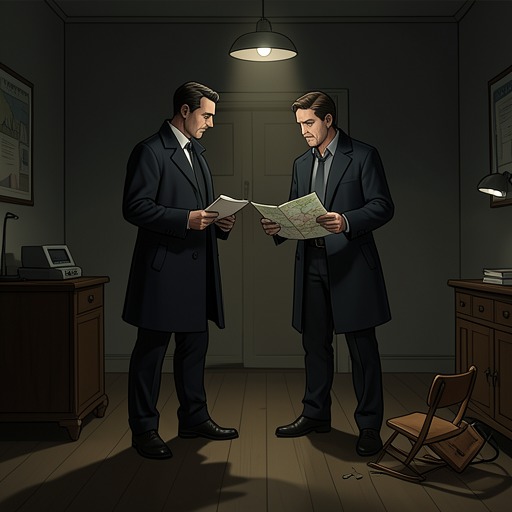
Charlie fulfills part of the bargain by arranging for Judah to observe the secret Israeli–Palestinian meetings in London, on the condition that Judah delay reporting until a final agreement and use no direct quotations. Charlie does not attend because he must remain in Israel in case a new terrorist wave begins. The negotiations initially appear promising. Israel offers roughly 95 percent of the West Bank, while the Palestinians demand the whole territory with minor border adjustments intended to accommodate most Jewish settlers. Judah catches enough of the maps to see that Pisgat David falls on the Palestinian side in both versions, a detail that makes him wonder what Chaim would have thought.
The territorial gap is not initially insurmountable. The talks instead collapse over the division of Jerusalem, the right of return for Palestinian refugees, recognition of Israel as a Jewish state, the connection between Gaza and the West Bank, and the role of Hamas. After a beginning marked by warmth and hope, the meetings deteriorate into bitter reciprocal accusations and collapse a week later. Judah suspects that the London conference may have been an elaborate performance in which each side demonstrated a willingness to sacrifice while ensuring that the other could be blamed for failure. When Charlie finally permits publication, the Washington Post buries the report in the middle of the paper, and the world shows little interest.
The failure of the negotiations retrospectively weakens the moral rationale of Judah’s silence. The peace that was treated as too delicate to endanger does not arrive. Suicide bombings subside as Israel builds its West Bank barrier, but violence continues through Hamas missiles, flammable kites from Gaza, Israeli bombs and tanks, and new settlements. The West Bank becomes quieter without becoming free of terrorism, and Israel remains vulnerable as well. The political future used to protect Zehava and Charlie never justifies the truth sacrificed to it.
Consequences and Significance
Judah’s acceptance creates a lasting tension between professional success and ethical failure. He gains access, restores his career, and writes a book that reaches readers, but he does so by preserving a false uncertainty around Chaim’s death. His journalism becomes a form of participation in the cover-up: not because he lacks the facts, but because he has decided that the facts must remain outside the public account.
The bargain also exposes the instability of appeals to national interest. Zehava frames disclosure as a threat to peace, while Charlie frames concealment as a chance to let peace survive. Both arguments treat the victim’s death as material to be managed within a larger historical project. Yet the negotiations collapse, the war continues, and Charlie himself is later killed by a terrorist bomb outside the Russian Compound. His death gives the bargain an additional irony: the man who asked Judah to protect a political dream does not live to see it fulfilled, while the concealed killing remains buried inside the successful biography Judah produced.
The action is therefore neither a simple act of cowardice nor a successful act of political sacrifice. Judah understands that the offer contains both danger and temptation, and he knowingly accepts both. The resulting book keeps Chaim alive as a public thinker while denying the concrete violence that ended his life. In that contradiction, Judah’s decision becomes the governing moral fact of the episode: peace is invoked, truth is deferred, careers advance, and the unresolved dead continue to bear the cost.