Michal
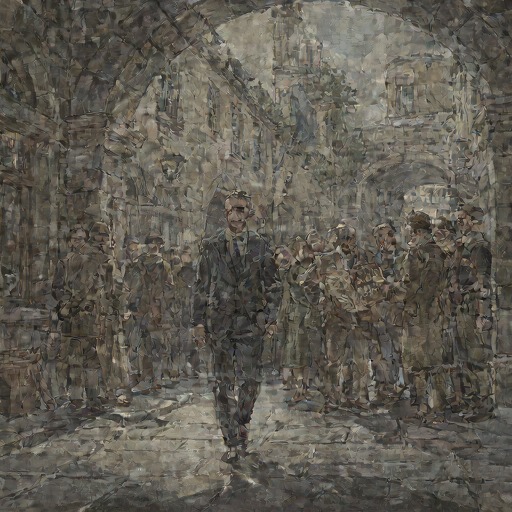
Here There Is No WhyMichal is the figure who first makes Israel personally real to Judah Loeb. He notices her as an apparently self-possessed Israeli woman moving through the Hebrew University with a light-blue bicycle, several languages, and a confidence that unsettles his sheltered American habits. Their romance begins in the front row of Chaim Lerner’s theology class, becomes Judah’s most overwhelming experience of first love, and ends not in reconciliation but in a final goodbye shadowed by divorce, historical violence, and secrets. Years later, Michal’s testimony also supplies the decisive truth behind Chaim’s death: she pushed him only after he attacked her, and Zehava helped conceal what happened. Her story therefore joins romance, political conflict, sexual abuse, and the ethics of survival.
Identity and First Appearance
Michal enters Judah’s life in September 1982, when she chooses the seat beside him on the first day of Lerner’s theology class. Before they speak, he has observed her around Mount Scopus: standing awkwardly in the Frank Sinatra cafeteria, arguing loudly in Hebrew with a registrar, making library copies with conspicuous energy, and smiling shyly among Israeli women whose laughter may or may not include her. Judah is immediately attracted to her appearance—she is thin, blue-eyed, tan, sharp-elbowed and sharp-kneed, with high cheekbones and shoulder-length brown hair—but his fascination depends just as much on her difference from the foreign students surrounding him.
Judah lives inside the One Year Program’s English-speaking bubble. Although he can manage practical Hebrew, he rarely crosses the social border separating American and Canadian students from Israelis. Michal crosses several borders without seeming to regard them as barriers. She is Israeli in Israel, yet she is also trilingual: she jokes and sometimes sings in Arabic with Palestinian cleaning women, gossips with Israeli students in Hebrew, and explains laundry machines to Americans in perfect, unaccented English. Her light-blue Italian men’s ten-speed is equally distinctive. She pedals it every morning up the formidable climb through Wadi Joz to Mount Scopus, at a time when bicycles are rare in Jerusalem. To Judah, who has never left the United States and has little experience of danger, intimacy, or travel, these ordinary acts appear exotic. His naivete turns Michal’s competence into an enchantment.
The first exchange establishes the asymmetry between them. Michal surveys the half-empty classroom, darts to the front-row seat beside Judah, smiles with her blue eyes suddenly wide, and whispers, “Good morning.” Shocked that she has addressed him, Judah answers in his worst American Hebrew accent, “Boker tov.” After class, they leave together, and she offers him a ride without making clear who has followed whom. She insists on riding the bicycle indoors through the university corridors, with Judah seated behind her while she stands and bears the burden despite being much smaller. At a refreshment kiosk she announces that she has missed breakfast and then, reading his uncertainty, tells him, “My treat.” Her repeated prompting, culminating in “Nu?”, converts his passive astonishment into participation.
Romance and Intellectual Initiation
Michal’s pursuit of Judah is romantic, but it is also intellectual. She asks about his family, his parents’ divorce, his father’s accounting work, his arguments with his sister, his mother’s work as a librarian, and his grandmother’s suicide. Judah is less surprised by the content of his own story than by Michal’s attention to the physical signs accompanying it: his clenched and unclenched fingers, a sniffling nose, a scratched elbow, and a tapping foot. She studies him with the curiosity of a medical student, registering the body beneath the biography.
After listening to Judah’s ten-minute account of what he considers an unremarkable life, Michal asks whether he wants to meet “him.” When Judah cannot identify the person she means, she clarifies that she is referring to Lerner and says that Chaim can help him. The next day she waits outside class with Chaim, still wearing her bicycle helmet and holding the ten-speed. She introduces them, and Chaim greets Judah with both hands, a warmth that contrasts with the threatening, almost demonic impression Judah had formed of him during the first lecture. Michal thus serves as Judah’s threshold figure: she brings him into Chaim’s intellectual and domestic world, where theology, politics, family intimacy, and concealed violence will become inseparable.
Judah experiences Michal as an almost totalizing first love. He remembers waking beside her, the scent and physical contact of intimacy, long kisses, hands finding each other, and sexual pleasure that had not yet become intercourse. Because every experience is new to him, it is amplified by his conviction that she is his one true love. In the later five-petition prayer exercise, he places Michal on the list beside career, family, health, and friendship, then immediately chooses her over the other four if only one desire can be granted. The experiment produces a painful reversal: every other petition is fulfilled, but Michal is the only thing he does not receive. The failed prayer makes her absence part of the book’s argument about desire, divine limitation, and the difference between what can be obtained and what cannot be kept.
Divided Loyalties and the War
Michal’s romance with Judah is interrupted by her older bond with Yoav Lerner. She and Yoav were middle-school companions, high-school sweethearts, and serious young adult lovers. Their relationship had rarely been quarrelsome until Yoav applied for officer training. To Michal, the application meant more danger and more separation, but above all it meant that Yoav would become more deeply involved in the Lebanon conflict, a war she despised. Their telephone argument ended with Michal hanging up; when Yoav did not call back, she treated the relationship as finished and began a new life with Judah.
That apparent freedom collapses when Zehava tells Michal that Yoav has shot two ten-year-old boys in Northern Lebanon and has been admitted to a military psychiatric ward in Haifa. Michal initially refuses Zehava’s repeated requests to visit him. She is happy with Judah, though guilt complicates that happiness, and Zehava’s persistent appeals are difficult to resist because Zehava has always occupied a maternal place in her life and calls her “my daughter.” After repeated calls, Michal finally visits Yoav in the military hospital. The visit reactivates the history she had tried to close and helps explain why her relationship with Judah never becomes secure, even during its most ecstatic period.
Michal also understands that Chaim’s theology cannot be separated from the political world around him. When Judah describes a hostile Zohar study session, she immediately rejects his surprise that some participants hate Chaim. She points to what Chaim teaches in class and what he writes about theodicy, Job, and questioning God. She likewise warns Judah that nothing about Chaim and Zehava is what it seems. Her warning is not abstract suspicion: she knows the Lerner family’s ideological divisions, Zehava’s support for the aims and execution of the Lebanon invasion despite her opposition to the government, and the danger that Judah’s investigation could inflict on Zehava and Yoav.
By the time Judah returns years later, Michal has become an attorney, a right-wing political activist, a polemicist, and a power broker. Her gray pantsuit and briefcase replace the student clothes in which Judah first knew her, but her old forcefulness remains. At the airport she uses the identification card worn around her neck to hurry Judah and Hannah through customs and security, shouting in Hebrew at chastened officials. The adult Michal is therefore not a softened version of the young woman on the bicycle. She is more institutionally powerful and politically embedded, while still retaining the directness and physical decisiveness that defined her first appearance.
Care, Secrecy, and Relationships
Michal’s relationship with Hannah reveals a tenderness distinct from her history with Judah. When she collects them at the airport, she gives Judah a surprisingly cold peck but hugs Hannah tightly, as though greeting a long-lost relative or rescued hostage. Hannah returns the embrace with comparable intensity. Michal then insists that Hannah sit in the front of the car beside her because she wants to know Judah’s daughter. The gesture establishes a near-maternal bond that later becomes active and practical rather than merely affectionate.
That bond leads Michal to arrange Hannah’s visit to Kamal, a jailed failed suicide bomber whom she had worked with on a documentary. After Hannah emails her about a school assignment, the two exchange several messages during the night. Michal presents herself as an expert on the psychology of suicide murderers and offers to take Hannah to meet Kamal, while also acknowledging the disturbing relevance of Hannah’s family background. Her response combines professional access, political knowledge, and personal care; she does not simply answer Hannah’s curiosity but creates a controlled encounter around a subject charged with the family’s history.
Michal’s care for Judah is more ambivalent because it is bound to concealment. She is the person who introduces him to Chaim, warns him about the Lerner family, and later withholds the truth about Chaim’s death. When Judah returns to investigate the death, she objects that his journalistic project could reopen Zehava’s worst wound and damage Yoav. She insists that Zehava is an important political figure and accuses Judah of being seduced by Zehava’s talent for managing journalists. Her resistance protects the family’s public and private arrangements, but it also places her inside the cover-up.
The relationship with Judah remains emotionally active even after decades. During the period of Mary Loeb’s illness, Michal asks Judah about his previous romances, pressing not merely for sexual details but for the narrative meaning of his past. Judah explains the contrast between Michal as first love and Mary as the love of his life: Michal opened the door, while Mary waited on the other side; Michal represented adolescent longing, while Mary represented adult serenity. He calls his time with Michal an adventure, a formulation that preserves its force without denying its incompleteness. Their shared memory is therefore neither erased nor restored. It survives as a formative episode whose meaning changes as Judah’s later life accumulates loss.
Chaim Lerner’s Death and the Delayed Truth
Michal’s most consequential secret concerns Chaim. She states plainly that Chaim would never have killed himself because his entire identity was organized around survival. His physical pain and nightmare memories were fuel rather than evidence of surrender, and she considers him more committed to life than anyone she had known. This conviction gives retrospective force to Judah’s own doubts about the supposed suicide and makes Michal the witness who can finally confirm what his investigation has inferred.
Her account begins when she is fifteen. During a family vacation at a beach in Nahariya, Chaim finds her alone and engages her in unusually serious theological conversation. He asks what she wants to become, what subjects and books interest her, and why an almighty God might permit the Holocaust. When Michal suggests that God may want to help but be unable to do so, Chaim becomes fascinated. He then asks why human beings, including Nazis, commit sadistic acts. Michal proposes that many abusers were themselves abused. She is flattered by his attention and absorbed in impressing a celebrated intellectual when his finger moves from her ankle upward before he pulls it away at the approach of her father and Yoav.
Over the following two years, Chaim repeatedly manufactures opportunities to be alone with her. He waits at bus stops, arranges high-school guest lectures so he can walk her home, or appears when her parents are absent. Their conversations continue to concern philosophy, theology, and politics, and his apparent interest in her ideas makes the encounters confusing. Yet he repeatedly maneuvers their bodies to touch her neck, shoulder, rib, knee, and the top of her breast. Each time, Michal slaps his hand away, and Chaim retreats in stunned silence. The pattern explains why her later silence is not simple loyalty to the family: it is the long afterlife of an abuse that Chaim has kept hidden beneath intellectual authority and familial intimacy.
At Zehava’s home, Chaim eventually approaches Michal while Zehava is occupied with a telephone call. He drinks heavily, apologizes for his past behavior, and asks her to join him on the balcony. Once the door closes, the apology becomes another attack. He embraces her, kisses her, and touches her breast. When she shoves him away, he grabs her left hand, twisting it so severely that he dislocates the arm. Michal responds by pushing hard against his chest. Chaim falls backward onto the railing, balances for a fatal moment, reaches toward her, says, “Whoops,” and falls headfirst to his death.
The physical evidence remains in Michal’s body. Years later, when Judah remembers the night he left Israel, he recalls her embracing him with only one arm after she claimed to have found Chaim’s body. She winced, and the left arm was injured. Michal confirms that Zehava reset the dislocated arm five minutes later, using a skill remembered from early motherhood, before the police arrived. Judah did not understand the hug immediately; grief and heartbreak overwhelmed his ability to reason. Only after learning that Michal and Zehava had lied about their alibis, and after discovering Chaim’s history with young women, did he connect the injury to the balcony.
Change, Ending, and Narrative Significance
Michal’s character is built from contradictions that the narrative gradually refuses to simplify. She is at once the bold Israeli cyclist who draws Judah out of his timid foreignness, the politically forceful attorney who can command security personnel, the devoted quasi-daughter of Zehava, the former lover of Yoav, and the adolescent victim of Chaim’s calculated boundary violations. Her youthful confidence is not proof that she is invulnerable. The same decisiveness that makes her seem exotic to Judah becomes, under attack, the bodily act that saves her from further assault but leaves Chaim dead.
Her relationship with Judah follows a romance pattern that the book deliberately breaks. There is a meeting, an intense approach, a period of physical and intellectual closeness, and then a separation caused not by a lack of feeling but by forces outside the lovers’ private fantasy: Yoav’s war involvement, Michal’s loyalty to Zehava, and the unresolved violence inside the Lerner family. Decades later, when Michal tells Judah that Yoav has moved out and that they are divorcing, she suggests that she is free and that their relationship need not remain what it was. Judah nevertheless chooses goodbye. He thinks of Charlie and understands that recovering the old romance would betray the dead and misread the person both of them have become. Their final embrace retains natural familiarity but no erotic promise.
After Zehava’s death, Michal can finally speak. She tells Judah that Chaim never would have killed himself and then recounts the balcony attack. The disclosure is both confession and testimony: it identifies the true cause of death while preserving the distinction between intentional murder and a defensive shove during an assault. Michal does not present herself theatrically as either innocent heroine or calculating conspirator. She speaks calmly and clinically, as if describing an ordinary task, a tone that reflects the distance required to survive the memory and the burden of having allowed a false suicide narrative to stand.
Michal’s narrative importance lies in the way she transforms Judah’s memories. The bicycle ride becomes the beginning of a love that could not last; the cold airport greeting and fierce embrace of Hannah become signs of a relationship that has migrated from romance toward caretaking; the injured arm in the one-armed farewell becomes a delayed clue; and the secret held for decades becomes the final answer to the mystery surrounding Chaim. Through Michal, the book shows that truth may remain physically present long after it has been verbally suppressed. Her body remembers what the official story denies, and her eventual speech turns private survival into public knowledge.