Mount Scopus
Here There Is No WhyMount Scopus is the Jerusalem setting in which Judah Loeb’s year in Israel takes shape. More than a university hill, it is a threshold space: a place where an American student enters Israeli language, politics, military experience, religious argument, romance, and grief while remaining partly outside each world. The campus shelters the One Year Program’s English-speaking bubble, yet its Hebrew institutions, Israeli students, Arab market, dormitories, and routes toward the Old City repeatedly expose the limits of that shelter.
Campus and Social Boundaries
Mount Scopus first appears through Judah’s retrospect as a landscape of partial observation. He notices Michal at the Frank Sinatra cafeteria, standing alone awkwardly; in the administration building, waving her arms and clicking her tongue while arguing loudly in Hebrew with the registrar; at the library kiosk, making copies with what he remembers as aerobic energy; and in a crowd of Israeli women whose laughter made it impossible to know whether they were laughing at her or with her. These scattered campus sightings establish Michal as both visible and difficult for Judah to interpret.
The setting also reveals the social boundary surrounding the One Year Program. Judah’s first friends are American or Canadian students, while his broader acquaintance includes British, South African, and Belgian students. The group can manage practical Hebrew well enough to shop, do laundry, ask bus drivers for directions, bargain at the Arab market, answer a cinema ticket taker, or argue over crowded showers. Socially, however, the English-speaking circle remains largely sealed. Michal’s Israeli identity therefore seems exotic to Judah even though he is already in Israel: Mount Scopus is physically Israeli but socially divided into zones of familiarity and estrangement.
The campus’s everyday objects make that division concrete. Judah buys a Persian carpet in the Arab market, shops before stores close for Shabbat, and navigates Hebrew instructions without acquiring full cultural fluency. When Michal later tells him to meet outside his dormitory, he arrives in his only white shirt and black dress pants, carrying wine in a plastic bag. The meeting point is ordinary, but it becomes the entrance to a new intimacy and to a form of Israeli life Judah has previously watched from its edges.
Michal, Charlie, and the First Encounters
Judah meets Michal when she chooses to sit beside him on the first day of Chaim Lerner’s theology class. He is immediately attracted to her appearance—blue eyes, tan skin, high cheekbones, shoulder-length brown hair, and a thin, angular body—but his fascination is also cultural. He is drawn to the unexplained quality of her Israeli presence, which differs from the international but predominantly English-speaking student world he knows.
Mount Scopus is equally important to Judah’s relationship with Charlie. The two share a room and several American interests: baseball, pickup basketball, Led Zeppelin, and Maccabi Beer. Yet Charlie has made Aliyah and completed army service, while Judah remains a temporary student. Their room consequently contains two versions of American identity in Israel. Charlie belongs to the country more permanently and has military obligations; Judah belongs to the campus’s transient foreign-student population. They rarely socialize, but the intimacy of shared space allows affection to develop without deliberate effort.
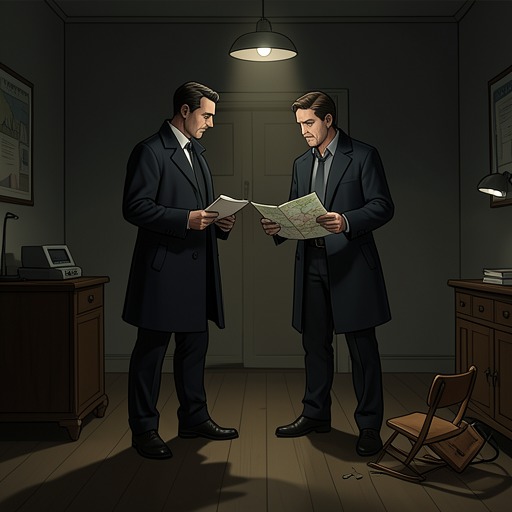
That difference becomes visible when Charlie cleans his Uzi beneath the dormitory bed and prepares for reserve duty. He lays out a rifle, cleaning rag, and oils on the inexpensive Persian carpet Judah bought in the Arab market, transforming the student room into a place where civilian study and military readiness coexist. When Judah asks whether the assignment concerns Lebanon, the question carries the larger war into Mount Scopus. The campus cannot remain an insulated academic refuge when one roommate is armed and reporting for duty at seven the next morning.
Theological and Political Threshold
Mount Scopus is connected to Chaim Lerner’s theology class, but Chaim’s teaching soon leads Judah beyond campus toward the Western Wall and the Kotel tunnel. There, Chaim explains the Zohar’s wordplay on “Mi,” or “who,” presenting God’s name as a question rather than a settled answer. In Chaim’s formulation, to invoke God is to inquire and search; spirituality is therefore an act of investigation. The intellectual movement from the university classroom to the subterranean study circle makes Mount Scopus the first stage of Judah’s education in a theology grounded in questioning.
The campus also places Judah near the political and religious divisions that Chaim hopes to reconcile. Chaim speaks of the Haredim and West Bank religious settlers as the people he intends to address through his book, including those he dislikes and those who dislike him. From Mount Scopus, Judah’s world opens toward Pisgat David, a settlement whose brightly colored bilingual welcome sign, red-roofed houses, lawns, garages, and children playing American football contradict his expectation of tents, guard towers, and barbed wire. The journey begins from the academic hill but leads into a built environment that makes competing claims to home and belonging visible.
Judah’s later understanding of Chaim depends on this movement between places. Chaim is described not primarily as a politician but as a storyteller, thinker, teacher, and theologian whose central project is to rescue God by creating a theological framework capable of confronting the Holocaust. Mount Scopus thus functions as an entry point into a larger intellectual geography: the university, the Kotel tunnel, religious institutions, settlements, and political arenas all become connected sites in the search for an answer to catastrophe.
Romance, Breakdown, and Departure
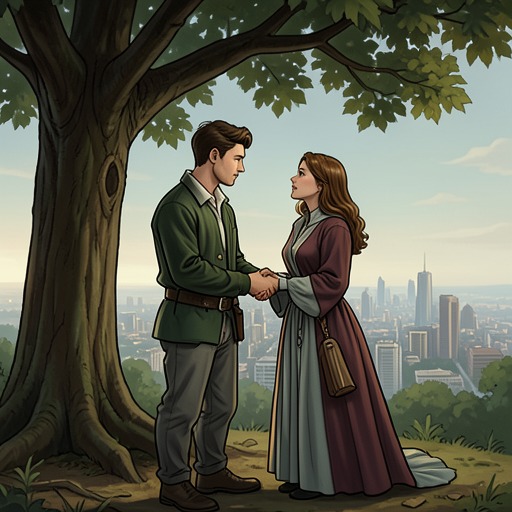
Mount Scopus is the setting of Judah and Michal’s early courtship and the place from which its emotional consequences spread. On a cool September evening, Michal arrives at Judah’s dormitory by bicycle, wearing a light-blue dress patterned with yellow daisies and a black helmet. She laughs and invites him to ride with her. The bicycle’s presence is especially striking because the Sabbath is beginning; the scene joins youthful romance to the practical and contested rules of Israeli religious life.
After Michal ends their relationship, Mount Scopus becomes a landscape Judah tries to abandon even while remaining there. He initially intends to finish the academic year. He rises after no more than two hours of sleep, attends classes, and appears more engaged than before, while Charlie takes him to dingy Jerusalem bars and the other American students play ultimate frisbee in Sacher Park. Judah joins political arguments at the Frank Sinatra cafeteria, defending Israel’s government and attacking the left. Spring returns to Jerusalem, but his apparent renewal is only imitation. The campus’s green trees and warmer weather contrast with the absence that dominates his inner life.
The dormitory therefore shifts from a place of possibility to a place of desolation. Judah cannot bear returning to its loneliness after learning that Michal has chosen Yoav Lerner. Charlie urges him to see her and suggests that the news may be mistaken or reversible; Judah reaches for his sneakers because the prospect of never seeing Michal again is unbearable. Even after Michal tells him that sometimes there is no why, the campus remains the place where he continues sorting Chaim’s papers, handling fan mail, and editing an English collection of stories while carrying the private wreckage of the breakup.
Narrative Significance
Mount Scopus embodies the book’s recurring tension between permeability and exclusion. Its students cross languages for practical tasks but preserve an English social enclosure. Its classrooms promise knowledge, yet Judah remains unable to read the Hebrew and Aramaic texts that structure Chaim’s lessons. Its dormitory provides friendship and romance but also exposes the distance between a temporary American visitor and Israelis shaped by military service, family history, and local political conflict.
The hill also serves as a spatial counterpoint to the sealed or charged places elsewhere in the narrative: the Lerner balcony where a death is reconstructed, the Kotel tunnel where theology becomes communal practice, the settlement whose suburban order materializes territorial claims, and the refugee camp from which Kamal’s grievance reaches Israel. From Mount Scopus, Judah learns to move among these worlds without fully belonging to any of them. That unsettled position becomes the basis of his reporting, his relationships, and his later attempt to interpret Chaim Lerner’s death.
In the end, Mount Scopus is remembered less as a stable home than as the first enclosure Judah discovers he cannot remain inside. It gives him Michal, Charlie, Chaim, and the subjects that will shape his adult life, but it also teaches him that proximity is not belonging. The campus stands at the beginning of his Israeli experience as both refuge and border: a place from which he can see the country clearly enough to be changed by it, but never clearly enough to mistake observation for possession.