Suicidality
Here There Is No WhySuicidality in the novel is not a single condition with a single cause: it appears as a thought provoked by disillusionment, as an actual suicide shaped by illness and family concern, and as a contested explanation for Chaim Lerner’s death. The narrative tests moral labels against particular lives, showing how trauma, guilt, and the desire to spare others can make outwardly similar acts mean different things. Its recurring distinction between thought and action matters: imagining suicide does not make a person suicidal, and calling a death suicide does not settle what happened or why.
Disillusionment and the Thought of Suicide
The novel first approaches suicidality through Chaim’s fiction. In the story Blue Jews, Jewish refugees encounter blue-skinned aliens who claim Jewish identity, tell stories of enslavement and liberation, pray with fervor, and inspire a religious renaissance. When the aliens depart with essential equipment and the community’s only handwritten Torah scroll, the apparent renewal is exposed as a deception. The story’s fictional community responds to its disillusionment with nihilistic cults whose most sacred ritual is suicide. Judah reads the episode as a possible reflection on modern Jewish faith after the Holocaust, but he is careful to separate the thought the story dramatizes from an actual intention: the idea of suicide interests him, while he is not himself suicidal.
That distinction becomes a way of reading Chaim’s writing and life without treating either as a simple diagnosis. Judah connects the story’s vision of a reality suddenly revealed as false with the suicides of Holocaust writers, including authors whom Chaim regards as spiritual colleagues. The fiction gives Judah a reason to seek Chaim’s counsel after heartbreak, but it does not establish that Chaim himself intends suicide. It instead makes suicidality part of a wider inquiry into what happens when a sustaining account of the world collapses.
Chaim Lerner and Competing Explanations
After Chaim’s death, the question of suicide becomes a struggle over interpretation. One early possibility is that he deliberately plunged from his balcony despite pain in his knee and hip. American writers, including the novelist Bella Shmozic, associate his death with the burden of Holocaust testimony. Shmozic calls him the sixth million and first victim and the eighth Holocaust writer, placing him in a line of writers who died by suicide. She also reads one of his stories, about a blind man who suddenly gains sight and dies after the overwhelming influx of experience, as an allegory for the Holocaust writer’s unmediated exposure to horror. Her argument makes seeing and writing themselves seem perilous, but it remains an interpretation of Chaim’s death, not proof of its cause.
Zehava Lerner challenges the premise that the most useful question is why Chaim killed himself. She says that she has considered the subject unwillingly and argues that the question should instead be how he remained alive for so many years after the Holocaust. Her account of their marriage complicates any single explanation: Chaim resented the time her political career took from their family, and she perceived his disapproval, yet she says she remained in love with him and believed he tried to live normally. She also describes his tendency to drift into a distant inner world during ordinary moments. Her account presents the possibility of long-standing suffering without reducing their marriage or his death to one cause.
Yoav Lerner offers a different, intensely personal explanation. He describes killing two Lebanese boys after mistaking them for armed fighters during the Lebanon War. He says that his father was haunted by the war and by the possibility that Israeli violence had made his own people resemble the perpetrators of the Holocaust. Yoav recalls Chaim’s recurring nightmare of becoming a Nazi colonel in the Israeli army and hunting Arab children; in Yoav’s view, the nightmare entered reality through his own actions. He therefore believes that Chaim killed himself because of him, even though the army later cleared Yoav of responsibility. The account reveals the force of Yoav’s guilt, but it is still his explanation rather than a settled finding about Chaim’s death.
The later account of the balcony fall further unsettles the suicide theory. Zehava says Chaim struck at her during a confrontation; she caught his hand, twisted it, and pushed him away. Because his knee and hip were impaired, he lost his footing against the railing and fell. Her account makes his physical vulnerability part of the fatal sequence and distinguishes a fall during an act of self-protection from a deliberate jump. The competing explanations remain significant because they show how the same death can be framed as a consequence of Holocaust trauma, paternal guilt, or a violent encounter between spouses.
Mary Loeb, Hannah, and the Ethics of Interpretation
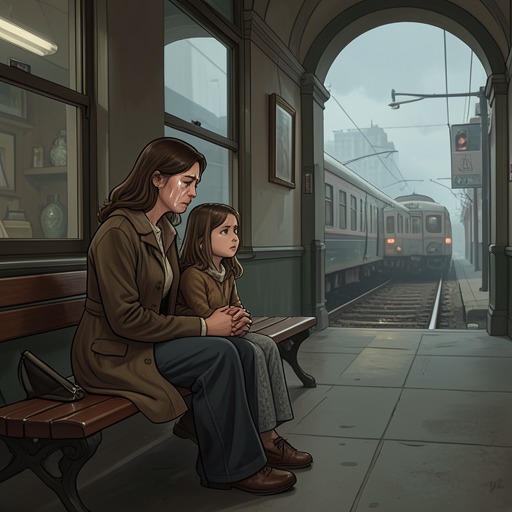
Mary Loeb’s suicide gives the subject a more direct and intimate form. Years after Chaim advised Judah to allow suffering its place while recognizing that life contains more than suffering, Mary takes her own life. Afterward, Judah spirals into depression and addiction and recalls Chaim’s advice, but finds it worthless. The memory does not function as a cure: its return exposes the gap between words that once captivated Judah and the experience of grief that later overwhelms him. Judah also describes a change in his ability to cry after Mary’s death. He had rarely cried before; afterward, tears come readily, and the difficulty is stopping them.
The novel resists treating Mary’s death as equivalent to an act intended to harm others. In a conversation with Hannah, Kamal condemns suicide in sweeping moral terms, calling the person who dies selfish and cowardly. Hannah reacts while watching the exchange and insists that Mary did not try to take innocent people with her. Her response does not deny the pain of her mother’s death; it rejects the use of Kamal’s accusation as a direct judgment of Mary. The scene makes the difference between suicide and a suicidal attack explicit, while showing how a surviving child may hear condemnation of one as condemnation of the other.
Kamal later writes to Hannah after learning about Mary’s death. He distinguishes his own history from hers: he describes himself as a murderer who tried to kill, whereas he understands Mary as a sick and frightened woman who did not try to kill anyone else. He also argues that she did not want Hannah to see her deteriorate and that her illness would soon have killed her. His letter does not erase the grief or claim to know every part of Mary’s experience. Instead, it offers Hannah a reason not to judge her mother and to remember that Mary loved her. Suicide is thus addressed through the responsibilities of the living as well as through the circumstances of the death.
Repetition, Guilt, and the Limits of Explanation
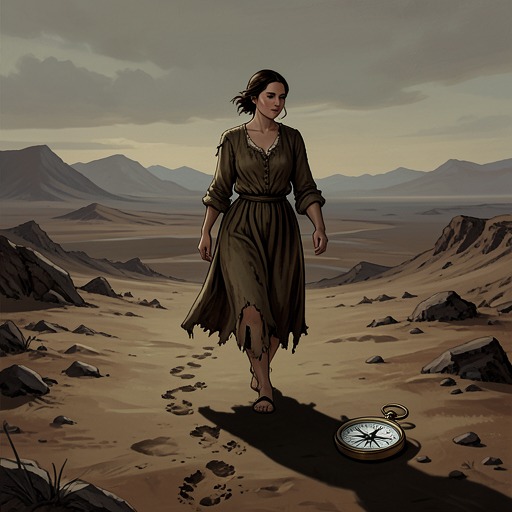
Suicidality links separate lives without making them interchangeable. Judah’s interest in suicide begins as a response to a fictional community’s disenchantment and to the history of Holocaust writers; it becomes personal only after Mary’s death, when grief, depression, and addiction alter his life. Hannah’s questions and reactions show how the subject persists across generations, while Kamal’s attempt to distinguish his own violence from Mary’s death shows that moral comparison can either clarify or distort. Chaim’s remembered counsel about suffering remains present, but Judah’s later experience demonstrates that sound advice cannot guarantee survival or recovery.
The novel also presents explanations as acts with consequences. Yoav’s belief that his actions caused his father’s suicide carries guilt; Shmozic’s literary interpretation turns Chaim into a representative Holocaust writer; Zehava’s account describes a fatal fall during a physical struggle. None can be collapsed into a general theory of why people die by suicide. The recurrent movement between fiction, testimony, family memory, and retrospective accusation instead makes uncertainty part of the subject: explanations can illuminate a particular wound, but they can also impose a label where the evidence remains contested.