Yoav Lerner's killing of two Lebanese boys
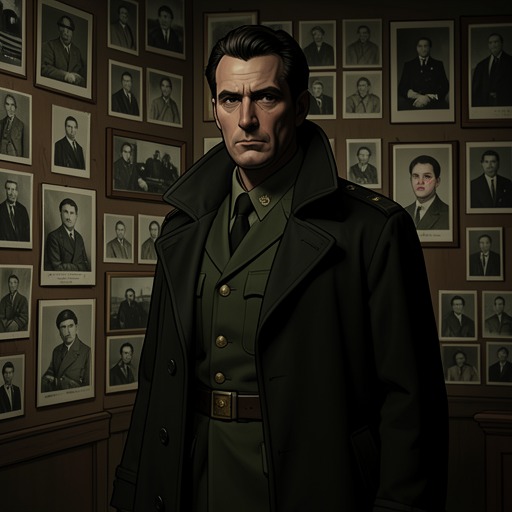
Here There Is No WhyYoav Lerner’s killing of two ten-year-old Lebanese boys is the pivotal wartime act in his account of his father’s collapse: in a village attack, he fires at what he believes are armed fighters, then discovers that his targets are children. The episode binds combat confusion to personal responsibility, inherited Holocaust memory, and the danger of turning an unverified account into a settled explanation. Yoav presents the deaths as the reason Chaim Lerner killed himself, but the novel later reveals that Chaim’s fall was caused by Michal pushing him away as he raised his hand to strike her.
Background and the Village Operation
The shooting takes place about a month after the Sabra and Shatila massacre, during the 1982 Lebanon War. Yoav recounts that his unit entered a small Lebanese village whose residents were mostly Palestinian refugees. He withholds both the village’s name and the mission’s details, saying that disclosure could get him arrested. He also insists on distinguishing the place from a refugee camp: the distinction is part of his argument about the language journalists use, though he presents it as immaterial to the suffering at issue.
The Israeli soldiers enter in mostly roofless halftracks, vehicles whose arrival itself creates havoc. Yoav is in the rearmost vehicle, assigned to monitor radio communications. He describes fear as shared by the soldiers, but says that the immediate anxieties were not simply death: they feared making mistakes, being humiliated, and killing civilians. He judges himself a coward in relation to those possibilities. That self-assessment frames the shooting not as a clean act of battlefield competence but as a decision made under pressure, inside a situation whose moral hazards he already recognizes.
Yoav’s account places the operation in a wider military pattern. In villages, he says, children threw stones from behind buildings and homes. The soldiers’ instructions were to hold their positions, protect themselves, intimidate the throwers, and not shoot at children. Live fire could then come from concealment, creating a sudden transition from a threat the soldiers were ordered not to answer with gunfire to one they were ordered to meet. Yoav describes a further complication: the shooters might reveal themselves only after the soldiers had begun to withhold fire, and those revealed as armed attackers could also be children. The account explains the pressure on the soldiers without making the danger disappear for the children caught in it.
The Shooting
In the incident Yoav remembers, the attack comes from the rear, unlike the usual pattern he describes, in which fighting begins at the front of the column. Stones come first. Yoav raises his shield and crouches, expecting the next stage: bullets from behind a fountain. His driver pushes him down into the back of the halftrack. Yoav says that he hears the commander order the soldiers to return fire, although the driver later says he did not hear the order. Yoav accepts that the driver is not lying; the noise of gunfire could explain the difference. The discrepancy remains part of the event’s uncertainty, but Yoav is emphatic about what he heard and what he did next.
He rises from beneath his seat and fires two continuous rounds at two targets. At the time, he believes they are Hezbollah fighters carrying Kalashnikovs. He recalls that he was a poor marksman, mocked by his battalion and unsuccessful in firing examinations, yet on this occasion he hits both targets in the chest. Only afterward does he understand that they are two ten-year-old boys. They wear no uniforms and have no Kalashnikovs. Yoav insists that he saw weapons when he fired; when he looks again, he sees only the dead children. His memory holds the conviction that he had a target and the devastating recognition that he had killed the wrong people, without resolving the gap between them.
The episode is preceded by a conversation Yoav says many Israeli parents have with children entering military service. His parents told him that if his life seemed threatened but he was not completely certain, he should shoot; if he was wrong, they would face the consequences together afterward. He says they meant it at the time. In the village, the abstract permission to act under uncertainty becomes irreversible: the assurance that the family would share the consequences cannot return the boys to life or settle what the order, the visible threat, and Yoav’s judgment required of him.
Responsibility, Memory, and Chaim’s Death
Yoav links the shooting to Chaim’s response to the Lebanon War. He says the war haunted his father, who could not regard it as merely an operation against a terrorist organization. Chaim’s recurring nightmare was that he had become a Nazi colonel in the Israeli army and was hunting Arab children rather than Jews. Yoav interprets the deaths as that nightmare entering reality across a generation: in his telling, he, the son, became the child-killing Nazi Chaim had feared becoming. He says Chaim could not live with what his son had done and repeatedly assigns himself responsibility for his father’s death.
That explanation sits beside, rather than erases, the larger argument Yoav makes about the Sabra and Shatila massacre and its reporting. He recounts that Israeli soldiers heard gunshots, commands, and screams, then entered Chatila after receiving orders; they disarmed Phalangist soldiers but, he says, had not physically stopped the killing, which had ceased before they arrived. He objects both to accounts that wrongly said Israeli forces carried out the massacre and to the misleading rearrangement of events that made their arrival appear to have halted it. His sharper accusation is that the soldiers did not intervene when they were bystanders to the massacre. By setting that failure beside his own shooting, Yoav refuses a simple division between innocent witnesses and perpetrators, while also resisting journalistic claims that collapse different actions into the same charge.
The novel later overturns the certainty of Yoav’s claim that Chaim killed himself because of the boys. Michal tells Judah that Chaim attacked her and that, as she caught his raised hand and pushed him away, he fell over the balcony railing and died. Zehava and Charlie confirm that Zehava concealed the truth, while Charlie says he believed Michal had acted in self-defense. The shooting remains a cause of Chaim’s distress in Yoav’s account, and Chaim’s nightmares make the war’s moral burden unmistakable; it is not, however, the literal cause of his death. The difference exposes how guilt can become a totalizing explanation, especially when a survivor’s family and public reputation make the truth difficult to speak.
Aftermath and Narrative Significance
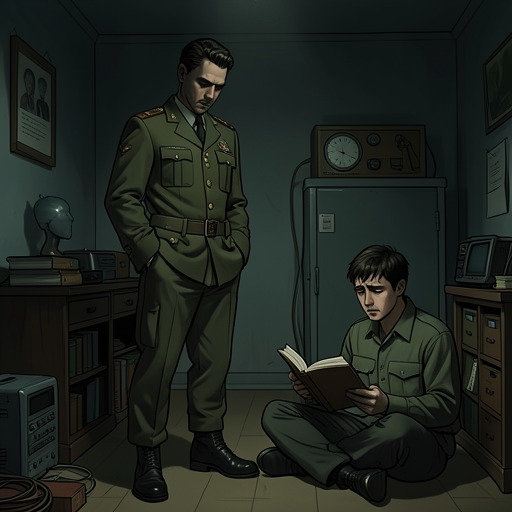
Zehava tells Michal that Yoav shot two ten-year-old boys in Northern Lebanon and was admitted to a military psychiatric ward in Haifa. She repeatedly urges Michal to visit him. Michal initially refuses, having begun a relationship with Judah after she and Yoav fought over his application to officer training, which she feared would involve him more deeply in the Lebanon conflict. After Zehava persists, Michal visits Yoav in hospital; her account to Judah breaks off at the point where he can infer what followed. The shooting therefore helps reopen the relationship between Michal and Yoav, even as it marks the rupture between Michal and Judah.
The army eventually clears Yoav of responsibility, but only after Chaim’s death. That finding does not undo the boys’ deaths or end Yoav’s self-condemnation. Nor does the narrative offer a straightforward legal verdict on the circumstances he describes: it gives Yoav’s account of the order, the attack, and what he believed he saw, alongside his later interpretation of the consequences. The distinction matters. Military clearance, the father’s anguish, and the son’s own guilt are different forms of judgment, and none can substitute for the dead children.
As a narrative event, the shooting connects the public history of the Lebanon War with a private chain of grief, concealment, and mistaken certainty. Yoav uses it to explain Chaim; Judah’s investigation later reveals that this explanation is not the whole truth. The event’s force lies in that collision: an act committed amid genuine battlefield confusion becomes, in memory, an account of inherited trauma and responsibility, while the family’s concealed violence shows how even a powerful confession can misidentify the cause of a death.