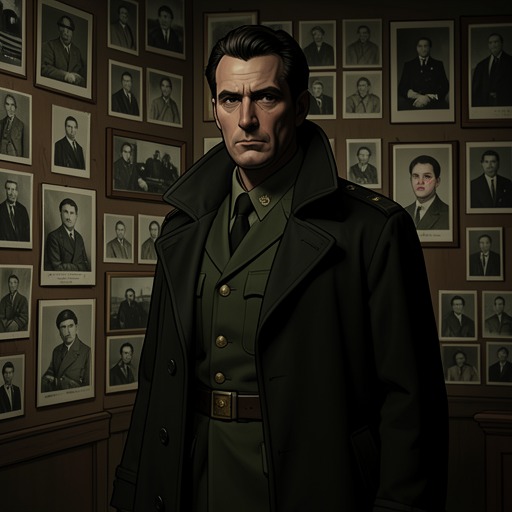
Zehava's funeral
Here There Is No WhyZehava's funeral is both a state-scale farewell and the scene in which the novel’s central private secret finally begins to surface. Held at Mount Herzl Cemetery fifteen years after Zehava Lerner had forbidden Michal from telling Judah Loeb what she knew, the ceremony gathers political power, family grief, and the unresolved question of Chaim Lerner’s death. Its public language celebrates Zehava’s life; its intimate aftermath exposes the cost of having concealed the truth about her husband.
Return to Jerusalem
Judah and Hannah Loeb return to Jerusalem after Michal contacts them to report Zehava’s death and urge them to attend the funeral. Michal says she has one more thing to tell Judah, but can do so only in person. Their visit is deliberately brief: Hannah does not want to be separated from her baby for more than a few days, while Judah does not want to remain in Israel, so they book only three nights at the David Citadel Hotel and plan to arrive on the morning of the funeral.
The journey is shaped by age, exhaustion, and accumulated history. Judah is sixty-one and dependent on Hannah’s arm as they walk through the cemetery; she fears that he might fall and feels that she is the only thing holding him up. The physical reversal matters because Judah once approached the Lerner house as an investigator, climbing three flights of stairs toward the balcony where Chaim fell, whereas at Zehava’s funeral he enters a national cemetery as an aging father supported by his daughter. The return is therefore not merely geographical. It brings Judah back to the people and places from which he had tried to withdraw, including the unresolved death that first drew him into the Lerner family’s life.
The public ceremony
Mount Herzl Cemetery is reserved for Israel’s most important dignitaries, and Zehava’s funeral reflects her rise from political activist to a leading figure in the national opposition. Hundreds, perhaps thousands, of mourners crowd the grave on a cool, sunny day in late September. Armed soldiers protect the site, while Judah notices the security through the continuing presence of suicide bombings and political violence in the background of public life.
The eulogies are delivered in Hebrew, and Hannah, now fluent, whispers translations to her father. The first speaker, an old man, recalls amusing stories from Zehava’s early political years. The current prime minister, defense minister, and opposition leader are present, followed by the president, whose speech moves the crowd to tears. The ceremony gives Zehava a public afterlife through political memory: her career is converted into anecdotes, eloquence, and national mourning, while the private violence and secrecy surrounding the Lerner household remain unspoken.
The rites are brief. After the president’s eulogy, a crane lowers Zehava’s shrouded body into the grave, a cantor sings several quick prayers, and the crowd disperses after thirty minutes. The mechanical descent of the body contrasts with the scale of the gathering. A huge public assembly ends in a short, controlled procedure, leaving the emotional and narrative residue to the survivors rather than resolving it through ceremony.
Michal’s private summons
Judah wants to find Michal and assumes she may return to Chaim’s house with Yoav Lerner. Hannah, however, knows where Michal is. She leads her father past the tombs of David Ben-Gurion, Zalman Shazar, Golda Meir, and Theodore Herzl to a narrow path among tall pine trees, then refuses to go farther because Michal has asked to speak with Judah alone.
The separation creates a second ceremony inside the first. Hannah, the rabbi’s daughter who has become an adult with a family of her own, escorts Judah to the place of disclosure and then withdraws. Her knowledge suggests that she and Michal have remained in contact, especially during Hannah’s year studying in Jerusalem, and that they may have discussed Judah. The daughter is thus not simply a mourner or guide; she becomes the person who recognizes that the funeral must give way to a private reckoning between former lovers and investigators of the same buried past.
Michal initially appears to Judah as an unfamiliar grieving old woman sitting alone in the cemetery. Friendship alters his perception, allowing the older face to dissolve into the woman he knew forty years earlier. Their physical closeness returns without erotic charge: Judah places an arm around her shoulder, Michal leans against him, and he holds her while she gathers the courage to speak. The scene turns the cemetery’s public silence into a protective interval in which suppressed knowledge can finally be voiced.
The delayed revelation
Michal explains that she could not tell Judah the truth while Zehava was alive because Zehava absolutely forbade her to tell anyone, especially him. The prohibition makes Zehava’s funeral the necessary condition of disclosure. Zehava’s death removes the authority that had enforced the silence, but it does not erase the moral burden of having maintained it.
Michal’s first statement is decisive: Chaim never would have killed himself. Judah answers that he already knew this. His certainty reaches back to his first investigation, when he examined the third-story balcony, its four rusting neck-high bars, and the physical difficulty of a man with an injured knee climbing over it. The apparent suicide had always conflicted with Chaim’s identity as a Holocaust survivor committed to survival. Chaim’s pain and nightmare memories were not presented as a surrender to death but as fuel for continuing to live; Michal therefore confirms a conclusion Judah had sensed before he possessed the missing facts.
The revelation also reclassifies earlier evidence. Five neighbors heard Chaim’s body fall at precisely seven p.m., preceded by a voice saying, "Whoops," as though he had dropped something. Police testimony placed Michal and Zehava away from the apartment, and Michal had a documented alibi: she was shopping for a wedding dress with her future mother-in-law at Rafik’s Boutique, with a receipt recording the date and time. These details had narrowed the field without solving the case. At the funeral, Michal’s testimony changes the question from whether Chaim’s death was mysterious to what happened at the balcony and who concealed it.
Aftermath and significance
The funeral does not reveal the entire mechanism of Chaim’s death in the cemetery scene, but it changes the ethical and narrative status of the mystery. Judah had accepted Charlie’s arrangement: he wrote a biography of Chaim while preserving the death as an unresolved possibility, allowing explanations ranging from lingering Holocaust trauma and illness to loneliness, accident, or murder. Michal’s statement makes that uncertainty retrospectively inadequate. The published mystery was not simply an open investigation; it was also the product of a bargain, a silence, and Zehava’s command.
The event joins several forms of ritual that recur throughout the book. Earlier, Chaim and Judah perform Havdalah, the farewell to Shabbat, while Zehava first remains silent and then unexpectedly sings. At a later Shabbat dinner, Yoav assumes the household rituals once led by Chaim. At Zehava’s funeral, public political mourning temporarily gathers the nation, but the real transformation occurs away from the grave, beneath the trees, when Michal’s confession transfers knowledge from the dead to the living. The formal rite closes Zehava’s public life; the private conversation reopens Chaim’s death.
The funeral also anticipates the book’s later movement from death toward imperfect continuity. In the 2023 Hanukkah epilogue, Judah marries Liora beneath a huppah made partly from his late father’s wedding tallit, while Hannah, now a rabbi, reads the ketubah and explains that the breaking of the glass admits sorrow into a moment of joy. Judah thinks of Mary, Michal, Yoav, Charlie, Israel, and Chaim before smashing the glass. Zehava’s funeral belongs to the same moral structure: mourning does not disappear into ceremony, and joy or public honor cannot repair the broken world by themselves. What ritual can do is create a passage through which memory, grief, and belated truth remain present without preventing the living from continuing.