Davy Brightman’s dog-fighting ring
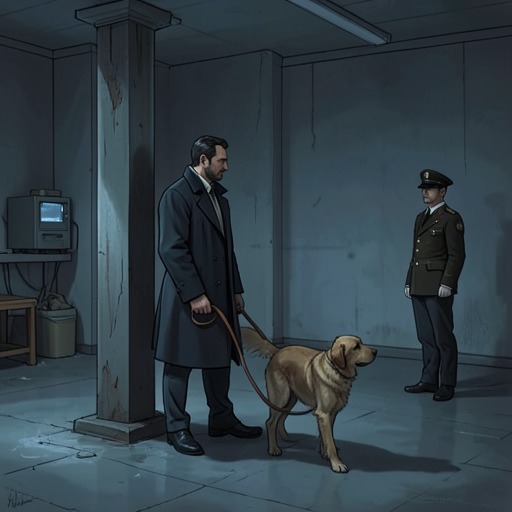
Hide and SeekDavy Brightman’s dog-fighting ring is a clandestine operation in Fife, organized around pit bulls and the staging of illegal fights. Its importance in the novel lies in the contrast between the police’s careful picture of how the gathering will work and the eventual arrests: the suspected organizer, Davy Brightman, is taken into custody, as is disc jockey Calum McCallum. The raid exposes a network that is not merely a rumor about animal fighting but an operation with handlers, transport, and paying attendees.
Organization and suspected leadership
The police identify Brightman as the principal figure behind the fights. He owns scrap yards in Kirkcaldy and Methil, and officers know that he keeps several pit bulls; they suspect that he uses them in fights. These details give the investigation a specific lead: a named person associated both with dogs suited to fighting and with a local business presence. The evidence does not describe a formal hierarchy beyond Brightman’s position as the suspected main organizer and the distinction between handlers and the people attending.
Brightman’s name is already familiar to John Rebus. When news of the raid reaches him, he recognizes Brightman as someone he had played against in school football: Brightman had played left back while Rebus played on the wing, and had once studded him during a match. That recollection does not establish anything about how the ring operates, but it gives the investigation an unexpectedly personal and local dimension. The suspected ringleader is not an anonymous figure in a police briefing; he belongs to Rebus’s memory of Fife.
How the fights are expected to work
The police receive a tip that a dog fight is due to take place at a secluded site. Its distance from ordinary traffic and habitation is central to the operational assessment: it is half a mile from the main road and a mile from the nearest house. A track runs from the road up to the site, providing a likely route for the vehicles bringing the dogs and the attendees. The setting is thus described not simply as remote, but as accessible by a particular approach while remaining separated from nearby homes.
Officers expect three or four vans carrying the dogs, followed by an uncertain number of cars bringing the people who have come to watch. The estimated scale is conditional rather than confirmed: if attendance reaches the size associated with Ibrox, the police will call in reinforcements. The plan distinguishes between the handlers and the punters. The stated priority is to catch the people handling the dogs, not to make the attendees the main target of the operation. That choice defines what the police hope to accomplish and shows how their limited response is organized around identifying the people directly responsible for running the fights.
Police operation and arrests
Brian Holmes joins the police presence in Fife but leaves before the raid takes place. Later, he tells Rebus that this was unfortunate, and that he does not think he made much of an impression on the team he was meant to work with. The operation is under Detective Sergeant Hendry, whom Rebus knows by reputation. Holmes’s absence means he can report neither the raid itself nor its immediate conduct from personal observation; his account marks the distance between being assigned to an operation and being present when it unfolds.
News of the action reaches Rebus through Todd, who raises it as a Fife operation and reports that a dog-fighting gathering has been broken up. The arrests make the raid more than a thwarted plan: the police take people into custody, and the ringleaders are among them. Rebus asks whether the people in charge were caught and learns that all the ringleaders were arrested, including Brightman, identified as the boss. The arrested people are being held at the police station in Dunfermline.
Calum McCallum is among those arrested. Rebus recognizes the name as that of Gill Templer’s lover, and the news prompts an unusually immediate personal reaction: he laughs with a release that mixes triumph with discomfort. The connection does not make McCallum a leader of the ring; the evidence identifies Brightman as its boss, while McCallum’s arrest establishes his presence among those detained. This distinction matters because the operation’s results extend beyond the principal suspect to people whose significance in Rebus’s life is separate from their place in the dog-fighting investigation.
Significance and limits of the account
The ring is presented through the practical details by which police try to anticipate an illicit gathering: a secluded location, a vehicle track, separate transport for dogs and spectators, and a tactical preference for arresting handlers. Its organization is therefore legible through movement and roles, even though the novel supplies no complete membership list or account of how long the operation has existed. Brightman’s arrest confirms the police’s central suspicion about leadership, while the arrest of McCallum reveals that the sweep reaches beyond the person identified as the boss.
The raid also appears in the wider context of a city confronting serious drug problems and a proposed public-awareness campaign, but the evidence does not establish that the campaign and Brightman’s ring are connected. Their juxtaposition instead places the dog-fighting operation among the different demands placed on police attention. Within the ring’s own story, the decisive outcome is concrete: the gathering is broken up, the ringleaders are caught, and Brightman is among those arrested.