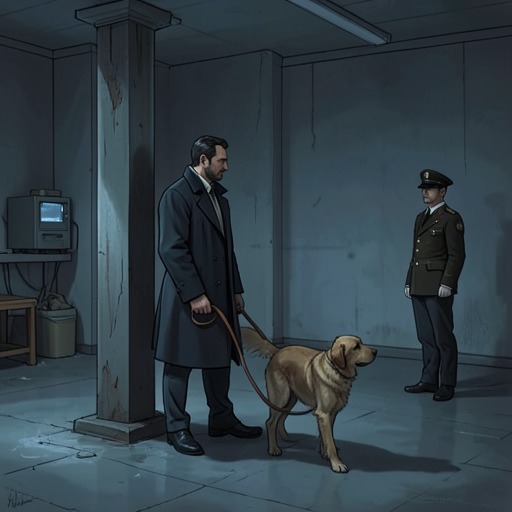
Dogs
Hide and SeekDogs appear in the novel principally as the animals exploited by an illegal fighting ring. They are brought to secluded bouts, set against one another for wagers, and treated by the people running the operation as part of an organized spectacle. The investigation eventually reaches the handlers and the ring’s alleged leader, but the account gives the dogs neither individual identities nor a reported fate after the arrests.
Role in the fighting ring
Brian Holmes explains the activity to John Rebus in direct, practical terms: two dogs are put into a ring, and spectators bet on the result. His description makes the animals the indispensable participants in the event, while the betting and organization belong to the humans around them. The dogs are not presented as willing competitors; they are made to fight for other people’s entertainment and profit.
The novel notes that the practice has recently revived, despite Rebus’s assumption that dog-fighting had disappeared long ago. Holmes calls it vicious, but the account does not dwell on the animals’ physical suffering. Instead, it establishes the basic arrangement—dogs, a ring, and wagers—then follows the investigation into the people who stage the bouts. That focus keeps the dogs central to the crime while showing how little the enterprise recognizes them as anything other than combatants.
The planned raid in Fife
Holmes has spent months working on the ring before telling Rebus that arrests are imminent. The police have received a reliable tip about a fight expected that night at a secluded site in Fife: it lies half a mile from the main road and a mile from the nearest house. A track leads from the road to the location, offering a route for the vans expected to carry the dogs and the cars expected to bring spectators.
The scale of the anticipated gathering shapes the police plan. Holmes’s colleague DS Hendry expects three or four vans carrying dogs, alongside an unknown number of cars carrying people who have come to watch and bet. If attendance grows to the scale of a major football crowd, the officers will call for reinforcements. Their stated priority, however, is not to arrest the spectators; it is to catch the handlers. The plan thus distinguishes the animals being transported to fight from the people who organize and profit from the event, and directs police attention toward the latter.
The dogs and the people who control them
The named suspected organizer is Davy Brightman, described as the main figure behind the ring. He owns scrapyards in Kirkcaldy and Methil, and police believe he keeps pit bulls and fights them. The text connects a specific kind of dog with the operation, but does not claim that every dog involved is a pit bull or describe particular animals. The dogs remain a group in the investigation rather than individual characters.
That distinction matters to the narrative’s account of responsibility. The animals are moved in vans and made to fight; the handlers arrange the event, and the spectators supply the audience and wagers. The police operation is designed around identifying those who run the ring, not treating the dogs as perpetrators. In this way, the dogs’ presence points beyond the bouts themselves to the human system that uses them: transport, secluded venue, organized attendance, and betting.
Arrests and narrative significance
The raid’s aftermath confirms that the police catch the people they set out to pursue. Rebus later learns that everyone arrested has been taken to Dunfermline police station and asks specifically whether the ringleaders were among them. He is told that every one was caught, including Brightman, identified as the boss. The investigation therefore reaches the suspected leadership, rather than ending with the discovery of a single fight or the detention of spectators alone.
The book does not report what happens to the dogs after the arrests, whether they are recovered or where they go. Their narrative role is consequently defined by the exploitation the ring makes possible, not by a resolution of their individual stories. The contrast is stark: the humans are named, investigated, arrested, and placed within the workings of the law, while the dogs remain unnamed and their fate outside the reported events. Their brief but consequential presence exposes the violence at the center of the betting enterprise without shifting the account away from the police effort to dismantle it.