James Carew’s diary
Hide and SeekJames Carew’s diary is a scant personal record that gives John Rebus a crucial link between Carew and Ronnie McGrath. Mostly blank, it contains only a handful of pencilled names and appointments; four entries for Hyde, all on late Friday evenings, turn this otherwise uninformative object into a clue. The diary offers no explanation of the meetings, but its recurring pattern gives Rebus a way to connect two apparently separate strands of the investigation and to reconstruct the larger operation around Hyde’s Club.
Discovery and Physical Form
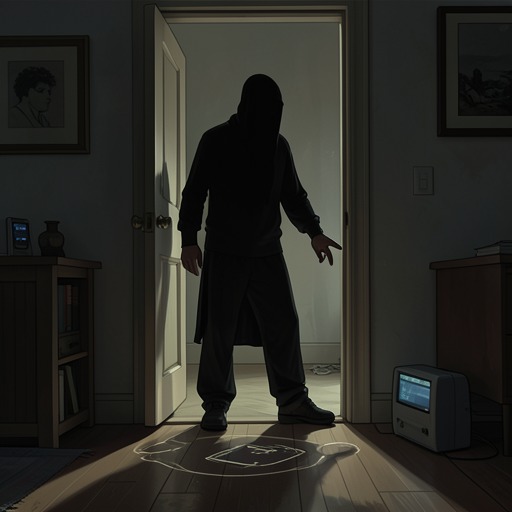
Rebus searches James Carew’s flat for something that might support his suspicion that Carew’s apparent suicide involved blackmail. He finds the diary inside a locked drawer in a desk in the living room. The keys are in Carew’s trousers, which remain at the flat after Carew has died in his pyjamas. The search thus proceeds through an ordinary, practical detail: the dead man’s clothes provide access to a private compartment in his home.
The desk itself is described as an antique and as beautiful, but its small surface can barely accommodate a sheet of A4 paper and an elbow. Once a useful piece of furniture, it has become an ornament in a wealthy man’s apartment. The diary similarly holds a modest, practical form that promises more than it delivers. It is leather-bound, with a large page for each day, but its pages are mostly blank; at most, Rebus finds a line or two of pencil writing on a written page. The object looks substantial and private, yet initially seems to offer little investigative value.
Rebus distinguishes it from the sort of appointment book he expects Carew to have kept for work. He thinks Carew’s office diary would have been crammed with business, whereas this one’s few entries suggest a more personal record. That is an interpretation rather than something the diary itself explains: the pages identify names and times, not the nature of the meetings. Their very sparseness makes the distinction consequential. The notebook does not give Rebus a narrative of Carew’s private life; it supplies isolated marks that he must test against other evidence.
The Hyde Entries
Among the names Rebus reads are Jerry, Lindsay, and Marks. The notes give times—four in the afternoon, half past six, and eleven in the morning—but provide no telephone numbers or locations. Rebus cannot determine whether Marks refers to one person, two people, or even a department store. The entries make clear that he has fragments, not a directory: anonymous names without the context needed to identify their owners or establish what occurred.
One entry is different. It records Hyde at ten at night. Rebus recognizes the name in relation to the word Ronnie McGrath had used when speaking to Tracy, and recalls that James Carew had also supplied the spelling Hyde. The resemblance between Hide and Hyde had earlier allowed the name to remain ambiguous; in the diary, the written surname gives Rebus a concrete point of contact. He reacts with excitement because the entry joins Ronnie and James Carew in a way that goes beyond their brief business encounter on Calton Hill.
Rebus turns through the remaining pages and finds three more appointments with Hyde. The four references fall within six months; every one is on a Friday and in the late evening. Some fall on the second Friday of the month, others on the third. The diary does not state what happened on those nights, identify the people involved, or explain why the meetings recurred. It does, however, establish a repeated schedule rather than a single coincidence. That pattern is the diary’s most important information: a surname, a late hour, and a regular day that can be compared with what Rebus knows about Hyde’s Club.
From Appointment to Reconstruction
The diary helps Rebus infer that Carew’s connection to Hyde was part of a recurring arrangement. Later, he uses its Friday entries to picture gatherings at Hyde’s Club on the third Friday of the month. He imagines boys brought from Calton Hill to serve the club’s clients, and considers that Ronnie may have photographed what went on. In this reconstruction, the diary does not prove each element; it supplies the recurring dates that allow Rebus to connect Carew’s appointments to a larger pattern of activity.
That distinction matters because the diary’s evidentiary force is suggestive rather than complete. It records Hyde’s name and meeting times, not a list of attendees, a description of the club, or a statement of purpose. Rebus’s search for names such as Jerry, Lindsay, and Marks has already shown how readily a sparse entry can support several possibilities. The Hyde appointments are more revealing because they recur and coincide with information from the investigation, but the reader can see the gap between what the pages say and what Rebus infers from them.
In Rebus’s later account of his reconstruction, Ronnie’s photographs may have represented insurance against the people involved. Finlay Andrews, he reasons, learned that Ronnie possessed photographs and killed him because he knew they existed, even though Rebus believes they were of little use as instruments of blackmail or as evidence. The diary therefore belongs to a chain of clues about concealed activity, photographs, and Ronnie’s death. It helps Rebus locate the shape of that chain without, by itself, resolving every link.
Narrative Importance and What Remains Unknown
The diary’s significance lies in the contrast between its blank pages and the implications concentrated in a few entries. It is not a confession or a comprehensive record. Its value emerges only when Rebus reads the name Hyde alongside the earlier, uncertain references to Hide and Hyde in the case. A small notation changes the apparent relation between Carew and Ronnie: what had looked like a fleeting transaction now appears connected to a recurring set of late-night meetings.
The object also illustrates the limits of investigative interpretation. Rebus needs a name, a location, or a telephone number to make the other appointments useful, but the diary gives him none. Even the four Hyde entries establish a schedule without explaining its purpose. The notebook narrows the field of suspicion and supports a reconstruction, but it cannot substitute for evidence of what took place. Its force comes from recurrence and corroboration, not from a full account written by Carew.
Rebus later remembers that, while at Carew’s flat, he was tempted to take the private diary and keep it for himself, but resisted. He contrasts that restraint with his conduct at Hyde’s Club, where he secretly took a photograph of Tony McCall from Finlay Andrews’s office. He also took four other photographs from there. The distinction places the diary within Rebus’s own moral accounting: he left Carew’s private record behind, while the photographs became objects he retained and returned to in private. The book does not state what ultimately happens to the diary. Its recorded role is the one it plays in the investigation—a sparse document whose repeated appointments expose a connection, while leaving Rebus to supply, and potentially overread, the pattern around them.