Neil McGrath’s tie clip
Hide and SeekNeil McGrath’s tie clip turns a personal possession left at Ronnie McGrath’s house into a tangible link between Neil and the night Ronnie died. John Rebus’s decision to keep it, and Neil’s recognition of it, make the clip an investigative clue rather than a resolution: it helps establish Neil’s presence at the house, but does not by itself explain what he did there or prove responsibility for Ronnie’s death.
Identity and Recovery
The clip is first important as something left behind at Ronnie’s house. When John Rebus later returns upstairs, he recalls where it had lain. The house is already a place under scrutiny: Rebus has been examining the circumstances surrounding Ronnie’s death, and the clip preserves a connection to an earlier, otherwise easily overlooked visit. Its significance lies in that physical trace. A small object has remained where its owner left it, even as the people connected to the house have gone.
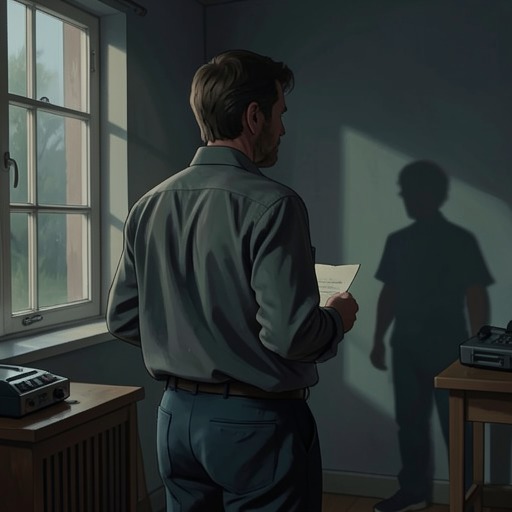
Rebus’s recollection of the clip occurs while he is inside Ronnie’s bedroom, looking through a gap in the boards over the window. He has recognized outside a Ford Escort that had followed him from the police station and previously waited outside his flat. He hears a floorboard creak and knows someone is behind him. The clip belongs to the accumulating evidence around Ronnie’s house, but the passage does not establish that the person behind Rebus is its owner. Its later identification, rather than this moment of surveillance, supplies the direct connection to Neil.
Identification and Connection to Neil
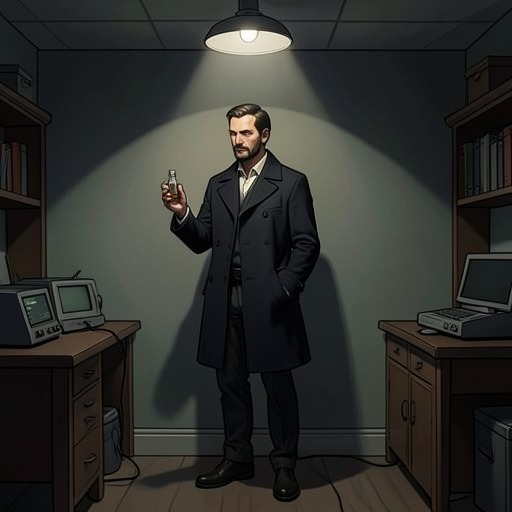
Rebus eventually confronts Neil with the fact that he was at Ronnie’s house on the night Ronnie died. Neil acknowledges that he was there for a while. Rebus then holds out the shiny clip. Neil cannot make it out in the torchlight, yet recognizes what it is without needing to see it clearly. He explains that it is his tie clip and that his tie broke that day, leaving the clip in his pocket. The exchange connects the object’s presence at the house to Neil’s account of what happened to his clothing.
The clip’s force comes from the contrast between its modest appearance and the importance of the recognition. It is not presented as a dramatic confession or as a complete explanation of Neil’s movements. Instead, Rebus offers an object that Neil immediately understands, and Neil supplies a specific circumstance that accounts for it: the broken tie and the clip carried in his pocket. Neil’s admission that he was at the house gives that explanation a setting, while the clip independently anchors the conversation to a physical trace left there.
Investigative Value and Limits
Rebus does not hand the clip back. He puts it into his pocket, and Neil understands the decision. That gesture keeps the item within the investigation and marks a shift in the exchange: the clip is no longer merely something Rebus has noticed at the house, but an object whose connection to Neil has been acknowledged by Neil himself. The evidence is still narrow. It supports Neil’s presence at Ronnie’s house and his explanation for how the clip came to be there; it does not establish what he did during the time he was there, or whether his visit had any part in Ronnie’s death.
That limitation matters because Rebus is struggling to distinguish a persuasive account of the death from a provable crime. His working reconstruction includes Ronnie being deprived of heroin, a body that someone had moved, and a packet of apparently good heroin that might have encouraged an overdose explanation; rat poison had also been found. Rebus recognizes how much of this remains conjecture. The clip adds a concrete fact to an uncertain case, but it does not settle the competing possibilities or fill in the missing circumstances surrounding Ronnie’s death.
Narrative Significance
The clip’s role is therefore one of connection without closure. Neil had been at the house for a while on the night Ronnie died, and the tie clip left there makes that presence materially legible. Yet neither the object nor Neil’s acknowledgement alone tells Rebus why Neil was there or what took place. The clue narrows the distance between a person and a scene while preserving the distinction between being present and being responsible.
The object also contrasts with the broader pressures surrounding Ronnie’s death. The case involves heroin use, the possibility of a staged overdose, and a city where Rebus’s doctor describes intravenous drug use as widespread. Against that scale, the clip is an intensely particular trace: not a general statistic or a theory about the death, but Neil’s own possession in a specific house. Its evidentiary weight is limited, but its physical specificity gives Rebus something firmer to work with than speculation. By pocketing it rather than returning it, he preserves that small, unresolved link as the investigation continues.