Rebus Is Framed and Suspended from the Investigation
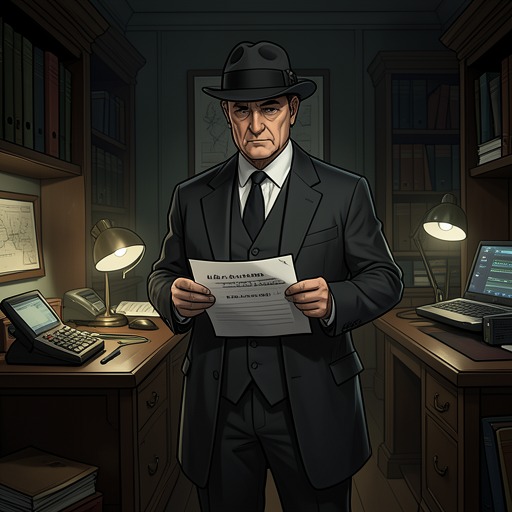
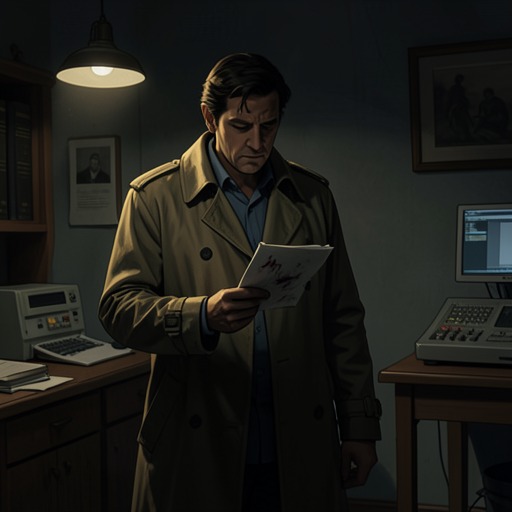
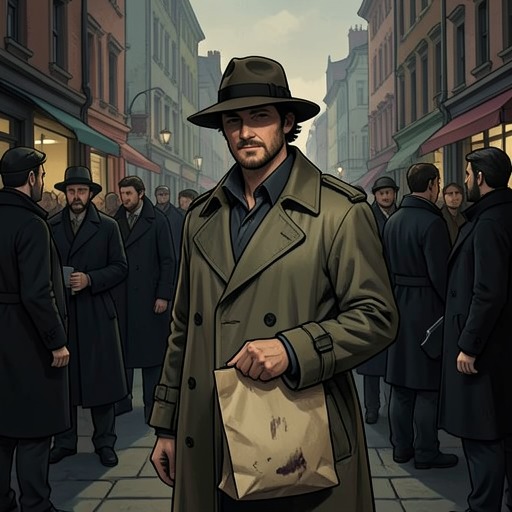
Hide and SeekJohn Rebus Is Framed and Suspended from the Investigation marks the moment a case about Ronnie McGrath’s death becomes a threat to Rebus’s own standing in the police. A complaint involving a twenty-pound payment gives the authorities grounds to remove him temporarily from the inquiry. Rebus sees the accusation not as an isolated disciplinary matter but as part of Hyde’s effort to make him stop investigating. The episode joins two forms of concealment: the staged appearance of McGrath’s death and the attempt to divert scrutiny from the people Rebus believes are responsible.
The investigation that leads to the accusation
At McGrath’s death scene, Rebus encounters a body arranged with arms outstretched between two candles, while a jar that had held instant coffee contains disposable syringes. The deliberate arrangement gives the room the appearance of an occult tableau, but the scene also contains the ordinary evidence of drug use. Rebus notes the syringes and asks that the wall be photographed, where a carefully drawn five-pointed star sits within two concentric circles. The combination of death, drug paraphernalia, and precise symbols encourages a ritual interpretation before the cause and circumstances are settled.
The photographs are part of an official initiative: Superintendent Watson has ordered pictures of drug-related incidents for his campaign. Rebus uses the photographer’s presence to record the wall as well as the body. That detail matters to the later conflict because the case is not merely a private investigation: it is being documented within an institutional campaign whose public subject is drugs. The striking symbols offer a visible explanation, while Rebus continues to suspect that the scene has been arranged to misdirect.
That suspicion receives support, though not a complete solution, from Matthew Vanderhyde’s assessment. Vanderhyde argues that human sacrifice is rare among Satanists and that a sacrifice without blood would be exceptionally implausible. He considers it more likely that someone made the death appear ritualistic after the victim had died. His reasoning does not identify the culprit, but it reinforces Rebus’s view that the tableau may be camouflage rather than an account of what happened. This distinction—between the appearance of ritual and the mechanism of death—forms the investigative ground on which Rebus believes Hyde is trying to obstruct him.
The complaint and Rebus’s response
The personal crisis becomes unmistakable when Rebus enters an interview room and sees the teenager identified as James with two detectives. The young man reacts with alarm at Rebus’s arrival, and Rebus has to signal that he is not there to use physical force. His response is controlled in manner but plainly angry: he tells the young man that he will face consequences. When the teenager dismisses the threat, Rebus lunges forward, and Brian Holmes pulls him back. The scene exposes a vulnerability in Rebus’s position: even an understandable display of anger can make him appear to confirm the complaint against him.
Rebus then explains his interpretation to Watson. He says a man called Hyde wants him to stop investigating McGrath’s case and that the complaint is a setup. Watson points to the formal allegation: the teenager claims Rebus gave him twenty pounds. Rebus acknowledges paying the money but denies that it was for sex; the available account does not establish the alternative reason for the payment. The difference between those facts is central. The payment is real, while its alleged purpose is contested, and the accusation arrives at a point when Rebus believes his inquiry has become dangerous to someone else.
Watson’s decision and immediate consequence
Rebus tries to persuade Watson that acting on the complaint will serve Hyde’s interests. Watson nevertheless tells him to leave the investigation alone, initially for a day or two and possibly for a week. He promises that the complaint will be tested and that its account can be broken down. The instruction is therefore both a temporary removal from the case and a decision to handle the allegation through official channels rather than accept Rebus’s explanation on the spot.
Watson’s order does not establish that Rebus is guilty, nor does it resolve who is behind the accusation. It does, however, interrupt the work Rebus is trying to do. His belief that Hyde engineered the complaint remains an inference voiced by Rebus, not a finding confirmed in the scene. The episode’s tension comes from that gap: Rebus may be right about the purpose of the accusation, but the documented payment gives the complaint a foothold, and the investigation is now subject to the same uncertainty that surrounds McGrath’s death.
The wider pattern of concealment
The later public account preserves the pattern of partial disclosure without confirming every connection Rebus suspects. Reports acknowledge that Finlay Andrews ran a club whose dealings were not entirely legitimate and that Malcolm Lanyon died by suicide as authorities closed in on his enterprise. They provide no details of the activities involved. James Carew’s suicide is publicly described as unconnected to Lanyon’s, despite their friendship, and Lanyon’s association with Andrews is left unresolved. The scandal fades, while elegant rooms reopen and the story’s rumors linger longer than its official explanations.
This aftermath gives Rebus’s allegation of a setup a larger narrative context, but it does not retrospectively prove the particulars of his claim about Hyde. Instead, the ending shows how public knowledge can be narrowed: deaths and selected associations are reported, while the operations and relationships that might explain them remain obscure. The accusation against Rebus is consequential because it threatens to remove the investigator from precisely the kind of inquiry in which evidence is vulnerable to being displaced by a more convenient story.