Rebus’s destruction of the Hyde’s photographs
Hide and SeekJohn Rebus’s destruction of the Hyde’s Club photographs closes the investigation not with a public reckoning but with a private act of erasure. The scandal has been contained, the deaths reported in carefully limited terms, and the people in the photographs remain powerful and recognizable to him. Rebus burns the images after repeatedly confronting the choice, making their destruction both a relinquishment of evidence and an admission of the guilt he cannot set aside.
A scandal made small
The photographs acquire their force against the official story that follows the deaths of Finlay Andrews and Malcolm Lanyon. The scandal is described as small and soon forgotten: rooms in elegant Georgian terraces are reopened, while journalists search for scandal but receive only a narrow account. Finlay had run a club whose dealings were not entirely legitimate; Malcolm had killed himself as the authorities closed in on his small empire. The nature of those dealings is left unspecified.
James Carew’s suicide is publicly separated from Malcolm’s, despite their friendship. Malcolm’s connection to Finlay and the club is left unresolved, and his appointment as James’s executor is presented as coincidence. The suggestion that other lawyers could have served instead further reduces an unsettling connection to an administrative detail. This version of events gives the public enough information to register deaths and rumors, but not enough to understand the network Rebus has encountered.
Rebus has told Brian Holmes that he knows who the people behind it are. Holmes asks whether that knowledge will matter, but Rebus keeps walking without answering. The question anticipates the final act: recognition is not the same as exposure, and possession of evidence does not guarantee that it will be used. The story’s public ending thus leaves the central knowledge with Rebus, while the scandal recedes around him.
The photographs and their keeper
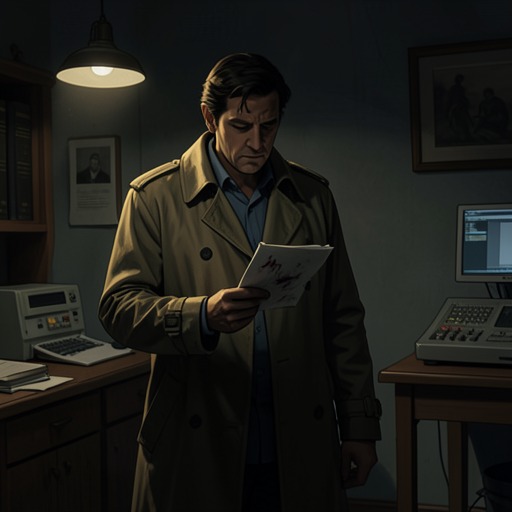
The images remain in a slim file in Rebus’s flat, inside a small filing cabinet beside the stereo. He has concealed the key beneath a corner of the carpet, a hiding place he regards as secure. The file connects the aftermath of Hyde’s Club to his domestic life: in the night, he moves from the darkened flat into the living room, switches on the desk lamp, unlocks the cabinet, and carries the photographs to the chair that had served as his bed for months.
The file contains four photographs taken at random from Andrews’s office, taken along with the photograph of Tony McCall that Rebus had filched separately. Rebus studies the faces on the prints: he recognizes them and associates them with names, handshakes, and voices. They are important, influential people, though the account does not identify them individually or specify what each image depicts. Their consequence lies partly in that gap between private recognition and public anonymity: Rebus knows what the faces mean in the context of the club, while the scandal’s official account gives no such details.
Tony’s photograph carries a more personal charge. Rebus had taken it from Andrews’s office while alone there for a moment, rather than taking James Carew’s private diary when the opportunity arose at Carew’s flat. He remembers resisting that earlier temptation but not resisting at Hyde’s. Tony is now a friend and colleague with whom he feels he has nothing in common except guilt. The image therefore belongs not only to the evidence he has kept, but also to a friendship altered by what Rebus knows and has done.
Rehearsal, decision, and aftermath
Before the burning, Rebus has thought about the photographs repeatedly, indeed about little else since the night at Hyde’s Club. He studies the faces again on nights when sleep is difficult, returning to the same visual evidence rather than resolving what to do with it. The act is prepared through repetition: he brings a metal wastepaper bin from beneath the desk, drops the photographs into it, and holds a lit match above them. He has held the match there many times before. This is not the first impulse to destroy the evidence, but it is the moment when the hesitation ends.
The photographs burn in a life already marked by the human cost of Hyde’s and by inadequate justice. Earlier, Rebus sits at his kitchen table drafting a resignation letter, but cannot make the words convey his emotions; he crumples the page and throws it toward the bin. Seeing Tracy, Holmes, and Nell Stapleton sharing a meal has reminded him of what the club cost, and of how little justice followed. The next knock at his door brings Gill Templer, smiling, but the scene does not resolve his professional or moral unease. The later destruction of the photographs takes place in that unresolved aftermath, not after any demonstrated public vindication.
The act removes the images from Rebus’s possession and prevents their use as evidence, while leaving the concealed knowledge and his guilt intact. Its private, almost ritual sequence contrasts with the public story’s quick fading: the reopened rooms and softened reports on one side, the solitary lamp, hidden key, file, bin, and match on the other. Rebus can destroy the photographs; he cannot make the people they showed, the deaths surrounding Hyde’s, or his own role in the affair disappear with them.