Rebus’s suspension from duty
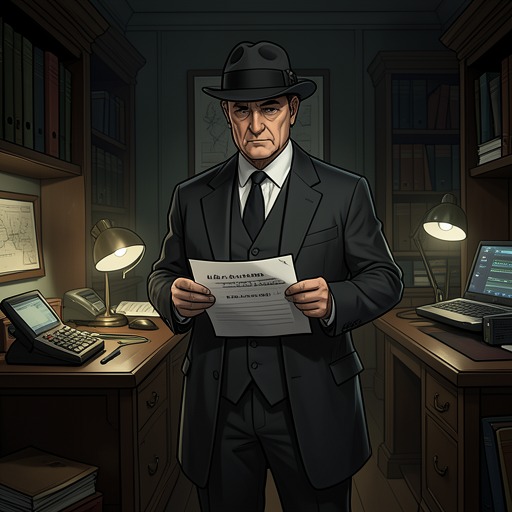
Hide and SeekJohn Rebus’s suspension from duty is a partial, carefully managed exclusion: a complaint against him begins to fade, but he remains outside the official investigation even as he continues trying to influence its course. The status limits his authority without extinguishing his sense of responsibility, and its slow, unofficial easing mirrors the broader handling of scandal in the novel.
The complaint and conditional reprieve
When John Rebus asks whether he is clear of the complaint, the answer is only tentative. He is told to allow a few more days for the matter to die down, rather than being given an unqualified return to duty. The complainant has disappeared after giving a false address, weakening the case against Rebus; nevertheless, the response is to wait for attention to pass, not to announce a decisive resolution.
The remaining uncertainty has a social cost as well as a professional one. A few colleagues have made jokes about the complaint, and the expectation is that some new subject will soon displace it. Rebus is thus treated as someone whose immediate danger may be receding, but whose standing has not simply been restored. His suspension exists in the gap between formal accountability and the informal hope that an embarrassing matter will be forgotten.
Exclusion from the Lanyon questioning
That gap becomes concrete when Rebus goes to Great London Road while Malcolm Lanyon is being held for questioning. Rebus is still officially excluded, and other officers have been assigned to conduct the interview. He wants to stay close because he believes he knows the answers to the questions and the kinds of tactics Lanyon may use; his stated concern is that Lanyon should not escape through a technicality.
Rebus’s offer to be available as backup does not restore his role. The officers’ response makes clear that his help is not welcome, even though he has arrived prepared to assist and remains convinced that his knowledge matters. The scene sets practical experience against official assignment: Rebus can see a risk in the interrogation, but the suspension leaves him without recognized authority to address it.
A changing case and an unsettled role
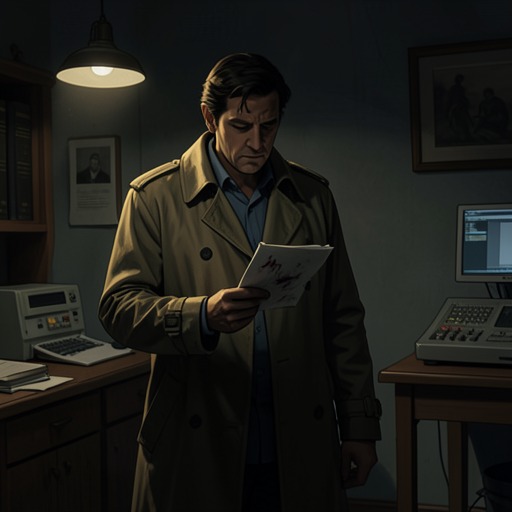
The case itself demands the kind of reconstruction Rebus continues to undertake. In his written review of Ronnie McGrath’s death, he tests the apparent explanation of overdose against the circumstances: Ronnie had been deprived of heroin despite the city’s supply, his body had been moved, and a packet of clean heroin had been left behind. The discovery of rat poison disrupts the possibility that the death would be recorded as a simple misadventure. Rebus then questions his own framing and starts again, showing that suspension has not ended his investigative thought, even when he lacks a secure official position.
The wider case also exposes a contrast between scrutiny of vulnerable people and the management of powerful or respectable interests. Evidence of dangerous heroin is discussed against the scale of intravenous drug use in Edinburgh; a character admits avoiding questions about where money came from; and Rebus challenges Charlie’s claim to belong in Pilmuir. These details do not establish that any of them caused Rebus’s suspension, but they give his uncertain standing a larger context: the investigation moves through a city where responsibility is unevenly acknowledged and where the right to ask questions is itself contested.
Informal closure and aftermath
The final account of the scandal offers no clear confirmation that Rebus has been formally reinstated. Finlay Andrews and Malcolm Lanyon die, while reports reduce Andrews’s club to dealings that were not entirely legitimate and describe Lanyon’s death as suicide. James Carew’s suicide is publicly separated from Lanyon’s, despite their friendship and Carew’s role as Lanyon’s executor; the club’s connection to Lanyon is left unresolved. The official story therefore narrows what can be said even as the underlying associations remain suggestive.
Against that quieting of the scandal, Rebus’s suspension appears as part of an atmosphere in which difficulties are allowed to fade rather than fully confronted. His immediate complaint loses force when its complainant vanishes, and the wider story ends with rumors diminishing and the official account leaving important questions unanswered. Rebus remains close enough to recognize the pattern, but the evidence does not show a clean restoration of his professional position.