The Bridge of Sighs
Hide and SeekThe Bridge of Sighs is a city-centre bar whose unexceptional midweek bustle becomes a meeting point for private and professional lives. Brian Holmes and Nell Stapleton come there for an evening together, only for a photograph from Holmes’s casework to intrude on their conversation; nearby, John Rebus and Tony McCall play pool and talk. The pub’s ordinary routines—drinks, a loud hi-fi, a game and a coin toss—give these crossings their quiet significance: work follows its investigators into leisure, while people who would prefer not to meet come close to sharing the same space.
Setting and Evening Rhythm
The Bridge of Sighs is described at a midweek, mid-evening turning point in the city-centre bar trade. The after-work customers have left, while the later crowd from the housing estates has not yet arrived by bus. This in-between hour makes the pub feel less like a destination than a place temporarily occupied by different groups, each on its own schedule.
The arrangement of the room is specific: Holmes and Nell sit at a corner table, away from the video games but too close to a loudspeaker. When Holmes asks for the volume to be lowered, the barmaid refuses because customers like it. Holmes answers that he and Nell are customers too. The small disagreement establishes the bar as a shared commercial space in which no single party controls the atmosphere. It also gives their conversation an everyday constraint: even a private exchange has to compete with the pub’s noise and routines.
Their drinks mark the difference in their preferences without interrupting the ordinary scene. Holmes goes to the bar for another half, while Nell has orange juice and Perrier. The details situate the couple in a recognizably casual evening out, but the meeting is not free of work: Nell has brought Holmes a printed bibliography of occult materials, after locating books and theses for his inquiry.
Holmes and Nell: Private Life Meets Casework
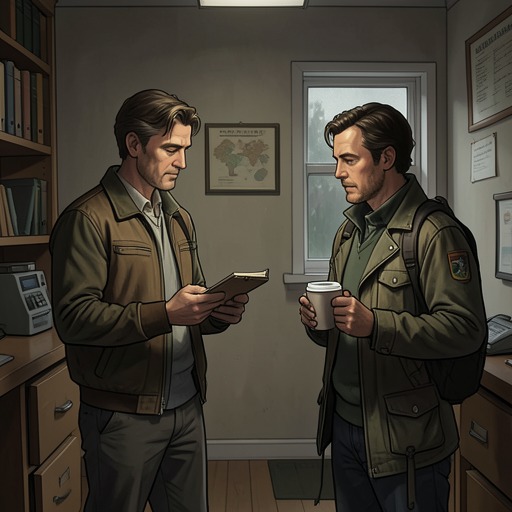
Holmes has asked Nell, a librarian at Edinburgh University, to find books on the occult. She does more than locate books he could consult on the premises: she also finds relevant theses and prepares a printed bibliography, which she gives him at the pub. Their exchange shows her expertise as a practical contribution to his investigation, while making visible the overlap between their professional and personal worlds.
That overlap becomes more pointed when Nell opens Holmes’s briefcase and sees a photograph of Tracy. She closes the case as Holmes returns with her drink and asks who the woman is. Holmes identifies Tracy only as part of a case he is working on, then asks Nell who gave her permission to open his briefcase. Nell turns the tension into a joke about his collecting dirty pictures; they smile together. The scene does not resolve the question of how much Holmes will tell her. Instead, it briefly exposes the boundary he is trying to maintain—and how easily an object from his work can bring that boundary into their evening.
Holmes is especially reluctant for Rebus and Nell to meet. He tries to leave his police life behind when he is with Nell, even though their book-related favours already connect the two. He also wants to keep Nell’s research ability available for future police needs. The photograph and bibliography thus stand on opposite sides of his attempted separation: one brings the case into their time together, while the other makes their intimacy useful to his work.
Rebus, McCall, and the Pool Room
Rebus and McCall enter laughing at a shared joke and head towards the bar. Holmes notices them and hopes they will not come to his table. He is also concerned that Rebus might use his teasing nickname, Shoeleather. The pair do not approach: after buying drinks, they go to the distant pool table and begin disputing who should provide the two twenty-pence pieces for the game. Their presence is close enough to unsettle Holmes, but the pub’s separate areas keep the two groups apart for the moment.
Rebus and McCall play by turns, with Rebus flipping a coin to decide who breaks. While they play, they discuss Edinburgh’s gay scene; Rebus responds without condemnation, then misses a shot when he comes to the table. The exchange places the two men’s familiarity alongside their official roles as senior officers, without turning the pub into a formal workplace. The game gives their conversation a setting and a rhythm, while the subject matter reveals a personal ease that coexists with Rebus’s efforts to push away an unwelcome memory of McCall’s earlier declaration of brotherly closeness.
Narrative Role
The Bridge of Sighs gathers two pairs of relationships into one evening without making them share a table. Holmes and Nell’s corner table is a setting for affection, research, and a brief challenge to Holmes’s privacy; Rebus and McCall’s pool game carries camaraderie and personal conversation. The pub’s ordinary divisions—corner table and distant pool table, drinks and games, one group’s departure and another’s arrival—allow these strands to coexist.
Its importance lies in this near intersection rather than in a dramatic confrontation. Rebus’s arrival threatens the separation Holmes wants between his police work and his relationship, but the officers remain across the room. The bar therefore makes the boundary visible while postponing its breach: work and private life are not truly sealed off from each other, even when the people involved manage, for a time, to occupy different corners.