
From Resentment to Gratitude
Hillbilly ElegyThis theme thread follows J.D. Vance’s gradual reconsideration of what he lacked, what others endure, and how gratitude can motivate rather than excuse action.
increasing Bearing strength in each event
 decreasing
Bearing strength in each eventdecreasingA Child’s Inventory of Lack
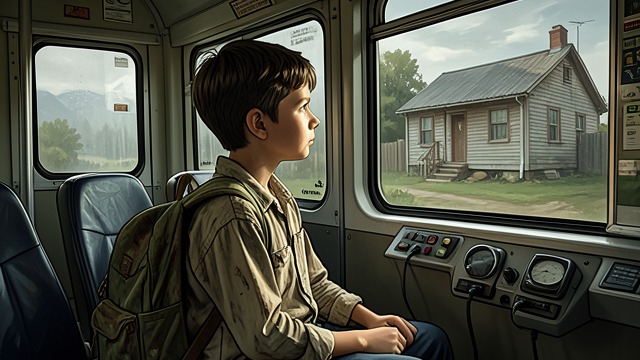
Measuring Life by What Is Missing
Everyday comparison
J.D. Vance resents riding the bus, wearing inexpensive clothes, living in a small house, and losing Papaw. These frustrations feel enormous because they define the world he knows.
Resentment as habit
He has little reason to compare his life with people facing greater material deprivation. Discontent becomes a familiar way of interpreting his circumstances.
The perspective is understandable, but it is not the only story his life can tell.
The Eraser in Iraq

A Child’s Joy Changes the Scale
A modest gift
J.D. Vance gives a shy Iraqi schoolboy a small eraser. The boy runs to his family, delighted by the inexpensive object.
A new comparison
Seeing the school and the children’s circumstances, J.D. Vance recognizes how many comforts and forms of support he had taken for granted. His resentment does not vanish, but it loses its claim to be the whole truth.
The encounter invites gratitude without pretending his own childhood was easy.
The Life Once Imagined

Arrival Without Simplicity
A fulfilled picture
J.D. Vance has a loving partner, a home, meaningful work, and financial security. These were conditions he once regarded as fantasy.
Unease remains
Upward mobility has separated him from familiar customs and introduced new social expectations. Gratitude coexists with cultural discomfort and unresolved family wounds.
A good life does not require pretending that the journey has erased every cost.
Shopping With Memory

Abundance Seen From Both Sides
Generosity in a store
J.D. Vance buys gifts for a child he has never met. His new material security allows him to participate in a system of charitable giving he did not know as a child.
Old scarcity returns
The shopping brings back memories of family debt, pressure, and the effort to make Christmas look prosperous. Giving makes him more aware of luck, not less aware of what poverty felt like.
His past becomes a guide to generosity as well as a reminder of inequality.
Gratitude as Obligation

Remembering Who Helped
A life dependent on others
J.D. Vance recognizes that relatives, teachers, mentors, and friends repeatedly made his progress possible. His success cannot be explained by individual effort alone.
Extending the chance
He asks what might have happened without those interventions and turns that question toward Brian. Gratitude becomes a reason to help create similar support for someone else.
The movement from luck to responsibility gives the memoir’s ending its forward direction.
before and during J.D. Vance’s early Marine service
early in J.D. Vance’s Iraq deployment
after his marriage and professional success
shortly before Christmas in Washington, D.C.
in the book’s closing reflections
