
The Family’s Informal Safety Net
Hillbilly ElegyThis subplot traces how relatives repeatedly provide care outside formal systems, while showing both the lifesaving value and fragility of that support.
increasing Bearing strength in each event
 decreasing
Bearing strength in each eventdecreasingGrandparents as Gatekeepers

Protection Before the System
A trusted refuge
Mamaw and Papaw help with homework, food, and daily care. Their home gives J.D. Vance a place to go when the household around Mom becomes unstable.
Informal authority
They protect him through family loyalty and forceful personal rules rather than formal custody arrangements. Their influence works because everyone knows they will intervene.
The arrangement is powerful but depends on the unusual strength and availability of particular relatives.
The Courtroom Compromise
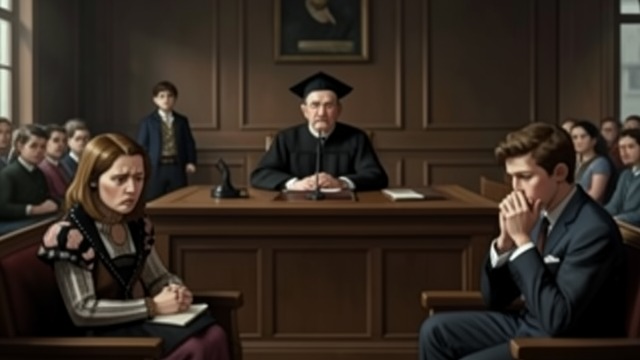
A Legal Case, a Family Choice
Fear of separation
J.D. Vance worries that child services might remove him from his grandparents and place him with strangers. He lies at the hearing to keep Mom from prison.
An informal arrangement
His legal custody remains with Mom, but he is allowed to live with Mamaw whenever he chooses. The family’s actual safety plan exists outside the formal order.
The compromise preserves his home but exposes how little the system recognizes kinship care in a way he can trust.
Lindsay as a Caregiver
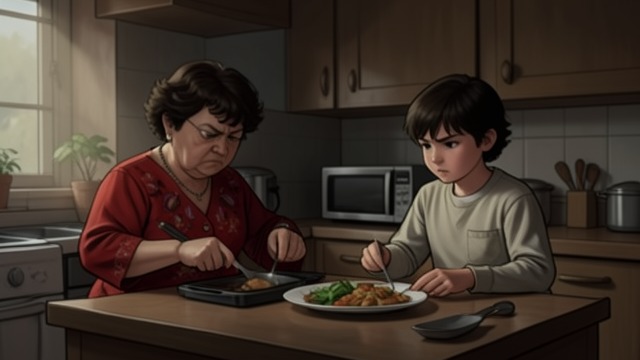
Siblings Holding the Household
Daily life without a parent
Lindsay Leigh Lewis and J.D. Vance feed themselves and manage school while Mom receives treatment. They improvise meals and solve problems without reliable adult structure.
Care that has a cost
Lindsay is still young, yet she takes responsibility for her brother and the household. Their independence protects them but also asks them to carry burdens meant for adults.
The family safety net is sustained by children as much as by grown relatives.
Aunt Wee Opens Her Home
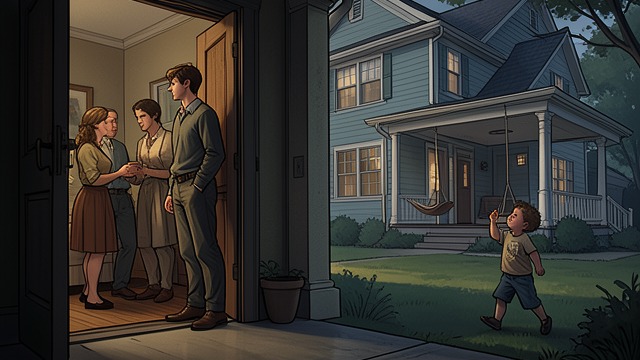
A New Home Base
A place to return
After college, J.D. Vance worries that staying with Aunt Wee will disrupt her family. She insists that her home is now his home.
Care across generations
He helps with his younger cousins and shares ordinary family routines. Aunt Wee’s support replaces some of what Mamaw had provided after her death.
The gesture demonstrates how kinship care can continue even when one family anchor is gone.
The Formal System’s Blind Spot
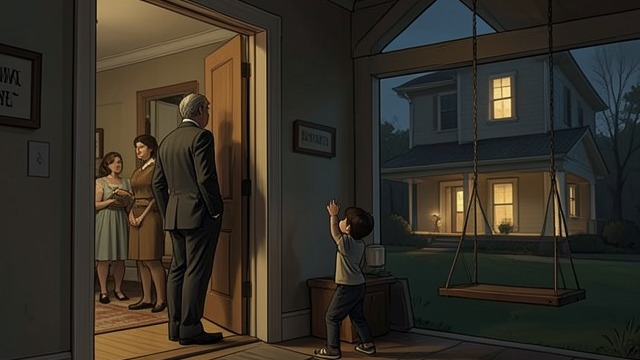
Kin Outside the Categories
A licensing obstacle
J.D. Vance reflects that child-services rules may treat grandparents as untrained caretakers unless they meet foster-care licensing requirements. Families like his can find relatives excluded from the options they trust.
Policy can deepen fear
As a child, he stayed silent because the formal system seemed capable of separating him from his family. He argues that systems should recognize extended kin as potential protectors.
The memoir turns a private arrangement into a critique of how the safety net defines family.
during J.D. Vance’s early childhood
after Mom’s arrest when J.D. Vance is about twelve
during Mom’s stay in addiction treatment
after J.D. Vance graduates from Ohio State University
during J.D. Vance’s later reflections on child services
