
The Marriage Models Around Him
Hillbilly ElegyThis emotional thread contrasts J.D. Vance’s inherited expectations about relationships with the stable partnerships he observes and gradually learns to build.
increasing Bearing strength in each event
 decreasing
Bearing strength in each eventdecreasingLove as Shouting
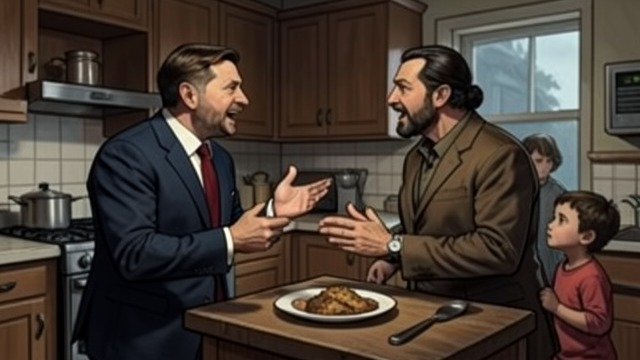
A Noisy Model of Marriage
Conflict as normal speech
J.D. Vance sees adults use insults, threats, and raised voices during disagreements. He assumes this is how people speak to one another in private.
A rare exception
Aunt Wee and Dan treat each other with unusual kindness. At first, their lack of shouting seems almost strange to him.
The contrast plants an alternative model before he is able to understand how to practice it.
Watching Don’s Household
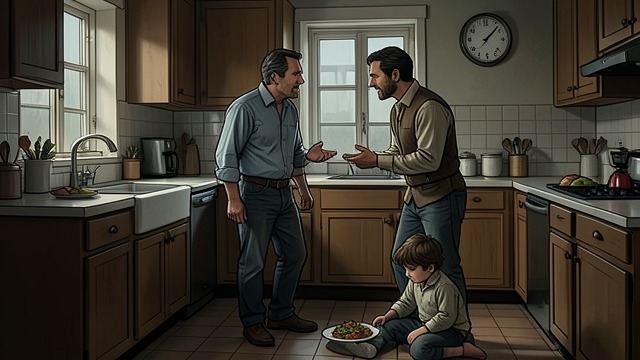
A Quieter Domestic Life
Different arguments
Don Bowman and Cheryl disagree without the explosive insults J.D. Vance knows from Mom’s household. Their children seem to enjoy a life with more routine and less fear.
Calm as evidence
The home shows him that disagreement does not have to become a crisis. Yet he remains uncertain whether he fully belongs there or can trust it to last.
The experience gives him a model but not yet the confidence to adopt it.
Aunt Wee and Dan’s Lesson
Family Without Battle
A different account of kinship
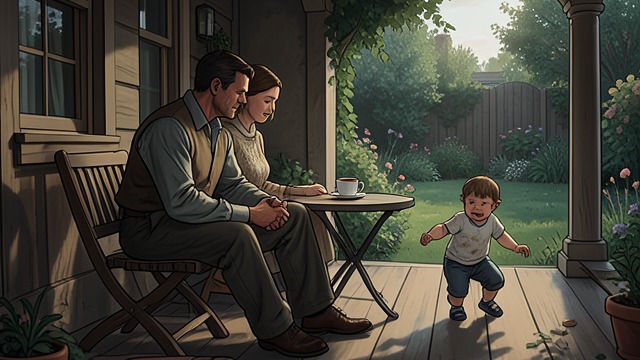
Dan tells J.D. Vance that family members should be called and checked on even when they seem uninterested. His response replaces the expectation of rejection with patient effort.
The struggle beneath calm
Aunt Wee later reveals that she once braced physically for arguments with Dan. Their peaceful marriage is not proof they never carried defensive habits; it is proof those habits could change.
Their relationship offers both a model of care and a path toward learning it.
The Fight With Usha
Repeating the Old Script
Fear becomes anger
When Usha Vance tries to comfort J.D. Vance after an interview, he lashes out and leaves. He recognizes how quickly disappointment becomes an attack on someone trying to help.
A different response from his partner
Usha follows him, asks him to communicate, and accepts his apology without counterattack. Their exchange interrupts the escalation he expects.
The relationship makes a peaceful response imaginable, while leaving J.D. Vance responsible for changing his own behavior.
A Chosen Family Future
Partnership as Practice
Decisions made together
J.D. Vance and Usha Vance shape their clerkship plans around shared priorities rather than prestige alone. They later marry and build a home together.
An unfinished transformation
J.D. Vance still describes himself as someone whose anger and withdrawal require attention. Marriage does not erase his history, but it gives him a relationship in which new habits can be practiced.
The stable home he once lacked becomes something he helps create with another person.
during J.D. Vance’s childhood
during visits to Don Bowman’s home
during J.D. Vance’s adolescence and adulthood
during the second year of law school
from the end of law school into marriage
