Brian
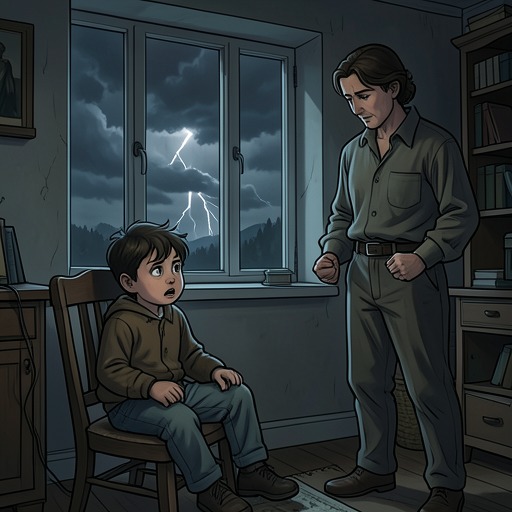
Hillbilly ElegyBrian is a young man from Kentucky’s Appalachian region whose circumstances bring the book’s reflections on family instability and the unequal chances facing children into a single, intimate encounter. J.D. Vance recognizes something of his own fifteen-year-old self in Brian, but Brian lacks the grandparents who helped Vance survive his childhood. His story remains unresolved: after a childhood already shaped by trauma and separation, his prospects depend heavily on whether the people around him can offer lasting support and a sense of agency.
Background and Family Circumstances
Brian’s mother, like Vance’s, became involved with narcotics. Brian had a complicated relationship with his father, though the account gives no further particulars. By the time Vance met him, Brian’s mother had permanently lost custody, and Brian had not lived with her for years. Supportive relatives were keeping him out of foster care, but they were not described as providing the stable, grandparent-led refuge that Mamaw and Papaw had provided for Vance.
The comparison between the two young lives is therefore both close and sharply limited. Brian reminded Vance of himself at fifteen, yet Brian had already experienced multiple instances of childhood trauma and lacked a Mamaw or Papaw like Vance’s. The book does not identify those traumas individually; it emphasizes instead how early adversity leaves Brian approaching the difficult decisions of education and employment with little margin for error.
The Lunch with J.D. Vance
Vance’s lunch with Brian takes place at a local fast-food restaurant in a part of Kentucky where, as the narrative observes, there was little else to eat. Vance notices details that might escape other people: Brian does not want to share his milk shake, an unusual reluctance in a boy who ends each sentence with please or thank you. He eats quickly, then nervously looks from person to person. These small gestures lead Vance to recognize that Brian wants to ask for something.
Vance puts an arm around Brian’s shoulder and asks whether he needs anything. Brian avoids eye contact and, almost in a whisper, asks for a few more french fries. The request reveals the immediate fact beneath the nervous manner: he is hungry, yet uncomfortable asking for additional food. The scene’s force comes from its scale. In 2014, in what Vance calls the richest country on earth, a child’s modest request for more fries is difficult for him to voice. The lunch makes deprivation visible not through a broad statistic but through a hesitant question.
Loss and the Limits of Self-Protection
A few months after their last meeting, Brian’s mother dies unexpectedly. Since he had not lived with her for years, an outsider might assume her death was easier to bear; Vance rejects that assumption. He places Brian’s loss alongside his own experience, explaining that distance from a parent can be a means of survival rather than evidence that love has ended. People in such circumstances may still love their parents and hope they will change, even when wisdom or law requires them to protect themselves.
The distinction matters to the way Brian’s family story is understood. Separation does not cancel attachment, and a parent’s death does not become emotionally simple merely because the child has been living elsewhere. Vance offers this reflection as a shared condition of people like himself and Brian, not as a report of a private conversation with Brian about his feelings.
Prospects and Narrative Significance
When Vance asks what will happen to Brian, the account offers no individual resolution. Brian’s mother is dead, his hope of a normal life has long since evaporated, and the choices he will soon face about education and employment are difficult even for children raised with wealth and privilege. Against that bleakness, the presence of relatives who keep him out of foster care is a concrete protection, but it does not by itself settle what his future will be.
Vance locates Brian’s chance in the people and institutions around him: his family, Vance and his kin, and the wider community of hillbillies. Whether that chance takes shape depends, in his account, on several forms of support. Brian needs a community that encourages him to believe he can influence his own future rather than take refuge in resentment; access to a church that teaches Christian love, family, and purpose; and neighbors who also sustain those who step forward to help him. Brian’s account thus ends not with a prediction about his fate but with a demand placed on the community: his future cannot be separated from the care, encouragement, and practical support available to him.