End Times
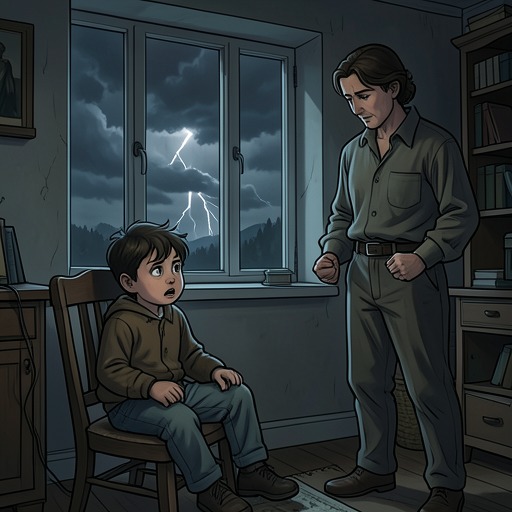
Hillbilly ElegyEnd Times is the apocalyptic belief system J.D. Vance encountered during his early years with his father and his father’s church. Its promise of an imminent cosmic ending gave cultural conflicts a single, urgent meaning: the world was sliding toward moral ruin, and the Rapture would bring history to its close. Vance recalls that the framework shaped his childhood faith, made society seem frightening and hostile, and later became part of the reason he turned away from Christianity.
Formation in a New Faith
After his father told him that he had sought signs from God before adopting him, Vance began spending substantial time with him and became a devoted convert to his church. Vance read books promoting young-earth creationism, challenged evolution online, and studied millennialist prophecy. He became convinced that the world would end in 2007 and even discarded his Black Sabbath CDs, reflecting the church’s suspicion of secular science and music.
The End Times teaching took hold alongside a broader sense of religious boundary-making. Vance recalls hearing about a War on Christmas, reading David Limbaugh’s Persecution, and encountering accounts of art exhibits that had offended Christian audiences. These stories led him, as a young teenager, to feel that Christians were a persecuted minority and that secular society was closing in on what counted as authentic belief.
Signs of an Approaching End
In Vance’s recollection, sermons and the Left Behind novels supplied a vivid sequence for interpreting the future. The culture was said to be moving toward moral corruption; the Rapture was expected, and churchgoers speculated about whether the Antichrist was already alive and which world leader he might be. Vance devoured the novels, absorbing their apocalyptic imagery as part of his religious imagination.
The expectation reached into ordinary ideas about adulthood. Someone told Vance that, if the Lord had not returned by the time he was old enough to marry, he would marry a very pretty girl. The remark treated the End Times not as a remote theological possibility but as the likely endpoint against which even a child’s imagined future had to be measured.
Moral Boundaries and Fear
Apocalyptic expectation belonged to a church culture that emphasized threats and prohibitions more than a wide-ranging account of Christian character. Vance remembers hearing about the gay lobby, the War on Christmas, evolution, liberal politics, and extramarital sex as dangers to resist. The affirmative duties he recalls were comparatively narrow: remain faithful to a future wife and preach the gospel. He tried to convert others, including a Muslim science teacher in seventh grade.
The contrast with Mamaw’s response to a childhood fear stayed with Vance. After a fire-and-brimstone broadcast led him to worry that his early preferences meant he was destined for hell, Mamaw reassured him that God would still love him. At the time, Vance interpreted her response as secularist rather than Christian. In retrospect, he recognized in it a form of Christian love, and contrasted it with a church in which cultural battles and the End Times occupied more attention than the qualities a Christian should cultivate.
Retrospective Significance
Vance describes the apocalyptic outlook as frightening and alienating: claims about secular indoctrination, attacks on faith, and a world approaching the abyss made society seem dangerous. He also recalls that his early religious views were sowing the seeds of an outright rejection of Christianity, even as he loved the church and the father who had introduced him to it. The memoir therefore presents End Times belief as more than a prediction about the future. It was a powerful organizing story that offered certainty and belonging while narrowing the boundaries of acceptable thought—and whose urgency would soon meet the demands of family grief and instability.